





Sorry, you need to enable JavaScript to visit this website.

Artec Forensic 3D Scanners. The crime scene won't wait. Your documentation shouldn't either.

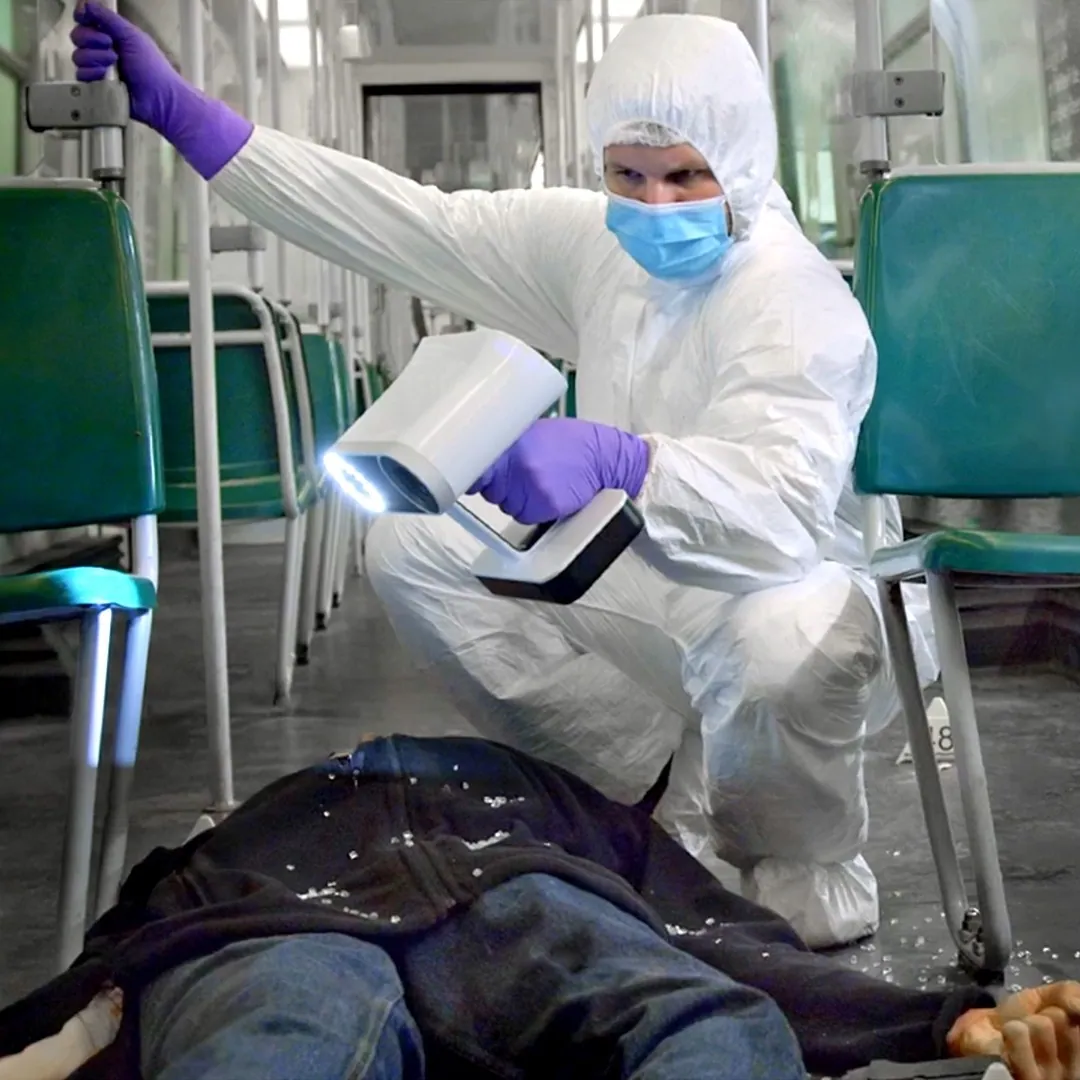
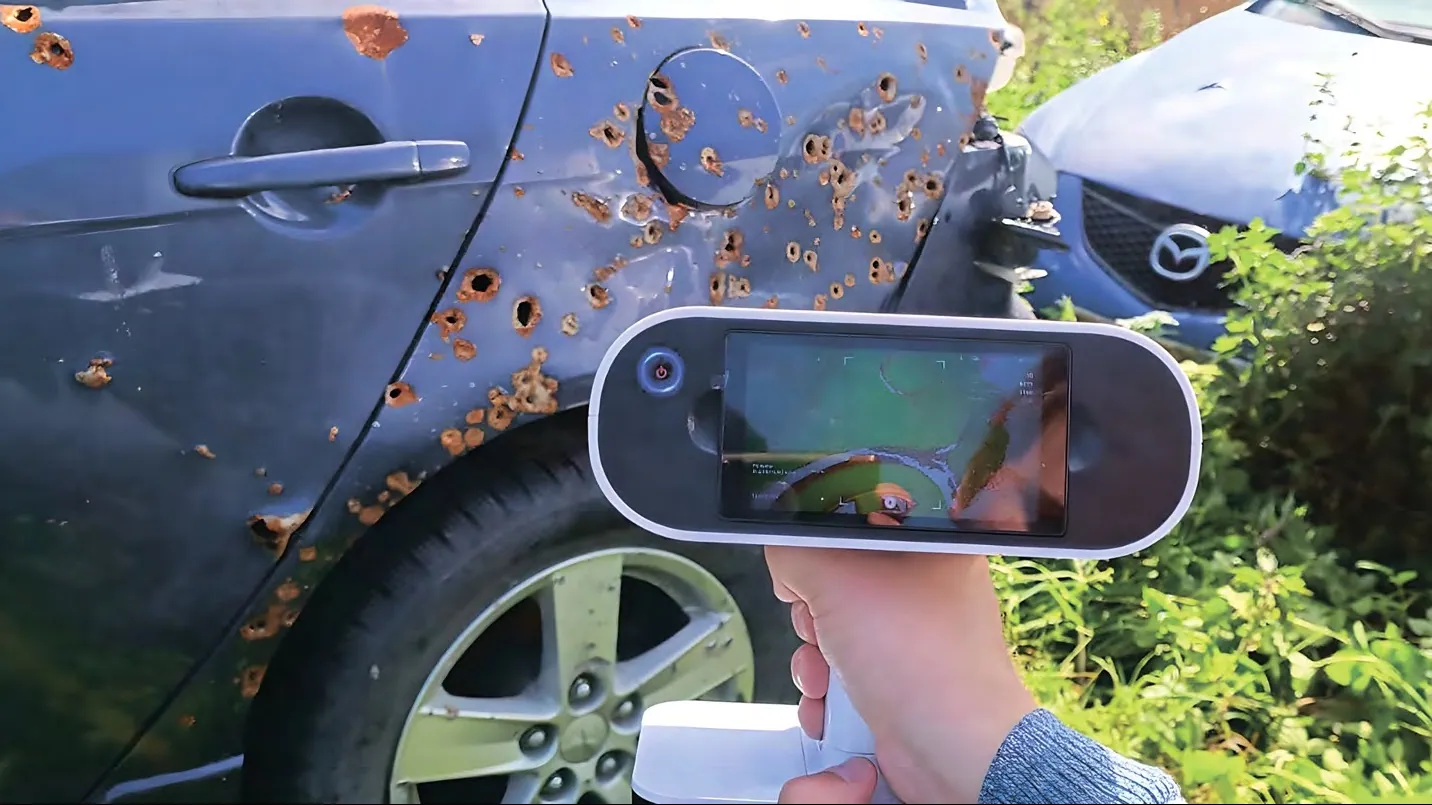
Artec 3D forensic scanners capture every detail — footwear impressions, wound patterns, bullet trajectories, entire accident scenes — in accurate, contactless 3D. Before the scene is cleared. Before evidence degrades. Before the window closes.

55% of violent crimes go unsolved. Inadequate scene capture is part of the problem.

According to FBI data, 55% of violent crimes and 83% of property crimes went unsolved in the US in 2019. Traditional forensic documentation — photographs, hand measurements, dental stone casts — was never designed for the speed and complexity modern crime scene investigation demands.

A photograph taken from the wrong angle misrepresents the spatial relationship between a weapon and a victim. A footwear impression cast takes 24 hours to dry and can still crack. A vehicle accident scene sits on a highway for hours while investigators work through documentation backlogs. All of it creates gaps in evidence that prosecutors have to fight around — or can't overcome at all.

3D laser scanning for crime scenes solves this at the source. The complete scene — every dimension, every surface, every measurement — captured before anything is moved or touched.

Camera angle distorts spatial relationships

Even experienced forensic photographers can inadvertently suggest distances between objects that don't hold up under cross-examination. 2D has no depth.

Manual measurements introduce operator error

Tape measures, sketches, and reference markers are inherently subjective. Every measurement is only as reliable as the person taking it — and defense attorneys know that.

Traditional documentation takes hours or days

A full photographic record of a complex indoor scene can take 4–8 hours. Footwear casting needs to cure overnight. That's time the scene is exposed, traffic is blocked, and your team is tied up.

2D results are hard to share and revisit

Hundreds of JPEGs stored on a hard drive aren't the same as an interactive 3D model. When a cold case comes back two years later, what you captured originally is all you have.

Artec 3D: Your Trusted Partner in Advancing Forensic Investigations

When choosing Artec 3D, non only will you receive a best-in-class 3D scanning solution, but you can also be reassured that our commitment to innovation and customer satisfaction is second to none. We're always here to help with our global support network to make sure you get the best out of your new 3D scanner.


Artec Leo's Key Features for Forensics

<1 hour to master

The Artec Leo is user-friendly, requiring less than an hour of training for novice users. After this brief introduction, users can commence with capturing data and digitizing a variety of objects, including evidence, in high-resolution 3D color.

Intuitive software

The Artec Studio software features an intuitive interface and comprehensive editing tools that enable transformation of scans into 3D models within minutes. These models can then be disseminated among team members, other departments, or exported to various software applications for further scrutiny and application.

Rapid Scanning

Artec Leo holds the title of the fastest portable 3D scanner in the market. It can swiftly scan smaller pieces of forensic evidence in seconds, a human body in 2‒3 minutes, and small crime or fatality scenes in just over 5 minutes.

Secure Storage

Artec Leo supports the storage of thousands of 3D scans locally or on Cloud-based solutions (including Cloud-in-a-box). This data can be readily shared with other forensics professionals.

Wireless and Portable

Artec Leo offers full portability with no need for additional laptops or cables, allowing forensic experts to begin scanning at a crime scene within seconds. Its unencumbered design ensures easy maneuverability around objects without obstruction to the scanning process.

Detailed Analysis and Reconstruction

The high-resolution scans provided by Leo enable precise measurements, aiding in forensic analyses, report generation, and crime, fatality, or accident scene reconstructions.

Benefits of 3D forensic scanning. What departments actually gain from crime scene 3D scanning

These aren't theoretical advantages. They're outcomes documented by the National Institute of Justice, Forensic Science International, and law enforcement agencies that have deployed Artec 3D scanners in active investigations.


Nondestructive scene documentation you can revisit

crime scene

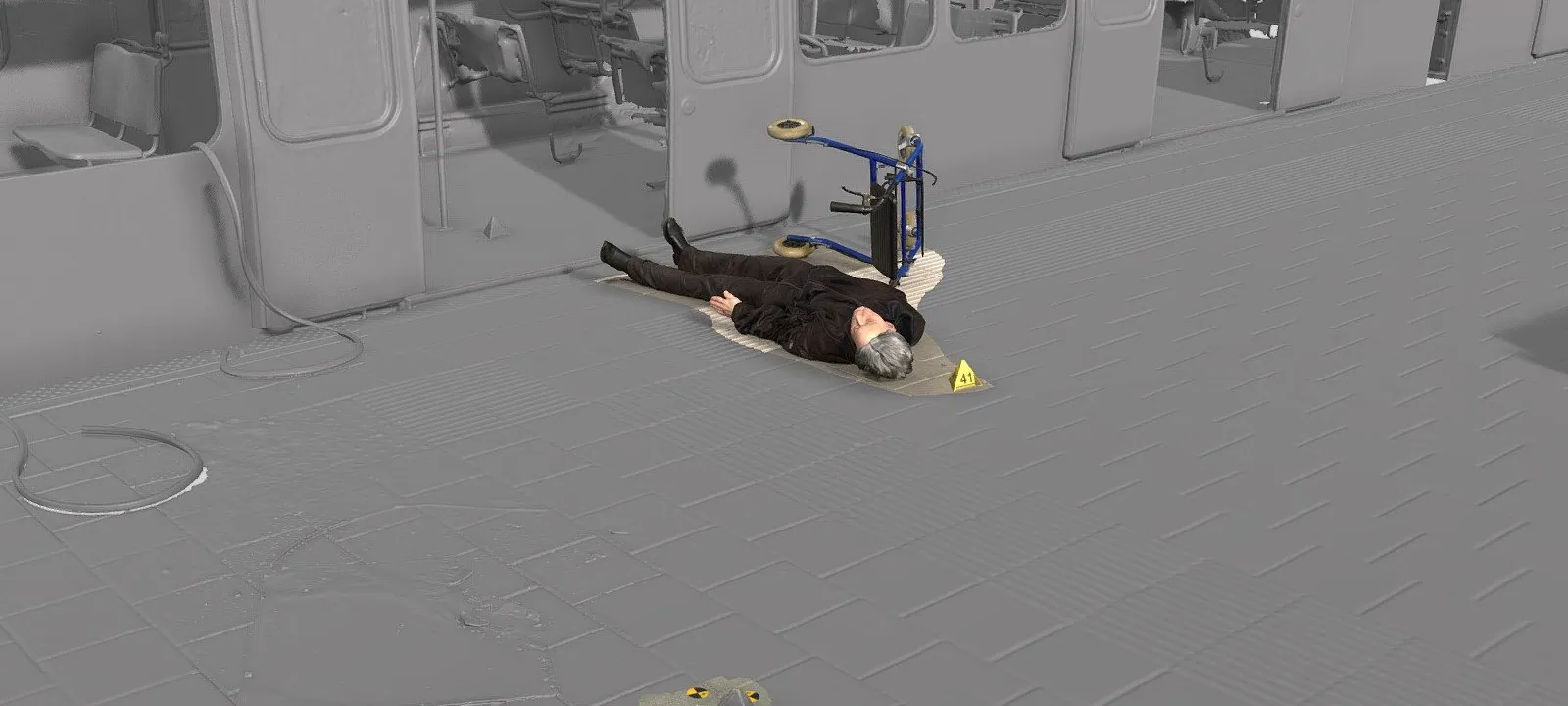
Once a crime scene is scanned, that moment exists permanently. Investigators, prosecutors, and forensic experts can walk back through the scene digitally — years later, from anywhere in the world — without any physical evidence present. Cold cases, appeals, new leads: the 3D data is still there.

Fewer specialists needed on site

crime scene

3D crime scene scanning has been shown to be up to 6x faster than conventional documentation methods. Fewer personnel are required at the scene, and they can complete their work before physical sites — roads, buildings, hospital rooms — need to be reopened. That's a direct cost reduction per investigation and a safety improvement for officers at scene perimeters.

Simpler analysis and 3D crime scene reconstruction

Forensic 3D Scanning

Spatial evidence — the angle of an entry wound, the position of a vehicle relative to a curb, the distribution of glass fragments — is difficult to analyze from photographs. 3D models make it unambiguous. Measurements are built into the dataset. Crime scene reconstruction software can import Artec scan data directly for simulation.

Faster collaboration across agencies and borders

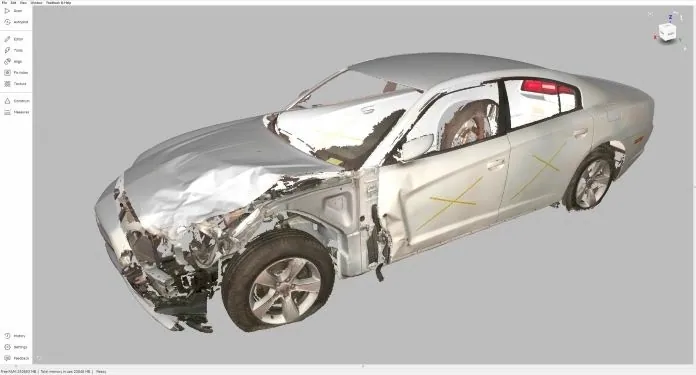
Car reconstruction in 3D

Scan data uploads to Artec Cloud or client-hosted servers. A forensic anthropologist at one university and an investigator at another agency can examine the same 3D model simultaneously without either one traveling. The Luxembourg Directorate of Defense used exactly this capability to deliver Artec Leo scanners to Ukraine for documenting war crimes evidence — data that was then securely shared with prosecutors internationally.

Evidence integrity that withstands cross-examination

Crime scene

Traditional forensic photography depends on the photographer's choices. 3D scanning doesn't. The data is complete, not selected. Prosecutors have found that presenting 3D scan evidence — rather than photographs — significantly reduces the time spent defending documentation methodology in court, and increases juror comprehension of complex spatial relationships.


Learn more about Artec Leo

KEY POINT

From crime scene documentation and evidence preservation to streamlined analysis and reconstruction, Artec 3D scanners are transforming the landscape of forensic investigation and helping to create a safer, more just world.

Case studies

3D scanning vs. dental stone casting for footwear impression forensics

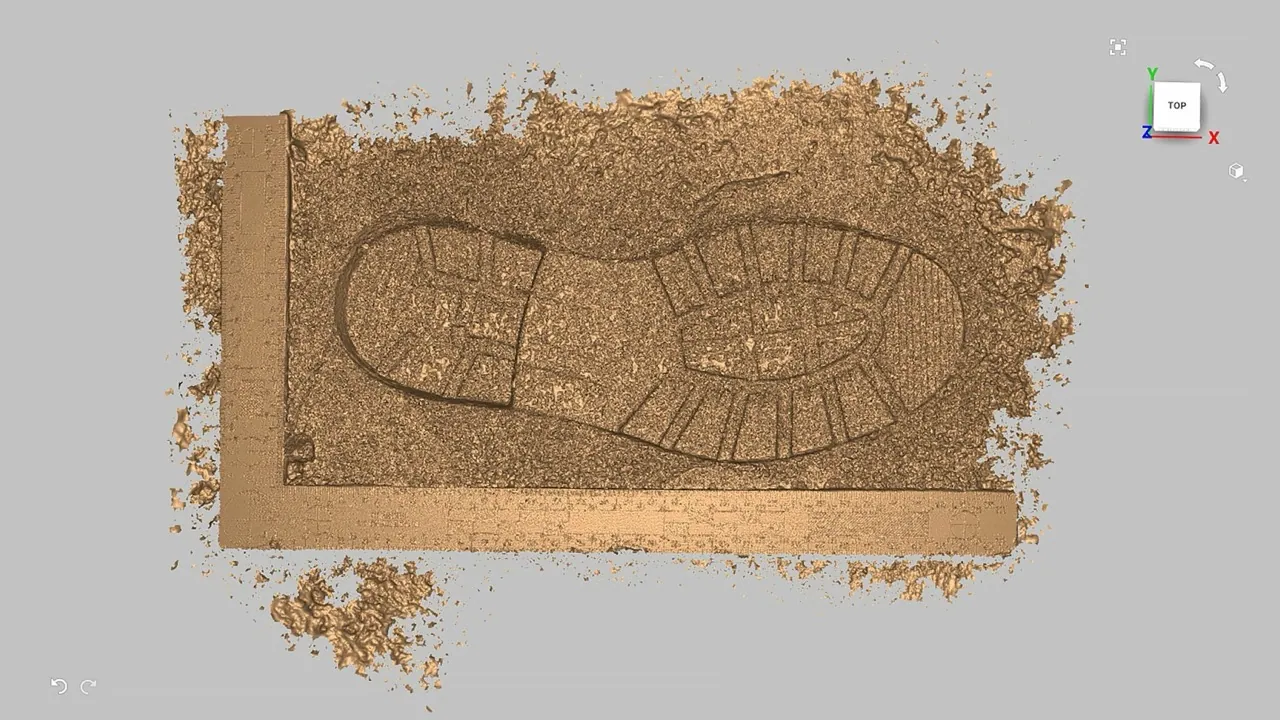
Challenge: footwear impressions are routinely recovered from outdoor crime scenes, but traditional plaster and dental stone casting is slow, fragile, and irreversible. If the cast cracks, the impression is gone. Artec 3D scanners capture the same impression in under a minute — producing a dimensionally accurate 3D model that can be 3D printed, shared with any lab, and revisited indefinitely.

Result: 1 minute capture vs. 24+ hours for traditional casting. Model immediately shareable with any forensic lab worldwide.

Vehicle accident reconstruction: Origin Forensics cuts scan time from 4 hours to under 1

Origin Forensics LLC specializes in forensic vehicle accident reconstruction for legal proceedings. Previously using a terrestrial laser scanner, the team spent 3–4 hours on each vehicle scan. Switching to Artec Leo brought that down to under an hour per vehicle — cable-free, no external laptop, full color submillimeter accuracy. The same data is court-admissible and can be shared directly with attorneys and experts.

Result: Scan time cut by 75%. Full color 3D models ready for court, produced faster than investigators could previously set up their equipment.

University of Toronto: 3D scanning tested head-to-head against forensic photography

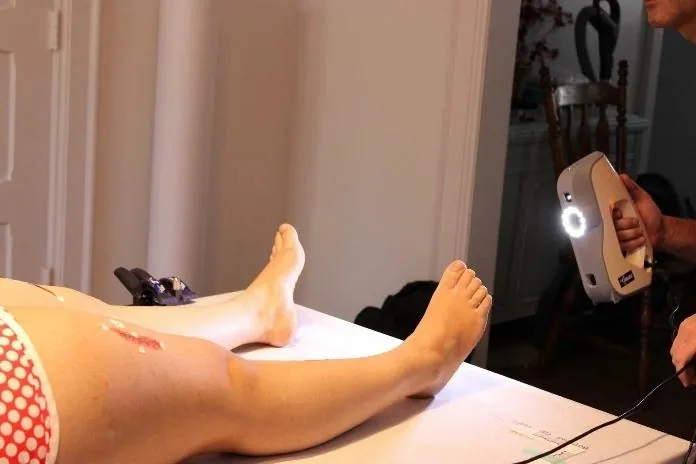
A controlled study at the University of Toronto's Forensic Program used a mock autopsy scenario — simulated tattoos and wounds on a human body — to compare 3D scanning directly against traditional forensic photography. The Artec Eva scanner completed full body documentation in 26 minutes and 1 second. Traditional photography took 54 minutes and 30 seconds. The 3D documentation was submillimeter-accurate in full color; the photographs were not dimensionally measurable at all.

Result: Over 2× faster than forensic photography. Submillimeter-accurate, color, dimensionally measurable 3D data — vs. flat images.

Artec 3D forensic scanners: which one for which job

Forensic crime scene scanning covers a wide range of evidence types — from bullet casings smaller than a fingernail to outdoor crime scenes spanning hundreds of meters. No single scanner does everything best. Here's what each does.

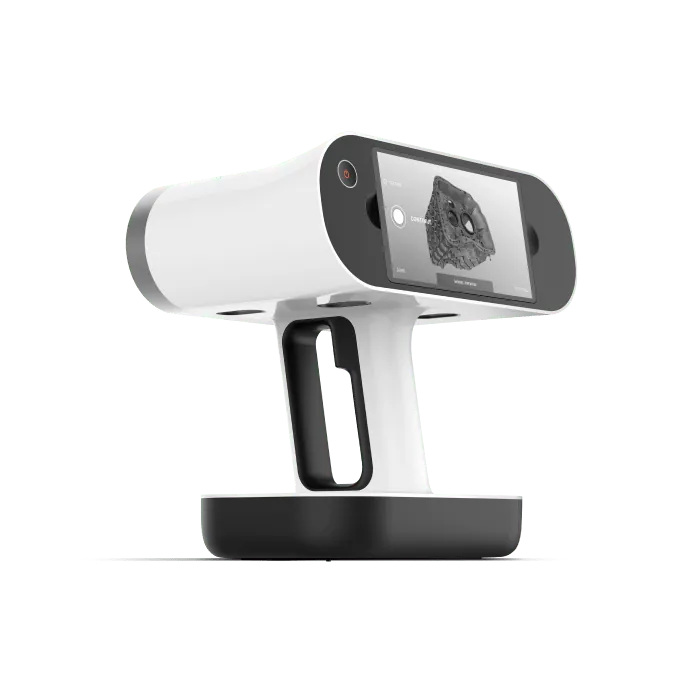
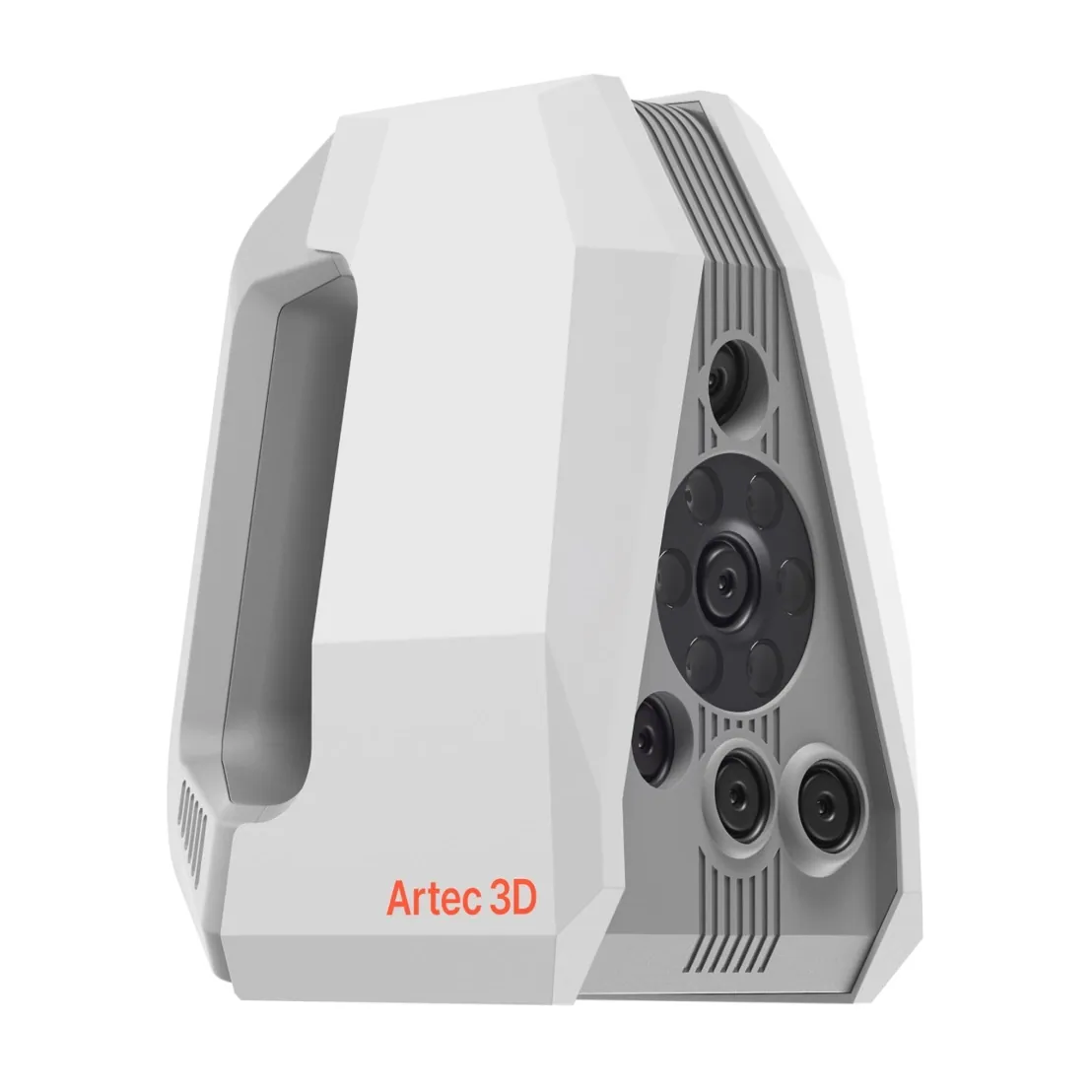
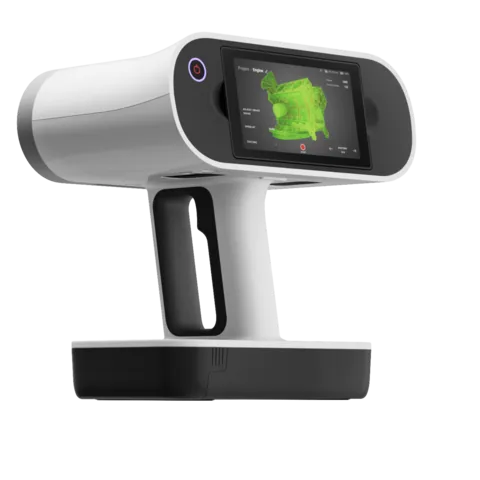
Artec Leo 3D Scanner

The fastest handheld forensic 3D scanner for crime scenes.

Scanner type: handheld
Object size: medium to large
3D accuracy: up to 0.1 mm
Resolution: up to 0.2 mm
Cables required: none

Leo captures a human body in 2–3 minutes. A bullet hole in 1–3 minutes. No laptop, no cables — investigators can move freely around the scene. The built-in touchscreen confirms scan coverage in real time, so there are no gaps discovered later. Used by police forces, forensic labs, and crime scene investigation units in more than 60 countries.

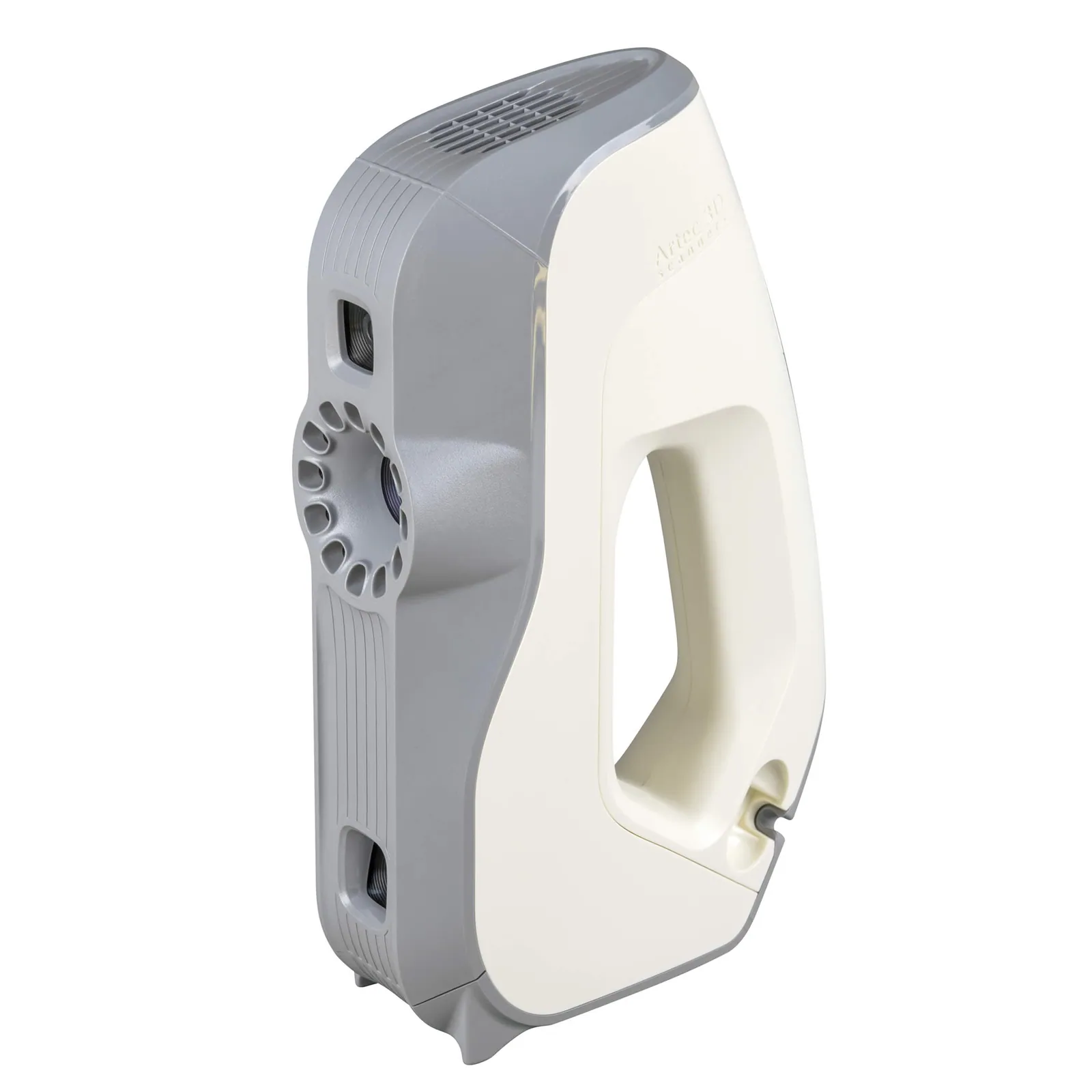
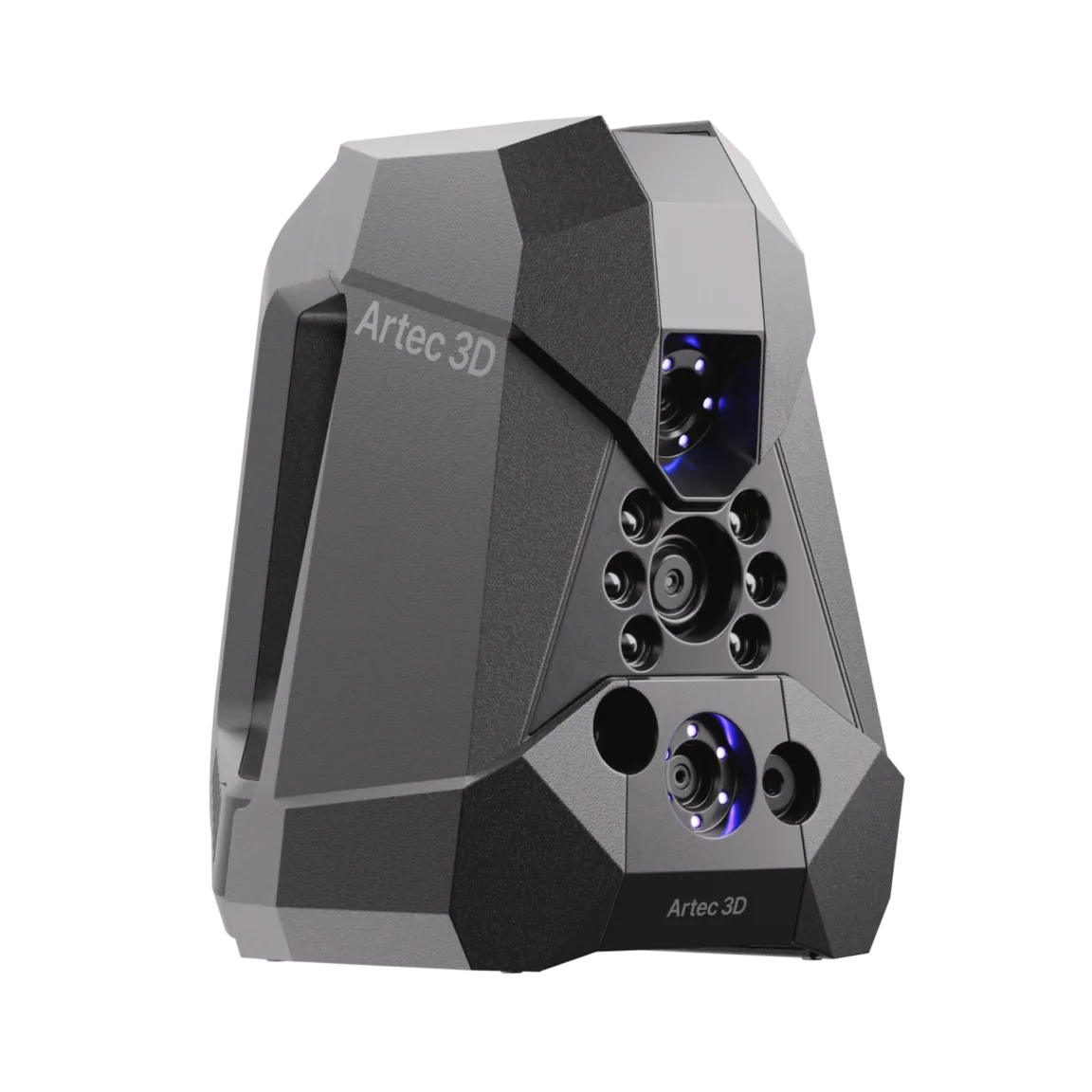
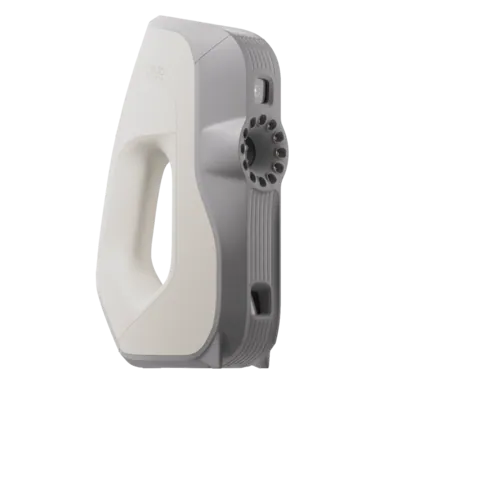
Artec Eva 3D Scanner

Dependable, full-color forensic scanner for small to medium evidence

Scanner type: handheld
Object size: small to medium
3D accuracy: up to 0.1 mm
Resolution: up to 0.2 mm
Color capture: full color

Eva was the scanner used in the University of Toronto forensic photography comparison study — completing full body documentation in 26 minutes vs. 54 for photography. It's the scanner investigators reach for when they need reliable, high-resolution color 3D of evidence at a crime scene, without the complexity of a LiDAR system.

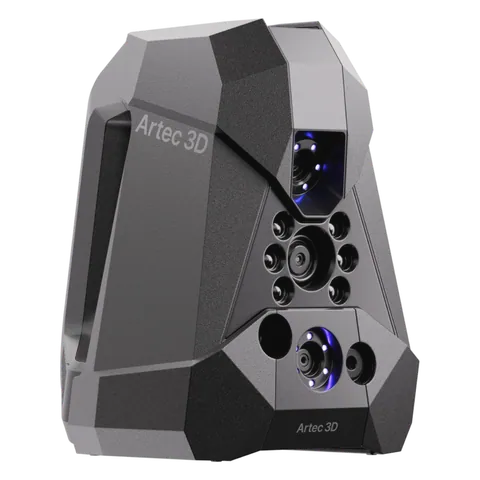
Artec Spider 3D Scanner

For fine forensic detail: bloodstains, tool marks, bite marks, footwear

Scanner type: handheld
Object size: extra small to small
3D accuracy: up to 0.05 mm
Resolution: up to 0.1 mm
Color capture: full color

When evidence requires the finest capture available from a handheld forensic scanner — bite marks for odontology, tool marks on a lock cylinder, detailed bloodstain patterns on textured surfaces — Spider II is the right choice.

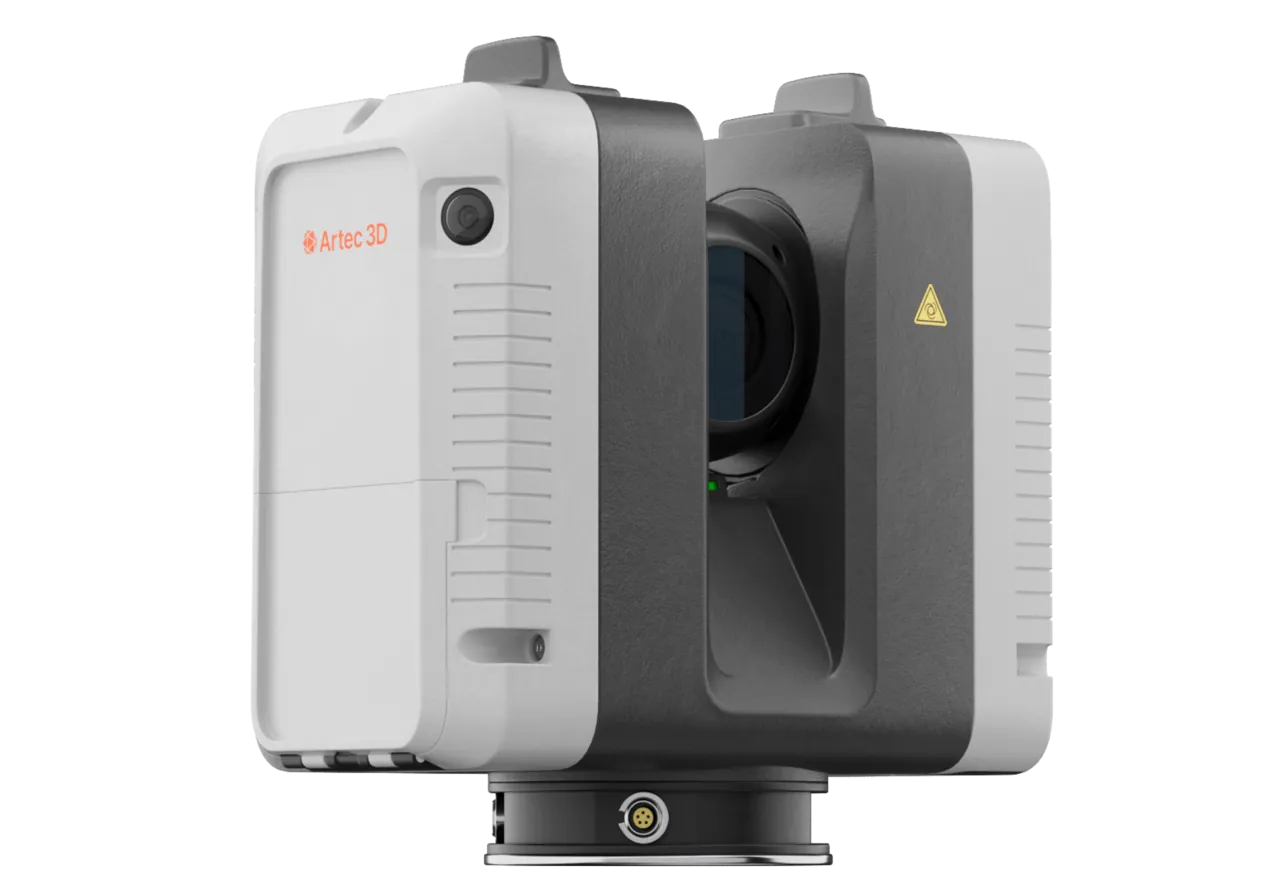
ray2-main

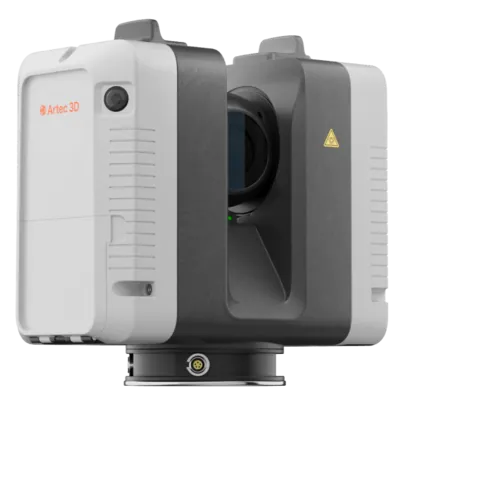
With the high-accuracy, long-range, wireless Ray II laser 3D scanner you can precisely and rapidly capture large to massive objects, scenes or areas, and from up to 130 m away.

Scanner type: Wireless
Object size: L, XL
Accuracy: 1.9 mm @ 10 m
Resolution: 3 / 6 / 12 mm @ 10 m

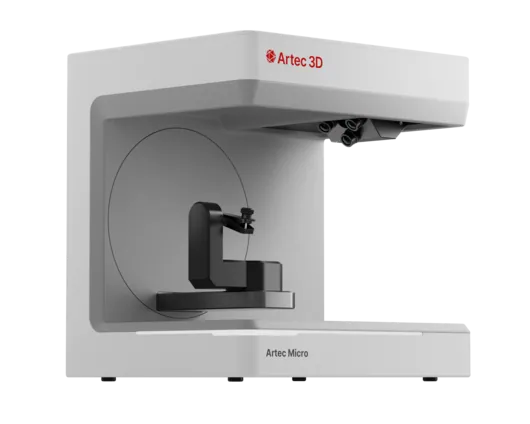
Artec Metrology Kit: Professional

A 3D optical coordinate measuring system for high-precision industrial applications – think deformation analysis, testing, inspection.
 

Scanner type: Handheld
Object size: M, L, XL
Accuracy: 0.002 mm
 

FAQ

  • How difficult is it to learn how to use an Artec 3D scanner for forensic applications?

    Artec 3D scanners are designed with user-friendliness in mind. Our intuitive hardware and software ensure a smooth learning curve, even for professionals with limited 3D scanning experience. Additionally, we offer training and certification programs to help you become proficient in using our scanners for forensic applications.

  • Can Artec 3D scanners work in various environmental conditions, such as low-light or outdoor settings?

    Yes, Artec 3D scanners are built to perform in a wide range of environmental conditions, including low-light and outdoor settings. Our scanners are equipped with advanced technology that allows them to adapt to different lighting situations and capture accurate data in various environments.

  • What file formats are supported by Artec 3D scanners and software?

    Artec 3D scanners and software support various file formats, including OBJ, PLY, STL, WRL, and more. This versatility ensures compatibility with popular forensic software tools and allows for seamless integration into your existing workflows.

  • Are Artec 3D scanners suitable for capturing small and intricate details, such as fingerprints or tool marks?

    Absolutely! Artec 3D scanners are designed to capture high-resolution scans with precise measurements, ensuring even the smallest and most intricate details are accurately documented. This level of detail is crucial for forensic applications, where accurate evidence preservation is paramount.

What's the next step?

expert

Reach out to an expert

Talk to a reliable professional and explore how Artec 3D scanners can improve your workflow, regardless of the task at hand.


Talk to an Expert