
Footwear Impressions
An impression in soil can be lost within hours. A cast takes 24 to 48 hours to harden fully, is destructive, and if it cracks there is no second attempt.
3D scanning records the impression in under a minute, with nothing touching it — depth, tread wear and damage as measurable geometry that can be compared against a suspect shoe for as long as the case runs.
 No sensitive case details required.
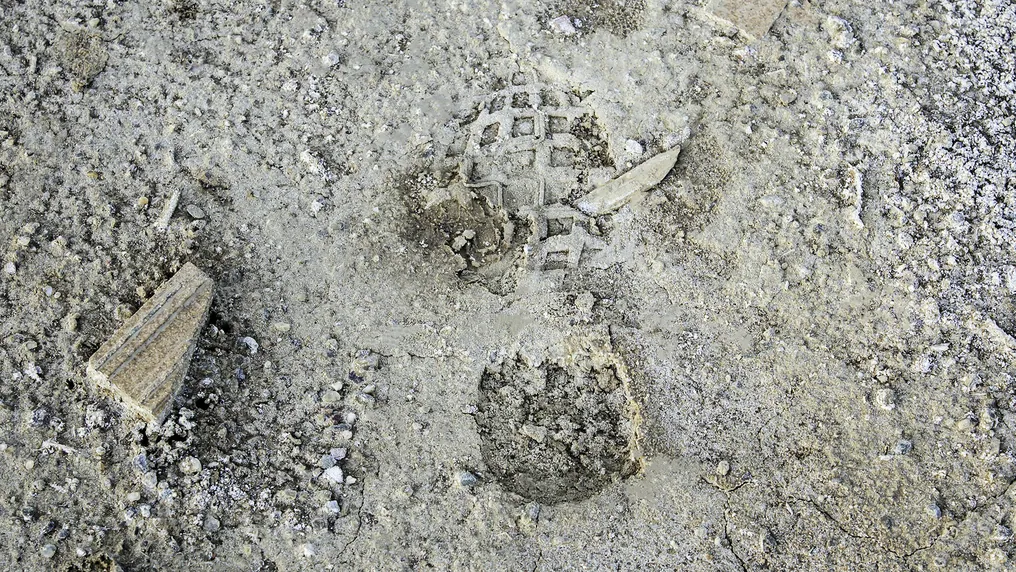
Can 3D scanning replace casting a footwear impression?
It captures the impression without contact — in under a minute in a documented case — so the impression survives for casting or sampling if the case still requires it, and the model is compared and re-measured later.
 Under a minuteAgainst 24 hours or more for a dental stone cast.
 Nothing appliedNo release agent, no medium. The impression stays intact.
 Depth, not just outlineTread depth and wear recorded as geometry, which a photograph cannot hold.
 Comparable laterOverlay against a suspect shoe and measure the difference.
Why a photograph and a cast between them still lose the identifying detail
Footwear is identified by wear, cuts and manufacturing characteristics, some only a millimetre or less across. A photograph with a scale records outline and pattern but not depth — and depth is what separates the same tread pressed at a different angle or by a heavier person. A cast records depth once, needs 24–48 hours to harden fully, and destroys the impression in the process.
Contactless capture takes geometry and colour in one pass. Artec Spider II states 0.05 mm point accuracy and 0.05 mm resolution and records the impression without touching the soil; Artec Leo covers a trail of impressions at walking pace. In the documented Artec case, the first-generation Artec Space Spider captured each impression in under a minute, against 24-plus hours for a cast to harden.
Because nothing is applied, the impression is still available afterwards — for a cast if the laboratory wants a physical exemplar, or for trace recovery. The scan is not a replacement for good practice; it is the record that exists before any of it happens.
The workflow, end to end
Scan before anything touches the impression. Everything else is optional afterwards.
 1. Record the positionA wide scan places the impression in the scene — direction of travel, relation to entry points.
 2. Capture the impressionHandheld, close range, under a minute. Coverage confirmed on screen.
 3. ProcessArtec Studio fuses the capture into a measurable model with depth.
- 4. CompareOverlay against a suspect shoe or a database exemplar; measure wear and damage.
 5. Cast if neededThe impression is intact, so a physical cast can still be taken.
Which scanner for this work
The impression needs fine detail; a trail of them needs speed. Two handhelds cover both.
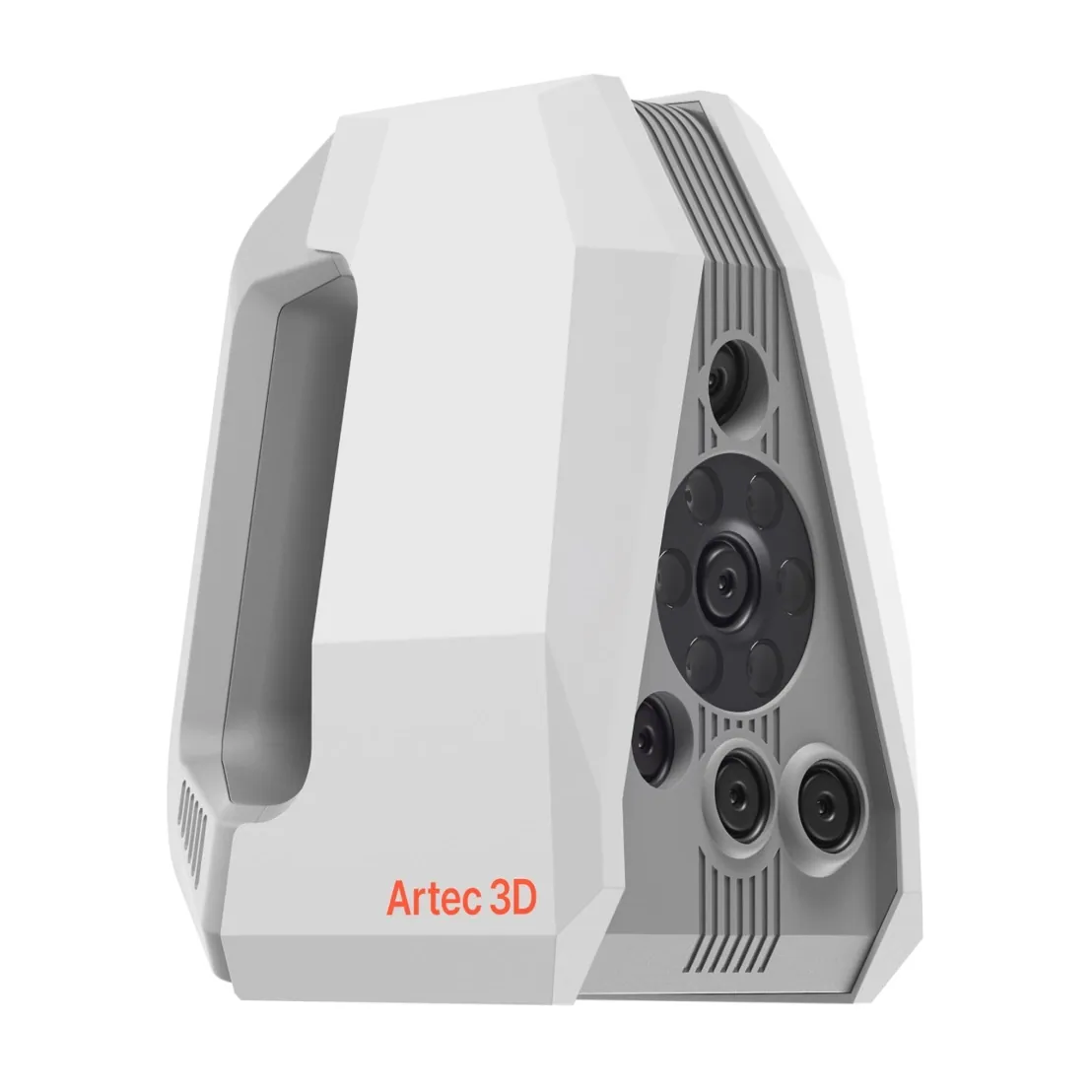
Artec Spider II
- Best for
- The impression itself — tread, wear, damage
- 3D point accuracy
- Up to 0.05 mm
- 3D resolution
- Up to 0.05 mm
- Light source
- Blue structured light, no targets on the surface
- Portability
- Handheld, tethered to a laptop
Spider II records the impression at up to 0.05 mm accuracy and 0.05 mm resolution, so cuts and wear that identify a shoe come through as geometry rather than approximation. Blue structured light records soil and dust without spray; snow varies, so test it before casework.
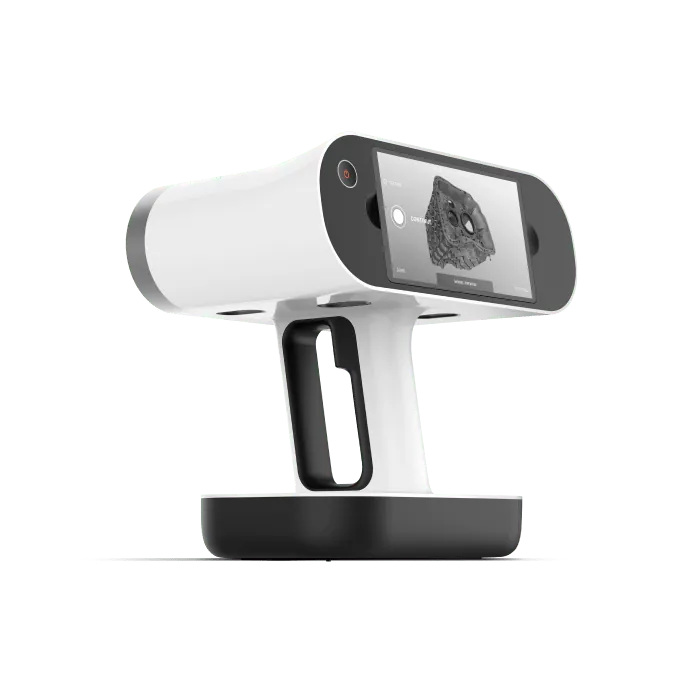
Artec Leo
- Best for
- Trails and impressions in context
- 3D point accuracy
- Up to 0.1 mm
- 3D resolution
- Up to 0.2 mm
- Capture
- Wireless, screen and processing onboard
- Capture speed
- Up to 35 million points/s (HD Mode)
Leo covers a run of impressions at walking pace, wirelessly, at 0.1 mm point accuracy (0.1 mm + 0.3 mm/m along the run) — and records where each one lies relative to the scene. The screen confirms coverage before you move on.
See a footwear impression turned into measurable 3D in under a minute — book a demo for your impression evidence.
Book a demoQuestions practitioners ask
Does the impression survive scanning?
Yes — that is the point. Capture is optical and contactless. Nothing is sprayed or pressed onto it, so casting and trace recovery remain possible afterwards.
Can the scan be compared to a shoe?
Yes. Artec Studio exports OBJ, PLY, STL and E57; the questioned impression and a scan of the shoe are aligned and measured in the comparison software your laboratory validates.
What about impressions in snow or dust?
Soil and dust usually need no preparation. Snow is harder: validate on your own conditions before casework.
Is a scan admissible alongside or instead of a cast?
Many units use it alongside casting rather than instead, and the choice is yours to validate. The scan is non-destructive and repeatable, which is what makes it the first record rather than the last.
Tell us about the work you do
A forensic application specialist will come back with the device that fits it, the accuracy to expect at that scale, and how the data reaches your existing workflow.