
Technology comparisons: choosing the method, not just the device
Every comparison here comes down to the same two questions: how far away is the thing you have to measure, and how fine is the detail that decides the case.
Twelve topics below, grouped into the comparisons, the figures, and what it takes to deploy.
 No sensitive case details required.
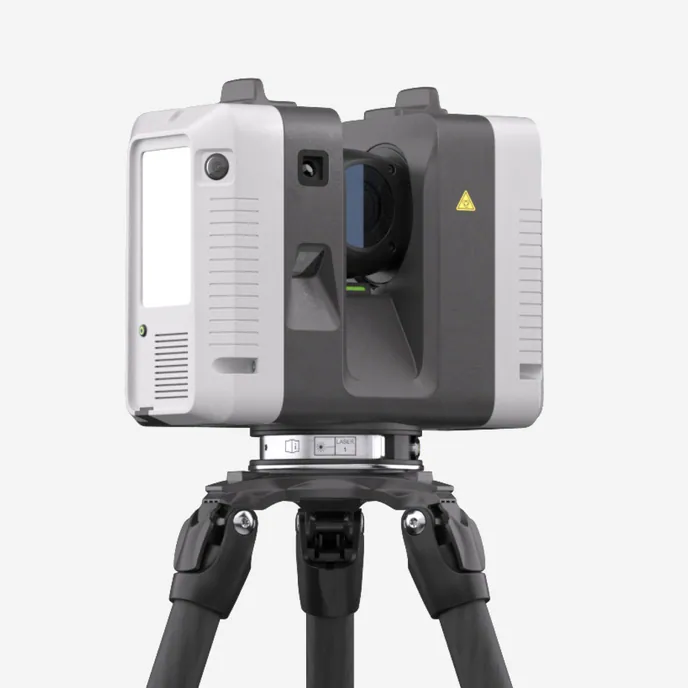
 Range against detailThe one trade every choice on this page turns on.
 Figures at a stated distance"High accuracy" is not a number until a range is attached to it.
 Validated before useA method is not yours until it is proven on known references.
 Deployable by your teamA device nobody is trained on documents nothing.
Method comparisons
Two ways of recording the same scene, compared on what actually decides it.
Figures and choosing
What the numbers mean, which device fits, and what it costs.
Getting it into service
Proving the method and getting a unit working with it.
Why the comparison is never device against device
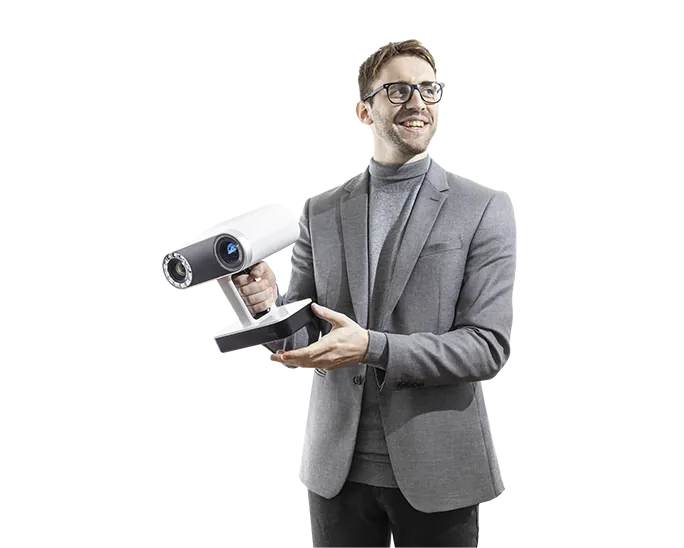
A handheld scanner and a terrestrial one are not competitors; they answer different questions about the same scene. A stain pattern needs 0.05 mm on a wall you can reach. The room that pattern sits in needs range and a 360° field of view. Many units end up running two devices for exactly this reason, and the interesting question is which two.
The comparisons against older methods work the same way. Photography records appearance and 3D records geometry — in a University of Toronto study, documenting 11 simulated injuries took 26 minutes with Artec Eva against 54 for photography and manual measurement, and produced a measurable colour 3D model. Casting captures an impression in soil once, destructively: up to an hour to set at the scene, then 24–48 hours to harden; a scan captures it in under a minute and leaves it intact.
Measured, not asserted
What the light source decides

Geometry without scene lighting: Structured or laser light measures geometry day or night; Ray II's colour imagery needs light on the scene.

Range where access is the problem: Up to 130 m from a tripod, for ground you can safely stand on.
Detail where the case is decided: 0.05 mm in the hand, on the surface as found.
A figure you can cite: Accuracy stated with the distance it was measured at.
Settle the comparison on a live demo, with a forensic specialist alongside.
Book a demoQuestions that come up first
Which is better, handheld or terrestrial?
Neither, on its own. Terrestrial gives you range and a full scene; handheld gives you the fine detail within arm's reach. Many forensic units run one of each, and pick per scene rather than once.
Is a phone with LiDAR good enough?
For a rough spatial note, sometimes. For evidence, the questions are what accuracy it states at what distance, whether it can be validated against references, and whether the method can be written into an SOP and defended. That is where a professional instrument is a different class of tool.
How should we read an accuracy figure?
Always with the distance attached. Artec Ray II states 1.9 mm at 10 m and 5.3 mm at 40 m; Spider II states up to 0.05 mm at close range. A figure without a range is not comparable to anything.
What does deployment actually involve?
Validation against known references, capture and processing training, and writing both into your procedure. Most investigators handle basic scanning after a few days of practice; the paperwork around it is what takes planning.
Other areas of forensic 3D work
Tell us about the work you do
A forensic application specialist will come back with the device that fits it, the accuracy to expect, and how the data reaches your existing case workflow.