
Forensic evidence, documented in 3D
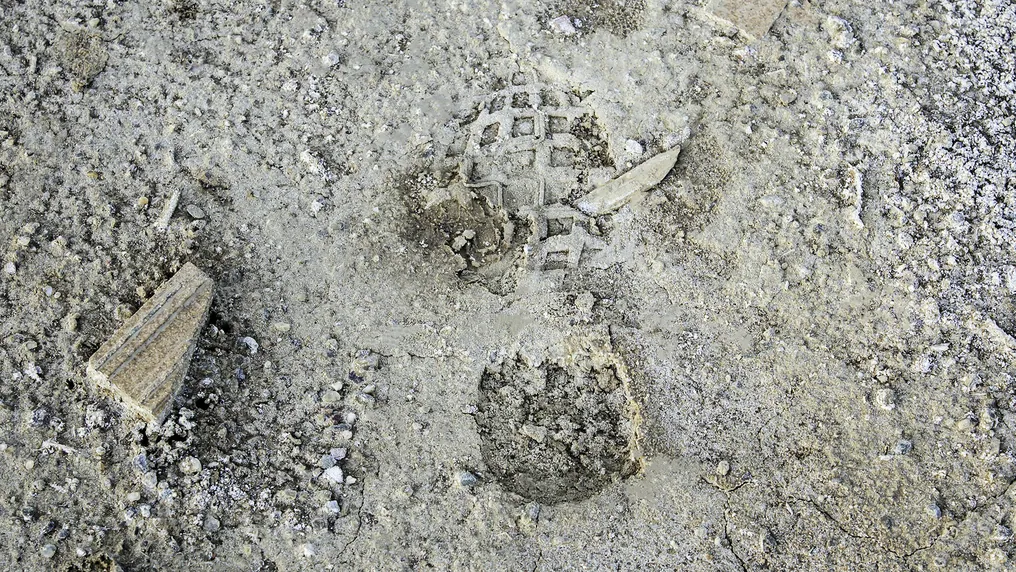
An impression in soil can be lost within hours. A cast takes one to two days to harden fully and can still crack. 3D scanning records the same evidence with nothing touching it — in a documented case, in under a minute per footwear impression.
Five kinds of evidence below, each with the accuracy and capture method that applies to it.
 No sensitive case details required.
 Nothing is appliedNo casting medium, no release agent. The item stays viable for every other test.
 Down to 0.05 mmTread wear, tool contact and mark shape recorded as measurable geometry.
 Under a minuteAgainst 24 hours or more for a dental stone cast that cannot be redone.
 Comparable laterA dimensional model that can be overlaid against a suspect item months on.
What kind of evidence are you documenting?
The method changes with the scale of the mark and whether it can be moved. Pick what is in front of you.
Why casting and photography lose the detail that identifies
A footwear impression is identified by wear, damage and manufacturing detail, some of it only a millimetre or less across. Dental stone captures much of it, once — and the process is destructive, takes one to two days to harden fully, and cannot be repeated if the cast fails. Photography with a scale records appearance, not depth, and depth is what distinguishes a tread pattern from the same pattern pressed harder.
Contactless 3D capture takes the geometry and the colour in one pass. The item is not coated, clamped or lifted, so it remains available for trace and DNA work, and the model can be measured, overlaid and re-examined for as long as the case runs.
Measured, not asserted
What one capture gives the laboratory
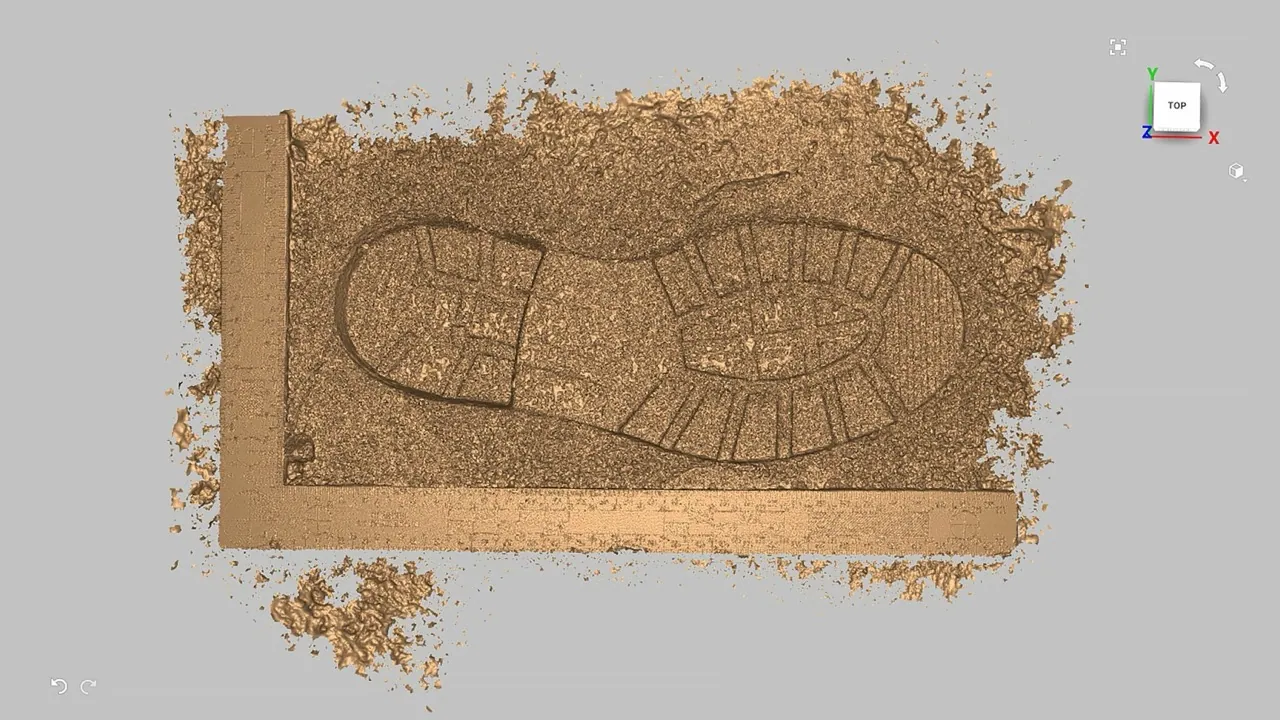

Dimensional comparison: Overlay the questioned impression against a suspect shoe or tool and measure the difference.
The item survives intact: No medium applied, so trace, DNA and further examination are all still possible.

A permanent record: An impression in soil can be lost within hours; the measurable copy is not.

Exhibits from the same file: The exhibit is made from the same model that produced the measurement.
See impression, mark and trace evidence turned into measurable 3D — book a demo for your unit.
Book a demoQuestions that come up first
Is a 3D scan accepted in place of a cast?
Many units use it alongside a cast rather than instead of one, and the choice is yours to validate. A scan is non-destructive and repeatable, so a unit can capture in 3D first and cast afterwards only when the case requires a physical exemplar.
How small an item can be documented?
Artec Spider II records detail at 0.05 mm accuracy and 0.05 mm resolution, which covers tread damage, tool contact and patterned injuries. For items that come to the laboratory, Artec Micro II adds 0.005 mm accuracy and 0.04 mm resolution on a desktop platform.
Does the surface need preparation?
Usually not. Capture is optical and target-free — nothing is sprayed, stuck or pressed onto the evidence. Polished metal, wet ground and snow are harder; test them before casework.
Can we compare a scan against a physical exemplar?
Yes. Artec Studio exports OBJ, PLY, STL and E57, so a scan of the questioned mark and a scan of the exemplar can be aligned and measured in the comparison software your laboratory already validates.
Other areas of forensic 3D work
Tell us about the work you do
A forensic application specialist will come back with the device that fits it, the accuracy to expect, and how the data reaches your existing case workflow.