
Small Evidence
The smallest items carry some of the most specific evidence — a fragment edge, a stamped serial, a sheared fastener, a trace object — and they are also the easiest to damage by handling.
3D scanning records them without contact — at 0.005 mm accuracy in the laboratory, or at 0.05 mm where they lie — as models that can be compared, measured and shared.
 No sensitive case details required.
How small an item can be documented in 3D?
A desktop scanner records items up to 200 × 200 × 150 mm at 0.005 mm accuracy and 0.04 mm resolution on an automated turntable; a handheld records items in place at 0.05 mm before they are lifted.
 0.005 mm on the bench0.005 mm accuracy and 0.04 mm resolution, on an automated platform.
 Minimal handlingRecorded before it is touched, or on a turntable that does the turning.
 Colour with geometryAppearance and form together, in one record.
 ShareableA specialist examines the model without the item leaving custody.
Why small items are handled too often and photographed too little
A small item is turned over in the hand to photograph six sides, then again for the examiner, then again for the expert. Every handling is a risk to trace evidence and a break in a clean record. And the photographs, however many, do not carry the geometry a comparison needs.
Artec Micro II records an item on an automated turntable at up to 0.005 mm accuracy and 0.04 mm resolution: fix it on the platform, start the scan, and the scanner does the turning; a second mounting covers the face it rests on. For items that must be recorded before they are lifted, Artec Spider II captures them in place at 0.05 mm.
The model is then the thing examiners handle. The item itself is touched only to mount it. Cartridge cases and projectiles are a discipline of their own and are covered under ballistics evidence.
The workflow, end to end
Record in place if it matters where it was; record on the bench for metrology-grade accuracy.
 1. Capture in placeHandheld scan of the item where it lies, before it is bagged, if position is evidence.
 2. Bag and logStandard handling; the scan is a separate record.
 3. Bench scanOn the desktop scanner: automated capture at 0.005 mm accuracy, with the turntable doing the turning.
 4. Measure and compareDimensions, marks and edges against exemplars or a database.
- 5. ShareThe model goes to the examiner; the item stays in custody.
Which scanner for this work
One device for the bench, one for the scene.
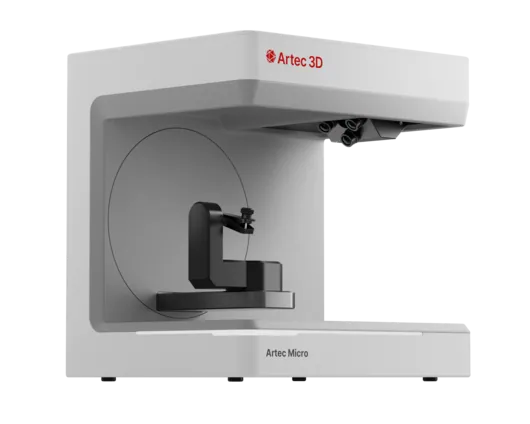
Artec Micro II
- Best for
- Items in the laboratory
- 3D point accuracy
- Up to 0.005 mm
- 3D resolution
- Up to 0.04 mm
- Capture
- Desktop, fully automated turntable
- Object size
- Up to 200 × 200 × 150 mm
Micro II is built for small objects: up to 200 × 200 × 150 mm on an automated turntable at 0.005 mm accuracy and 0.04 mm resolution. Stamped marks, fragment edges and fastener fractures come through as measurable geometry, with the item turned by the machine and remounted once for its underside.
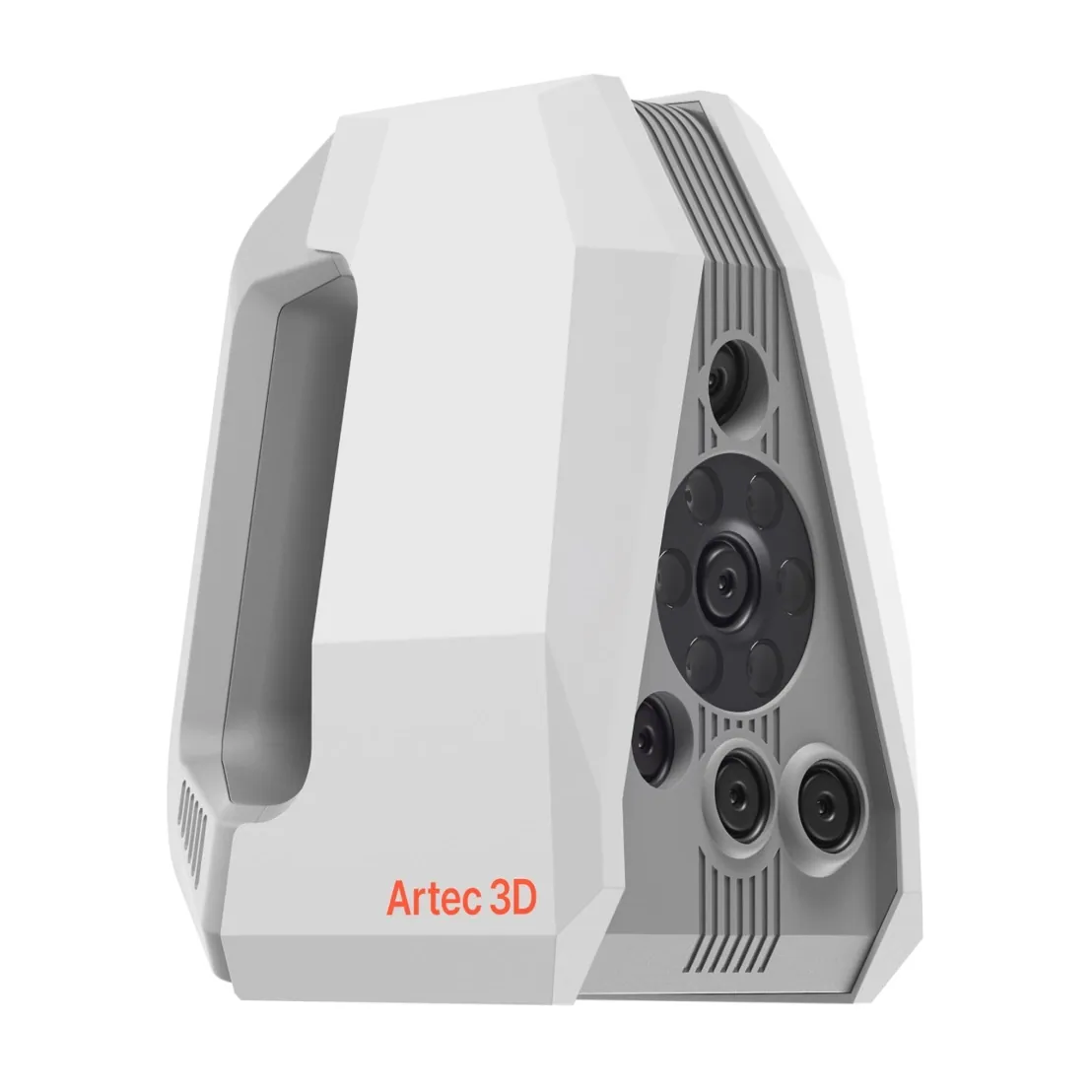
Artec Spider II
- Best for
- Items in place at the scene
- 3D point accuracy
- Up to 0.05 mm
- 3D resolution
- Up to 0.05 mm
- Light source
- Blue structured light, no targets on the surface
- Portability
- Handheld, tethered to a laptop
Spider II records a small item where it lies at up to 0.05 mm, contactlessly, before it is bagged — so position and detail are both preserved.
See what a bench scan resolves on the items your laboratory handles most — book a demo.
Book a demoQuestions practitioners ask
What is the smallest item worth scanning?
Micro II is designed for small parts, with 0.005 mm accuracy and 0.04 mm resolution; the form of a firing pin impression or a stamped mark is within range. Finer surface detail is the work of microscopy or dedicated surface-topography systems.
Does the item have to be touched?
On the desktop scanner, only to fix it on the platform and to turn it over once for its underside. The turntable does the rest. In place, capture is contactless.
Can shiny brass be scanned?
Polished metal is the known hard case for optical scanning. Ask to see comparable items scanned on Micro II at a demo, and validate before casework.
How does this help the examiner?
The examiner works on the model — measures, compares, annotates — without handling the item. A second opinion is a file transfer, not a transport.
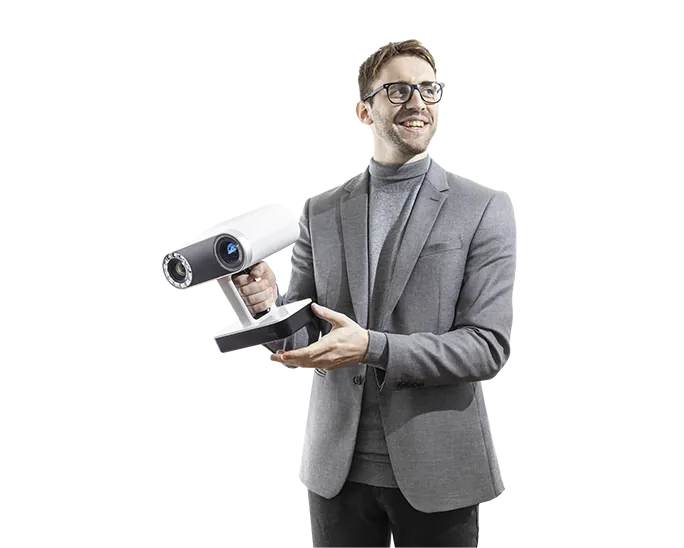
Tell us about the work you do
A forensic application specialist will come back with the device that fits it, the accuracy to expect at that scale, and how the data reaches your existing workflow.