
Evidence Documentation
An item of evidence is two things: the object, and where it was. The object goes to the laboratory. Where it was — its position, orientation and relationship to everything else — has to be recorded before it is lifted, or it is lost.
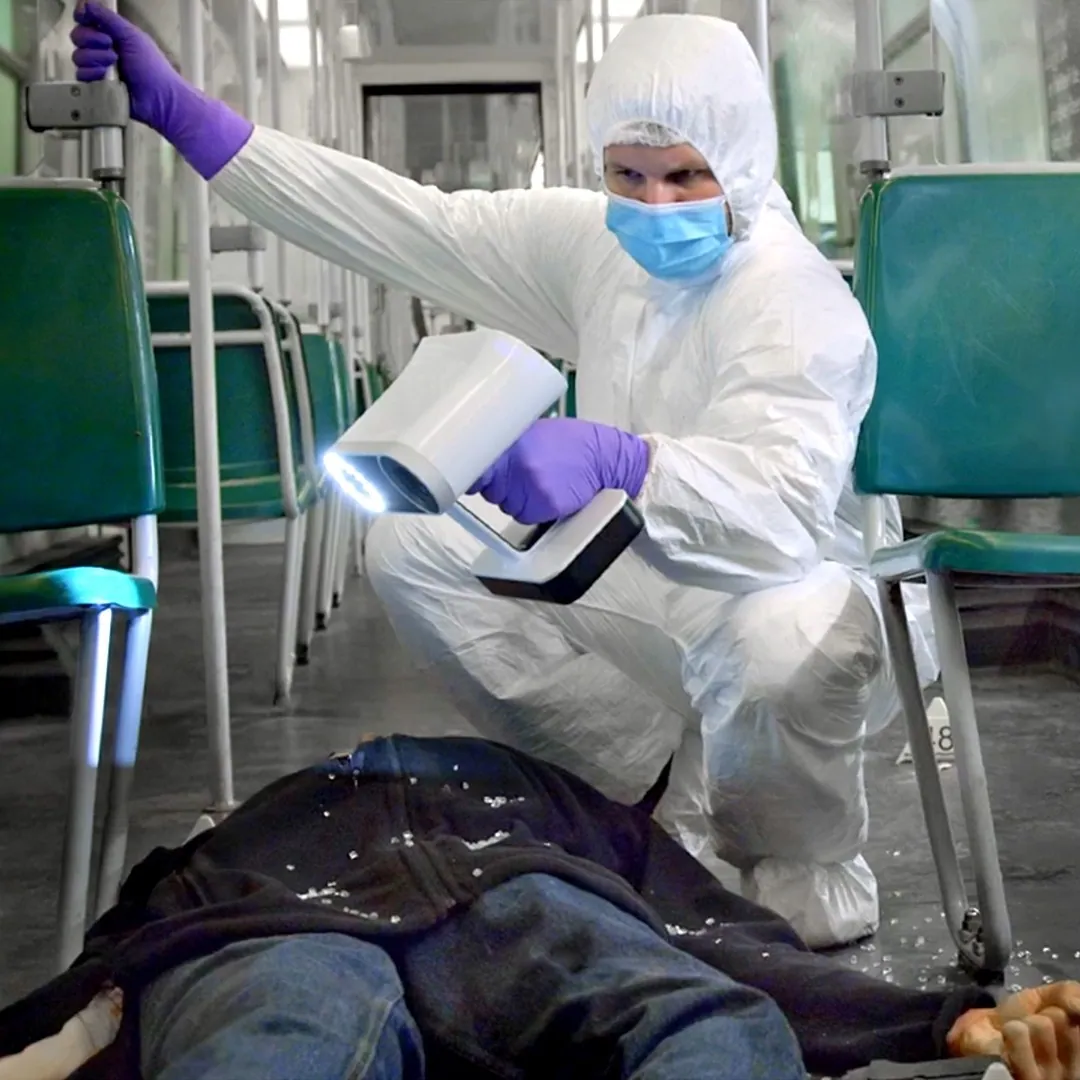
3D scanning records both at once, without contact, before the item is bagged.
 No sensitive case details required.
How does 3D scanning document evidence in place?
The item and its surroundings are captured together, contactlessly, so position and orientation are preserved as measured geometry — and the item is still available for every laboratory examination.
 Nothing touchedNo markers or spray on the item; it stays viable for trace and DNA.
 In contextThe item recorded in relation to everything around it.
 Colour and shapeAppearance and geometry in one record.
 Before it is liftedThe position survives the item leaving the scene.
Why a photograph with a scale is not a 3D record of position
The standard is a photograph with a scale beside the item, then a sketch and a tape measurement to fixed points. Each step is a chance for error, and none of them leaves orientation or the underlying surface measurable afterwards. Once the item is lifted, the record is what was photographed and written down.
Contactless capture takes the item and its surroundings in the same pass. Position, orientation and the relationship to the room are geometry in the model, measurable afterwards to any point. Nothing is applied to the item, so trace and DNA examination proceed as they would have anyway.
The National Institute of Justice's survey of 3D crime scene scanning devices records crime scene units adopting them for exactly this kind of documentation — and for the speed and efficiency it brings to it.
The workflow, end to end
Record before you lift. Everything else follows from that.
- 1. Capture the sceneWide scan places every item in one coordinate system.
 2. Capture each item in placeHandheld, close range, before the item is moved. Coverage confirmed on screen.
 3. VerifyCheck the record is complete while the scene is still intact.
- 4. Bag and logThe item goes to the laboratory; its position stays in the model.
 5. Measure laterPosition, distance to other items and orientation taken from the archive.
Which scanner for this work
One device for the item, one for where it sits.
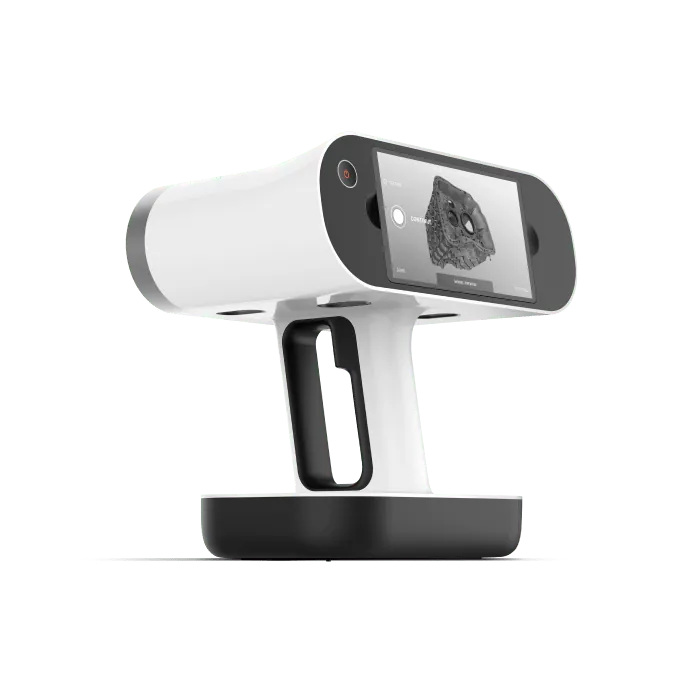
Artec Leo
- Best for
- Items in place — weapons, casings, personal effects
- 3D point accuracy
- Up to 0.1 mm
- 3D resolution
- Up to 0.2 mm
- Capture
- Wireless, screen and processing onboard
- Capture speed
- Up to 35 million points/s (HD Mode)
- Typical time
- A body or a bullet hole in minutes
Leo records an item at up to 0.1 mm in full colour without contact, and the built-in screen confirms coverage before you move on. Wireless, so the operator works around the item rather than dragging cables through the scene.
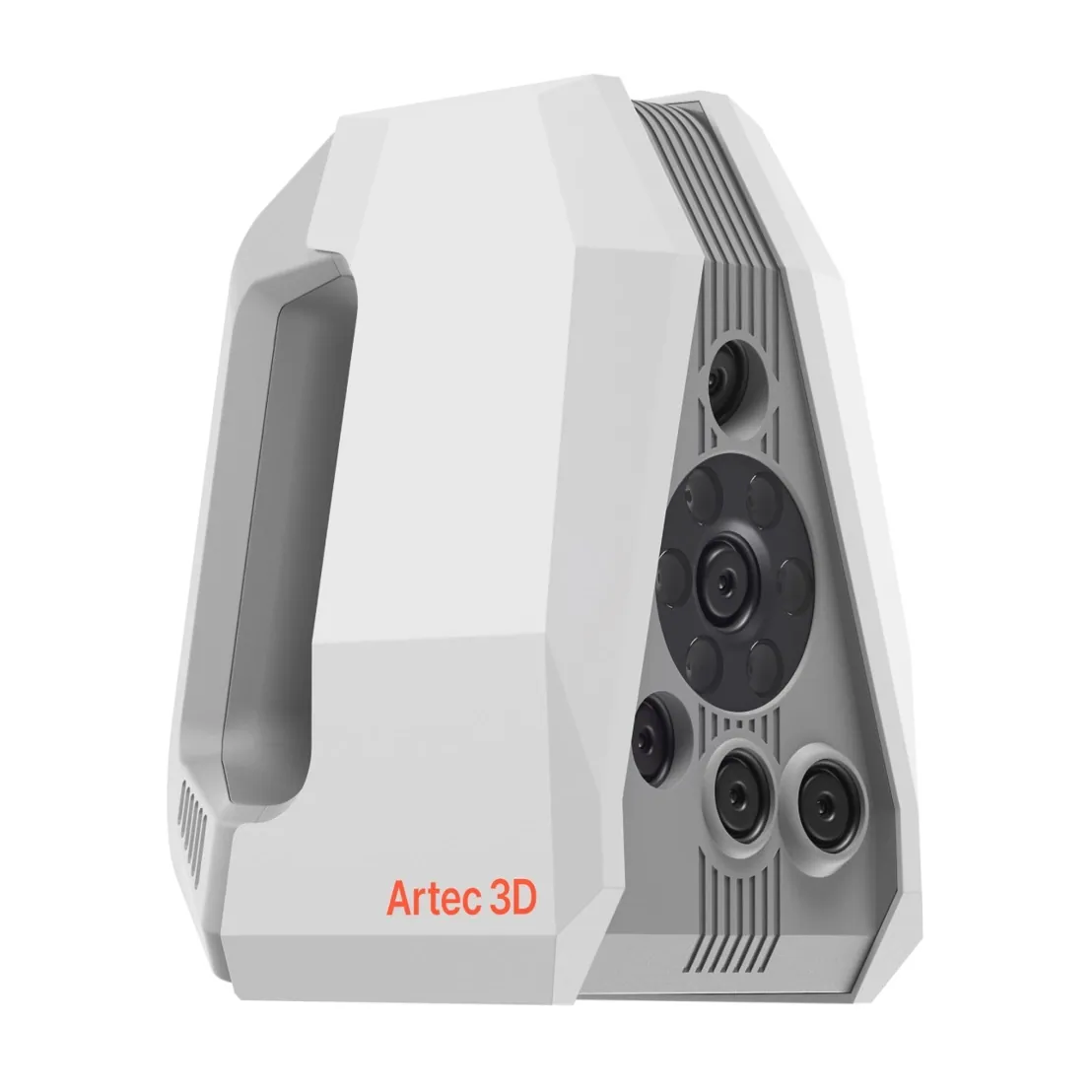
Artec Spider II
- Best for
- Small items and fine detail
- 3D point accuracy
- Up to 0.05 mm
- 3D resolution
- Up to 0.05 mm
- Light source
- Blue structured light, no targets on the surface
- Portability
- Handheld, tethered to a laptop
Where the item itself carries the evidence — a cartridge case, a tool, a fragment — Spider II records its shape at up to 0.05 mm, contactlessly, before it is bagged. Striation comparison stays with the laboratory's microscope.
See how evidence is recorded in position, before anything is lifted — book a demo for your scene work.
Book a demoQuestions practitioners ask
Does scanning interfere with trace or DNA?
No. Capture is optical and contactless: nothing is sprayed, stuck or pressed onto the item. It is documented in place, then handled exactly as it would have been.
How is chain of custody handled?
The item is bagged and logged as usual. The scan is a separate record of where it was, kept with its own capture log — operator, time, parameters — as part of the case file.
Can we measure the item after it is lifted?
Yes. Its position and orientation are geometry in the model, measurable to any other point in the scene, for as long as the case runs.
Do small items need a different device?
For fine detail — tool contact, small fragments, the shape of a mark — Spider II records at up to 0.05 mm; striation comparison stays with the laboratory's microscope. For position and context, Leo is faster and works untethered.
Tell us about the work you do
A forensic application specialist will come back with the device that fits it, the accuracy to expect at that scale, and how the data reaches your existing workflow.