
Forensic 3D scanning by profession: what changes for each role
The same capture is a different tool depending on who picks it up: a scene unit measures time, a laboratory measures reproducibility, a prosecutor measures whether the court can follow it.
Seven roles below, each with the part of the workflow it owns.
 No sensitive case details required.
 Time, for scene unitsRoom capture in minutes per tripod position, with coverage checked before the team leaves.
 Reproducibility, for laboratoriesA method that can be validated, written down and repeated.
 Clarity, for the courtroomAn exhibit that stands up and can still be understood.
 Transferable skill, for teachingA workflow students pick up and take into service with them.
Which describes your work?
Each page is written for the accountability that role carries, not for the technology.
One dataset, seven different jobs
A scene examiner is judged on what was recorded before the scene was released. A laboratory is judged on whether another examiner gets the same answer. A reconstructionist needs geometry a simulation will accept. A prosecutor needs an exhibit that does not collapse under cross-examination. These are not variations on one requirement; they are different requirements met by the same capture.
That is the practical argument for recording geometry once, properly, at the start. Every role downstream draws on the same file rather than commissioning its own measurements — and nobody has to return to a scene that no longer exists.
What each role stops doing
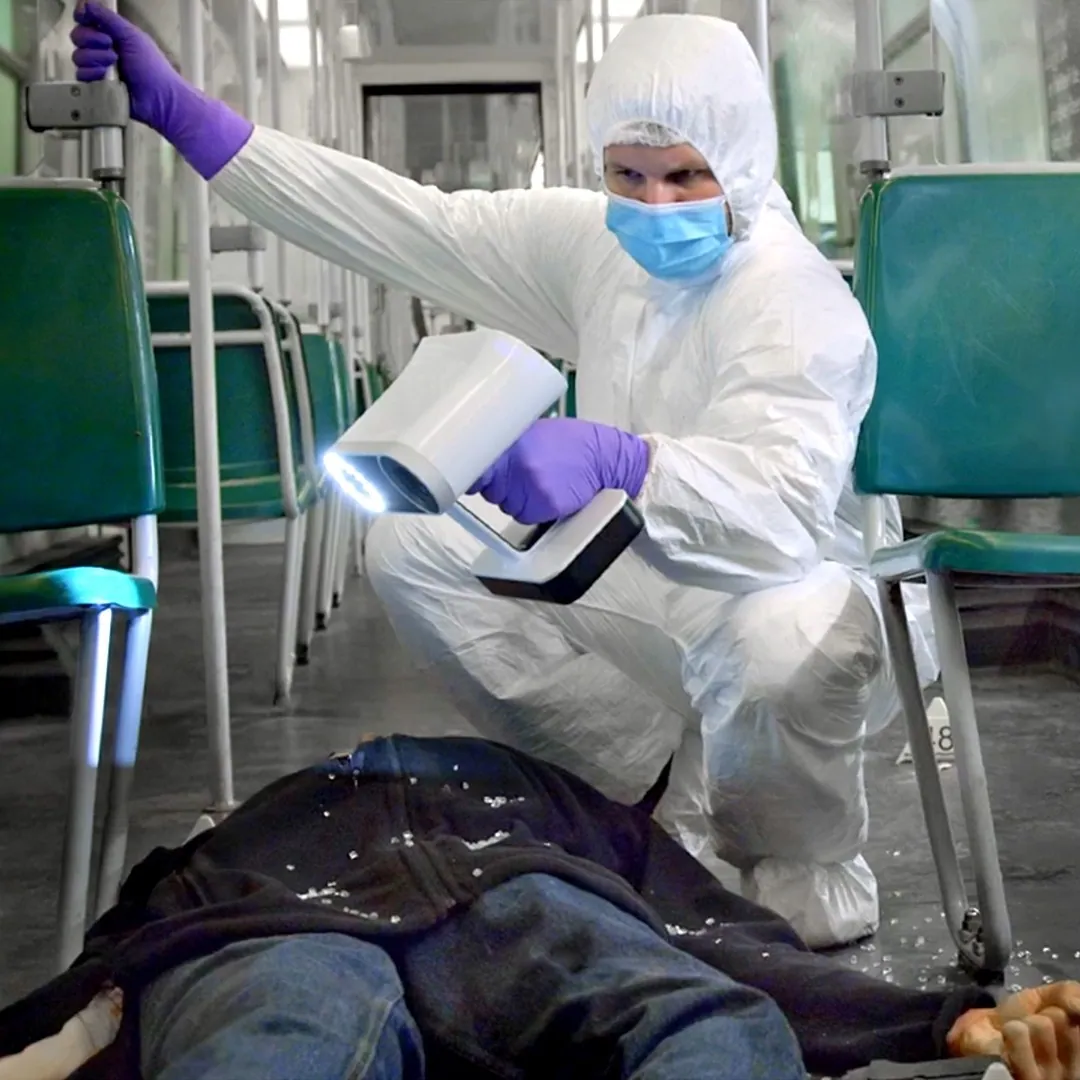

Waiting on a backlog: Capture is checked for coverage before the team leaves the scene; processing follows at the office.

Defending a tape measure: Measurements come from the model, not from two people's handwriting.

Travelling to review: A specialist opinion on the model, from wherever they are.

Re-attending a released scene: New questions answered from the archive.
Tell a specialist what your unit is accountable for, and get the workflow that fits it.
Book a consultationQuestions that come up first
We are a small unit — is this realistic for us?
The handheld units need no site preparation, no targets and no survey crew, and capture is learned in a day of hands-on training, with processing skills building over the first cases. Scale is more about the paperwork around validation than about the capture itself.
Who in the team should operate it?
Whoever documents scenes now. Coverage is shown on screen in real time, so the operator can see what has been captured while still on site rather than discovering a gap later.
How does this reach the prosecutor?
As a model and measurements produced from the same file the scene unit captured, exported in standard formats. Nothing is re-derived, which is what makes the exhibit and the report consistent with each other.
Do you support procurement and tender requirements?
Yes — evaluation planning, test criteria, indicative quotes and the supporting material a purchase approval or formal tender needs.
Other areas of forensic 3D work
Tell us about the work you do
A forensic application specialist will come back with the device that fits it, the accuracy to expect, and how the data reaches your existing case workflow.