
Fire Investigators
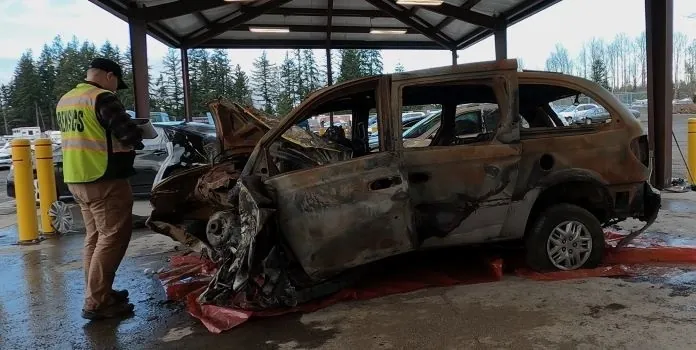
A fire investigator answers for an origin-and-cause determination that an insurer, a prosecutor or a coroner will test against a documented methodology — built on a scene that is dark, unsafe and about to be overhauled.
3D capture gives that determination a measured record of the scene as found: burn patterns, damage and the position of contents, taken before overhaul, from wherever it is safe to stand.
 No sensitive case details required.
 A methodology-grade recordMeasured geometry behind the pattern analysis, not photographs alone.
 From a safe distanceUp to 130 m from a tripod; nobody on a suspect floor.
 Before overhaulThe scene as found, kept — whatever the fire service has to do next.
 Alternative hypotheses tested laterA competing origin theory checked on the model, after demolition.
What changes for the investigation

The structure from the perimeter: Geometry captured through openings, even in darkness, before entry is authorised.
Origin area in detail: Appliances, openings and the point of origin at up to 0.1 mm once entry is safe.

Burn patterns as geometry: Heights, pattern boundaries and positions of contents measured on the model; probed char depths plotted on it.

A record for every reader: The same model for the insurer's engineer, the prosecutor and the coroner.
What a fire investigator is accountable for, and where the model helps
Origin-and-cause work is judged on methodology: was the scene documented systematically, were alternative hypotheses considered, can another investigator follow the reasoning from the record. Photographs taken in a dark, sooted interior during the window before overhaul are a thin basis for that, and they carry no measurements.
The capture itself is described under fire and arson investigation: a laser scanner from the perimeter, a handheld in the origin area once entry is safe. What it changes for the investigator is the record — burn pattern geometry, the position of contents and the state of the doors, measurable afterwards, with char depths probed on site plotted on the model. A competing hypothesis raised by an insurer's engineer is tested on the model, not argued from photographs of a building that has since been demolished.
Joint scenes benefit most. Fire service, police and the insurer's investigator work from the same file; where a fire follows an explosion or leads to a structural collapse, the same method covers the adjacent disciplines.
Which scanner for this work
Range and darkness are the constraints. A laser scanner comes first.
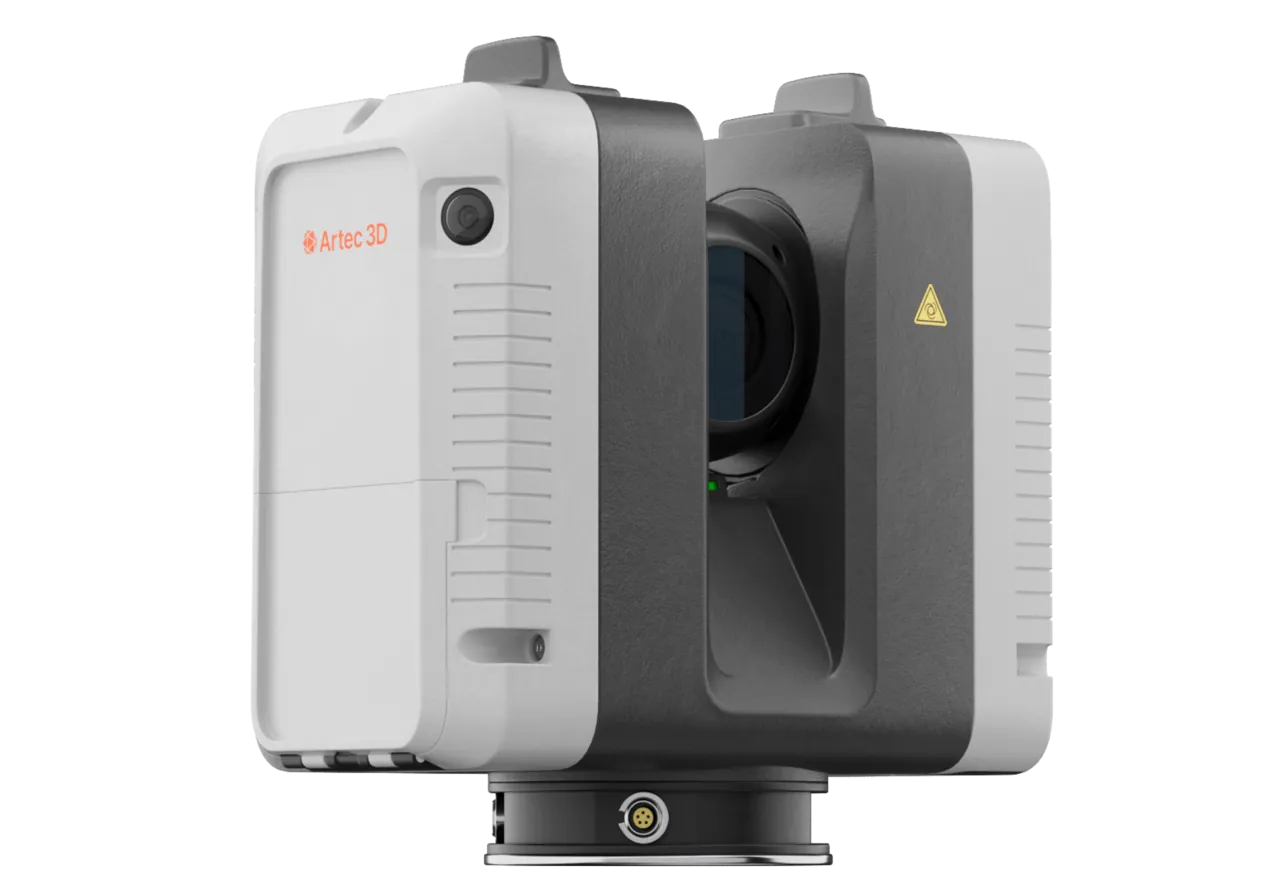
Artec Ray II
- Best for
- The structure, from wherever it is safe to stand
- Accuracy
- 1.9 mm at 10 m
- Range
- 0.5–130 m
- Scan time
- About 1.7 minutes per position (2.7 with colour)
- Portability
- Wireless, tripod-mounted
Up to 130 m from a tripod (less on soot), about 1.7 minutes per dome (2.7 with colour). Geometry even in darkness; burn-pattern colour needs light on the scene. A roof in view is captured from the ground.
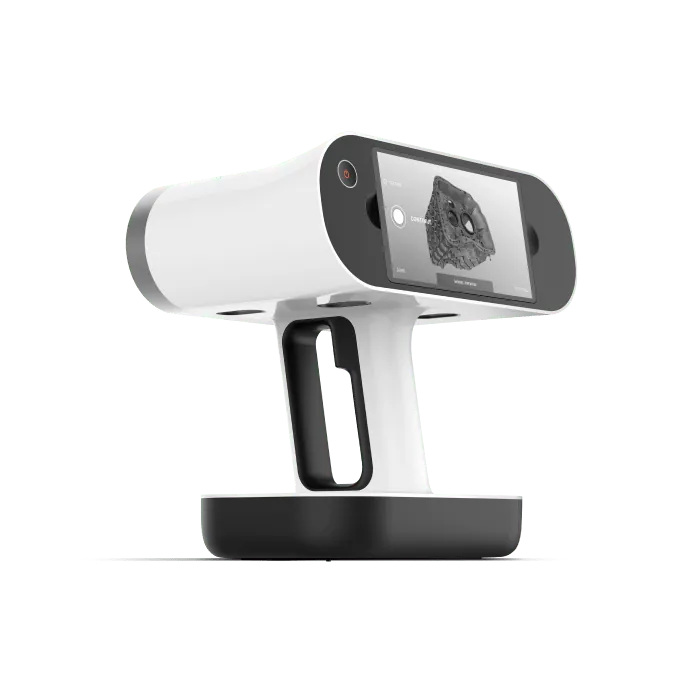
Artec Leo
- Best for
- Origin area and contents
- 3D point accuracy
- Up to 0.1 mm
- 3D resolution
- Up to 0.2 mm
- Capture
- Wireless, screen and processing onboard
- Capture speed
- Up to 35 million points/s (HD Mode)
Up to 0.1 mm, wireless, no external power; HD Mode helps on the dark surfaces a fire leaves.
See a fire scene documented from a safe distance, before overhaul — book a demo for your investigators.
Book a demoQuestions practitioners ask
Can we record before the fire service overhauls?
From the perimeter, yes — Ray II works from a tripod at up to 130 m and measures geometry without ambient light, so the exterior and the interior in view through openings are captured while the structure is still off-limits. Colour, which burn-pattern work relies on, needs light on the scene.
Does the record meet origin-and-cause methodology expectations?
It gives the systematic documentation the methodology asks for: the scene as found, measurable, with alternative hypotheses testable on the same data. The determination remains the investigator's.
How does this work on a joint police and fire scene?
One capture serves both. The file is shared in open formats, so the police reconstruction and the fire investigation start from the same measured scene.
What about insurers' engineers?
They receive the same model and measure it independently — which is a stronger position than exchanging photograph sets.
Tell us about the work you do
A forensic application specialist will come back with the device that fits it, the accuracy to expect at that scale, and how the data reaches your existing workflow.