
Fire & Arson Investigation
A fire scene is unsafe, dark, and changing — overhaul and weather work on it from the moment the fire is out. It may not be safe to enter twice.
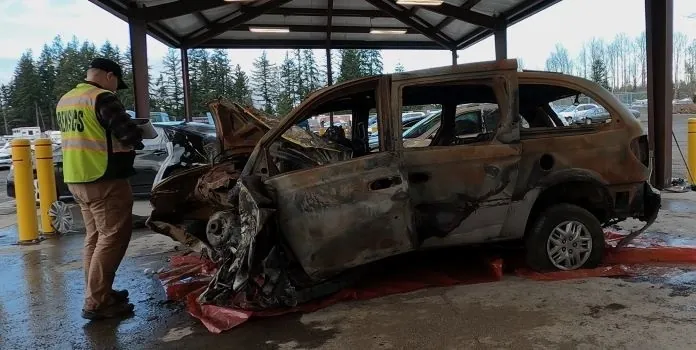
3D scanning records burn patterns, structural damage and the position of everything in one visit, from a tripod where the floor is uncertain and handheld where it is not.
 No sensitive case details required.
How does 3D scanning help fire investigation?
The structure and its contents are recorded as geometry in one visit — from a safe distance where needed — so burn patterns, damage and positions are measured afterwards, on a scene that no longer exists in that state.
 From a safe distanceLong-range capture where the floor or the roof is not trusted.
 Before overhaulThe scene as found, before debris is moved.
 Measures in darknessLaser and structured light need no daylight to measure; Ray II's colour imagery does.
 Measure afterwardsPositions and dimensions taken once the building is demolished.
Why fire scenes are documented once and argued about for years
Everything about a fire scene works against documentation: it is dark, wet, structurally uncertain and covered in soot that absorbs light. Investigators have a narrow window before overhaul, weather and demolition remove what is there. Photographs, sketches and the measurements taken in that window are the record — and nothing more can be measured later.
Artec Ray II is a laser scanner: it records the geometry of a burnt structure from a tripod at a safe distance — up to 130 metres on good surfaces, less on soot — even in complete darkness (its colour imagery needs light), without anyone walking on a suspect floor. Artec Leo records the detail within reach — an appliance, a doorway, a point of origin — and HD Mode helps with the dark, low-reflectance surfaces a fire leaves behind.
The model preserves the scene as it was found. Burn pattern, the position of every item, the state of every door is measurable afterwards, and an alternative origin hypothesis is tested on the same data.
The workflow, end to end
Capture the structure before overhaul, from wherever is safe.
 1. Capture from the perimeterTripod scans from safe positions; exterior and any accessible interior.
- 2. Capture interior detailHandheld scans of origin area, appliances and openings where entry is safe.
 3. MergeOne model of the structure and its contents, as found.
 4. AnalyseBurn pattern geometry, positions, distances and heights from the model.
 5. ArchiveThe structure will be demolished; the model will not.
Which scanner for this work
Range and darkness are the constraints. That points to a laser scanner first.
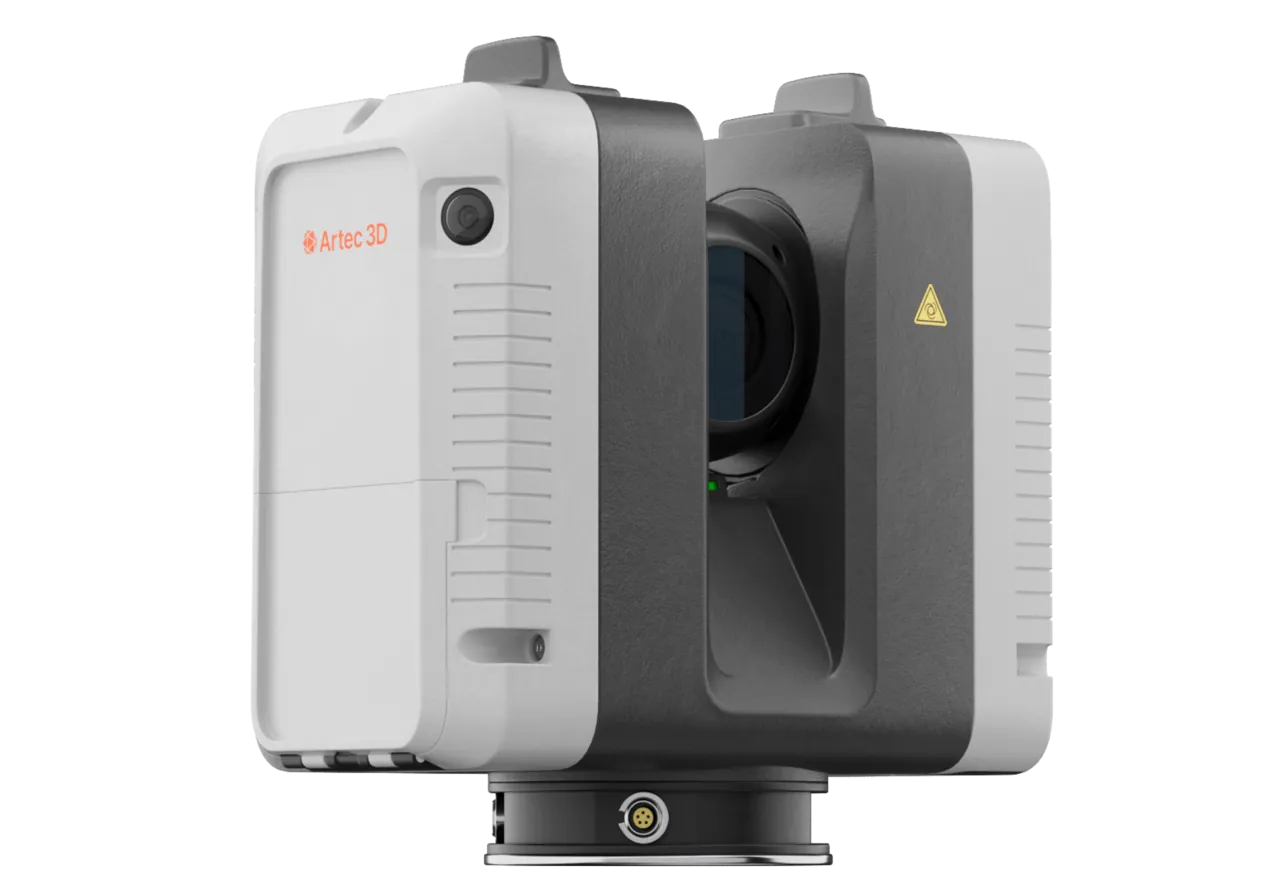
Artec Ray II
- Best for
- The structure — from wherever it is safe to stand
- Accuracy
- 1.9 mm at 10 m
- Range
- 0.5–130 m
- Scan time
- About 1.7 minutes per position (2.7 with colour)
- Portability
- Wireless, tripod-mounted
Ray II records a burnt building's geometry from a tripod — up to 130 metres on good surfaces, less on soot — even in complete darkness, in about 1.7 minutes per dome. The floor you do not trust is captured from the doorway; the roof you cannot reach is captured from the ground.
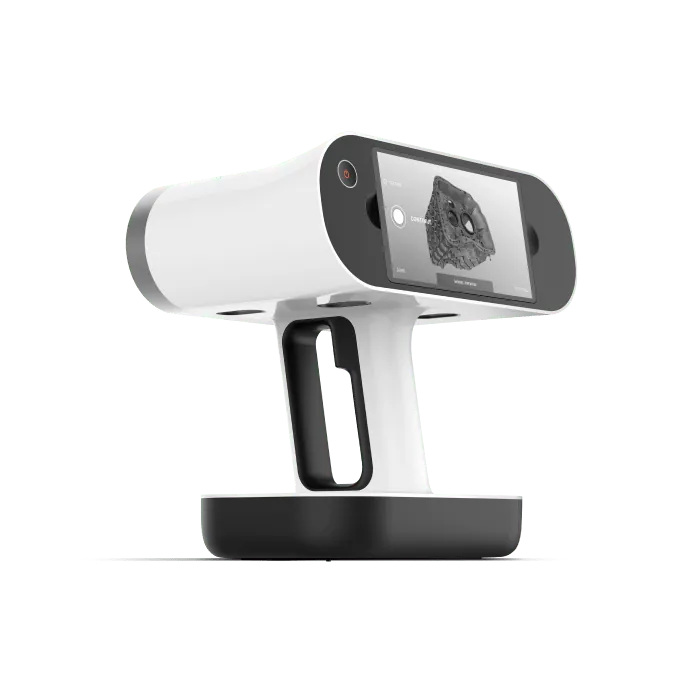
Artec Leo
- Best for
- Origin area and contents
- 3D point accuracy
- Up to 0.1 mm
- 3D resolution
- Up to 0.2 mm
- Capture
- Wireless, screen and processing onboard
- Capture speed
- Up to 35 million points/s (HD Mode)
Leo records appliances, openings and the point of origin at up to 0.1 mm without cables or external power — and HD Mode helps on the black, sooted surfaces a fire leaves.
See how a fire scene is measured from a safe distance, even in the dark — book a demo for your investigators.
Book a demoQuestions practitioners ask
Does it work in a completely dark, sooted interior?
Yes, for geometry. Ray II is laser-based and measures without ambient light, though its colour imagery needs light and soot shortens its range; Leo's HD Mode helps on black, low-reflectance surfaces.
Can we scan without entering the structure?
Ray II works from a tripod at a distance — up to 130 metres, less on soot — so an unsafe interior is captured from the doorway or from outside through openings.
How does this hold up in an arson prosecution?
As a measured record of the scene as found, with capture parameters recorded and the operator logged by the unit. Admissibility rests with the court; what the model contributes is a record that is measurable and repeatable with a documented, validated method.
What about water and debris?
Standing water is difficult for any optical method; wet surfaces usually scan, with more gaps and noise. Debris is recorded where it lies — which is exactly what you want before overhaul.
Tell us about the work you do
A forensic application specialist will come back with the device that fits it, the accuracy to expect at that scale, and how the data reaches your existing workflow.