
Accidents and incidents, captured before the site is cleared
An incident scene is under pressure from the first minute: a road to reopen, a structure that is not safe, a plant that has to restart. Whatever is not recorded before it is cleared is gone.
Six kinds of incident below, from a two-car collision to a structural failure.
 No sensitive case details required.
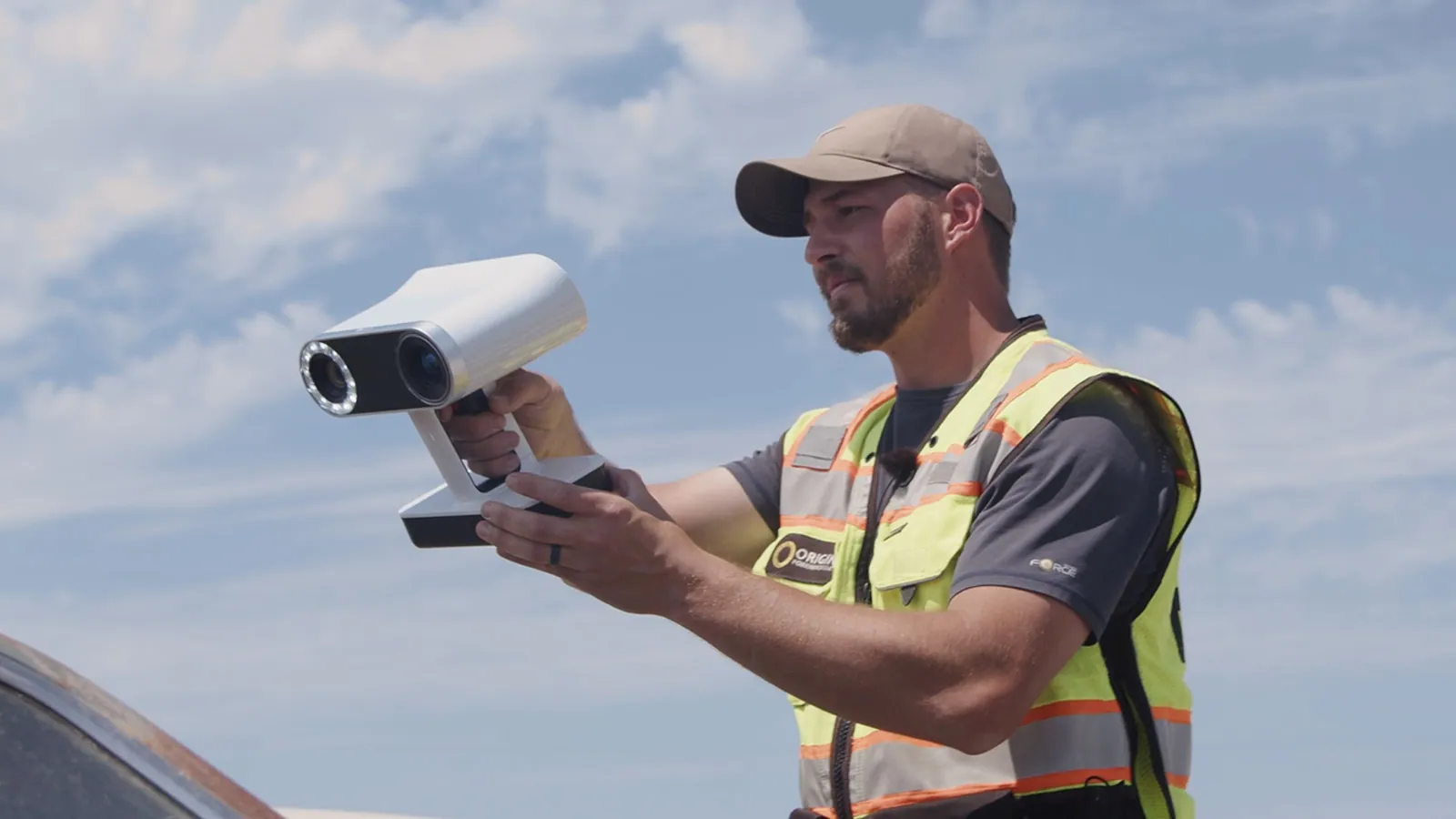
 Under an hour per vehicleIn a documented case, vehicle scans that took three to four hours with a tripod laser scanner took under one with Leo.
 The whole siteRoad, vehicles, debris field and marks in one coordinate system.
 Nothing disturbedNo markers on the roadway, no contact with deformed metal.
 Measure after reopeningCrush depth, sightlines and distances, taken once the site is gone.
What kind of incident are you documenting?
Scale and safety decide the method: a vehicle is reachable by hand, a collapsed structure is not.
Why the clock is the problem, not the measuring
Traditional scene work is a queue: photograph, sketch, measure, then work through the backlog at the office. A highway sits closed while it happens, a fire scene degrades, and a plant loses a shift. The measurements that get taken are the ones there was time for — and the reconstruction is later built on exactly those and no others.
At vehicle inspections after a crash, Origin Forensics cut scans from three to four hours to under one using Artec Leo, and left knowing the capture was complete. A scanned scene supports crush analysis, sightline work and simulation input from the same file, so a question raised months later is answered from the archive rather than from a site that has been repaired.
Measured, not asserted
One capture, every downstream analysis
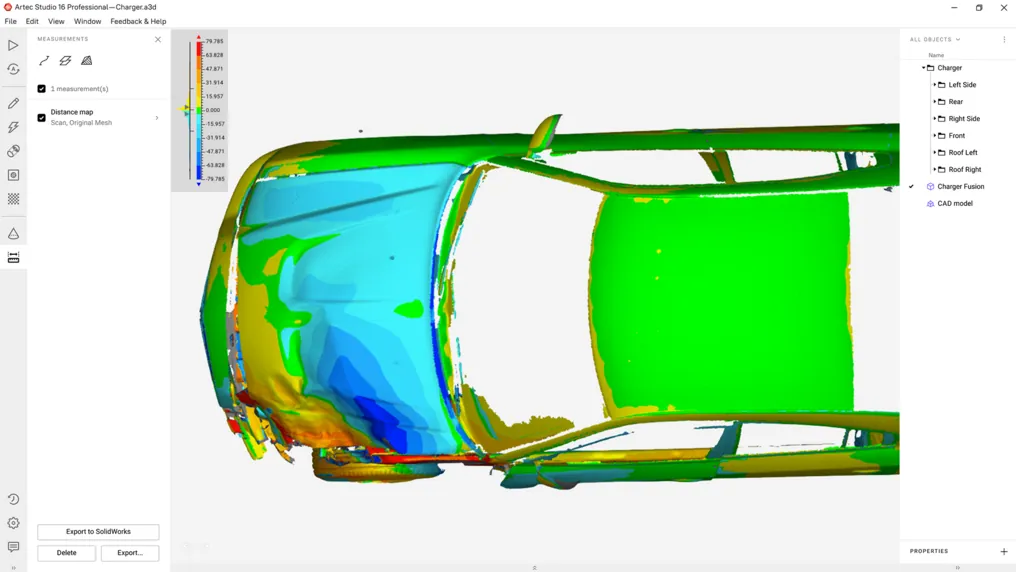

Crush and deformation: Profiles measured against undamaged geometry for crush and energy work.

Sightlines that hold up: What a driver could see, from the measured site rather than from a photograph.

Simulation input: Site geometry exported into the reconstruction package already in use.

An exhibit the court can follow: A model that can be walked through, built from the record.
See how collision, fire and incident scenes are captured before they change — book a demo for your investigators.
Book a demo“With Leo, we get highly accurate scans that provide more than enough geometry data for any analysis we need to conduct. And then you add in the photo texture to make it real.”
Questions that come up first
How much time does it add at the scene?
It replaces time rather than adding it. At vehicle inspections, Origin Forensics reported scans dropping from three to four hours to under one, and the team leaves knowing the capture is complete instead of finding gaps back at the office.
Does it work on a scene that is unsafe to enter?
Long-range capture is the answer where access is the constraint: Artec Ray II works from a tripod out to 130 m, so a damaged structure or an active hazard is documented from ground you trust.
Can it be used at night or in a burnt interior?
Yes. The scanners bring their own laser or structured light, so geometry does not depend on daylight. Ray II captures large indoor and outdoor scenes day or night (its colour imagery needs light, and soot shortens its range), and Leo carries its own light for colour.
Will the data go into our reconstruction software?
Artec Studio exports OBJ, PLY, STL, E57 and other standard formats, so site geometry lands in the analysis and simulation packages your team already uses.
Other areas of forensic 3D work
Tell us about the work you do
A forensic application specialist will come back with the device that fits it, the accuracy to expect, and how the data reaches your existing case workflow.