
Traffic Accident Reconstruction
A highway is closed while a collision is documented, and every minute is measured. What is not recorded before it reopens is reconstructed from photographs — or estimated.
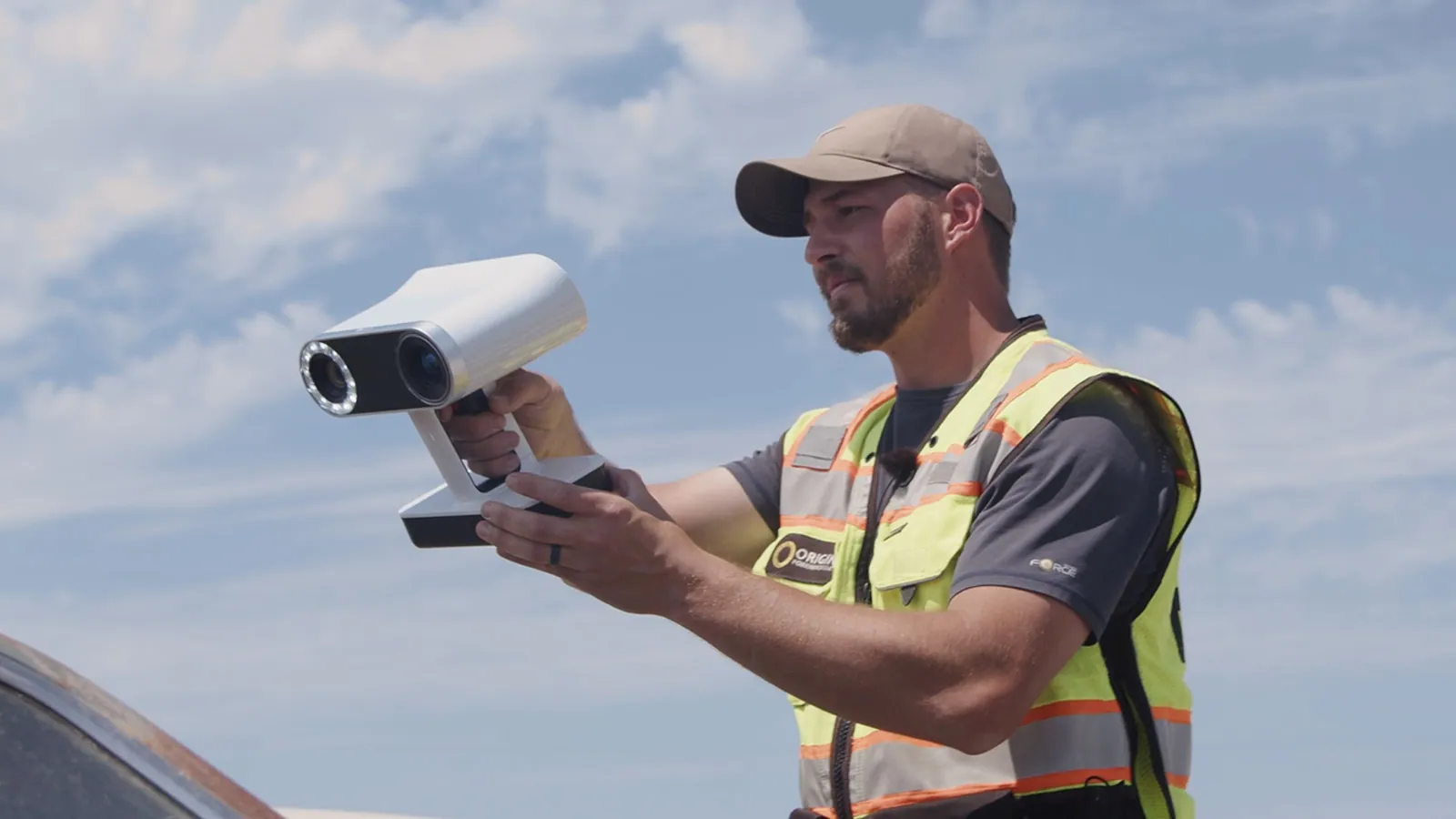
At vehicle inspections after a crash, Origin Forensics cut scans from three to four hours to under one with Artec Leo, and left knowing the capture was complete.
 No sensitive case details required.
How does 3D scanning change accident reconstruction?
The road, the vehicles, tire marks and debris are recorded as one measurable dataset — the roadway in a few minutes per tripod position, a vehicle in under an hour — so rest positions, crush and sightlines are derived from geometry.
 Under an hour per vehicleThree to four hours to under one, in a documented case.
 Road and vehicles togetherRest positions, marks and debris in one coordinate system.
 Crush measuredDeformation profiles against undamaged geometry.
 Simulation inputSite geometry exported into the reconstruction package.
Why the clock decides what the reconstruction is built on
Scene documentation at a collision is a queue worked under pressure to reopen the road: total station points, photographs, a sketch, then the backlog at the office. The measurements taken are the ones there was time for, and the reconstruction is built on exactly those.
At vehicle inspections, Origin Forensics reported scans dropping from three to four hours to under one with Artec Leo, and the team leaving knowing the capture was complete. Leo records a vehicle at up to 0.1 mm wirelessly, so an operator moves around it freely; Artec Ray II records the roadway, marks and debris field from a tripod in about 1.7 minutes per dome, out to 130 metres — geometry day or night, while its colour imagery needs light.
The dataset supports crush measurement, rest-position geometry, sightline work and simulation input from the same file — and a question raised months later is answered from the archive, not from a road that has since been resurfaced.
The workflow, end to end
The road first, the vehicles second, the analysis on the merged model.
- 1. Capture the roadwayTripod scans of the scene — marks, debris, rest positions, sightlines — a few minutes per position.
 2. Capture each vehicleHandheld, around and inside, with up to 0.1 mm accuracy. Coverage confirmed on screen.
 3. MergeVehicles registered into the roadway model in Artec Studio.
- 4. MeasureCrush profiles, rest positions, distances and gradients from the model.
 5. Export and presentInto the reconstruction package, and into the courtroom as an exhibit, where the court allows.
Which scanner for this work
Range for the road, detail for the vehicles. Many reconstruction teams use both.
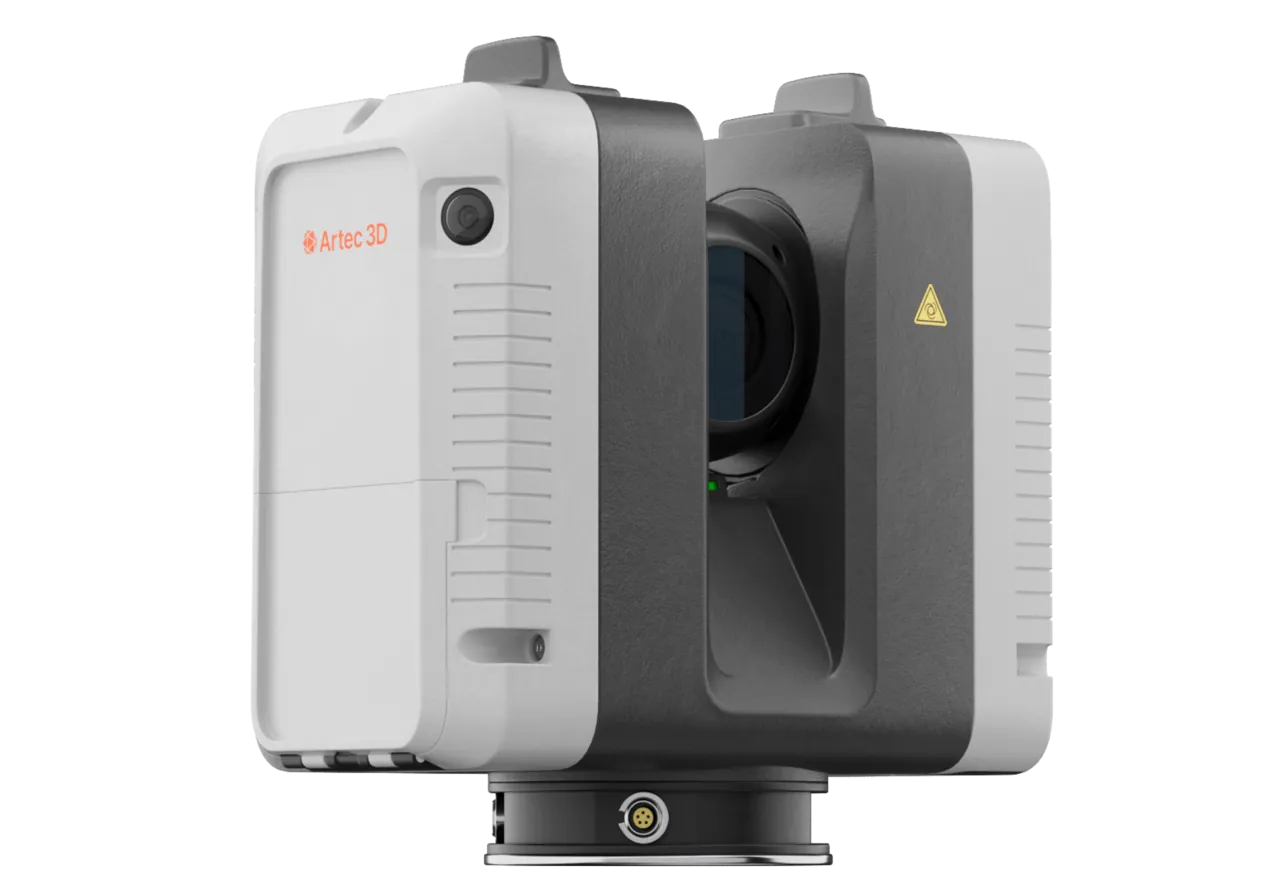
Artec Ray II
- Best for
- The roadway, marks and debris field
- Accuracy
- 1.9 mm at 10 m
- Range
- 0.5–130 m
- Scan time
- About 1.7 minutes per position (2.7 with colour)
- Portability
- Wireless, tripod-mounted
Ray II records the scene from a tripod out to 130 metres in about 1.7 minutes per dome, as a dense point cloud: gradients and rest positions as geometry, skid marks in its intensity and colour data. Geometry day or night; colour imagery needs light. No targets on the road.
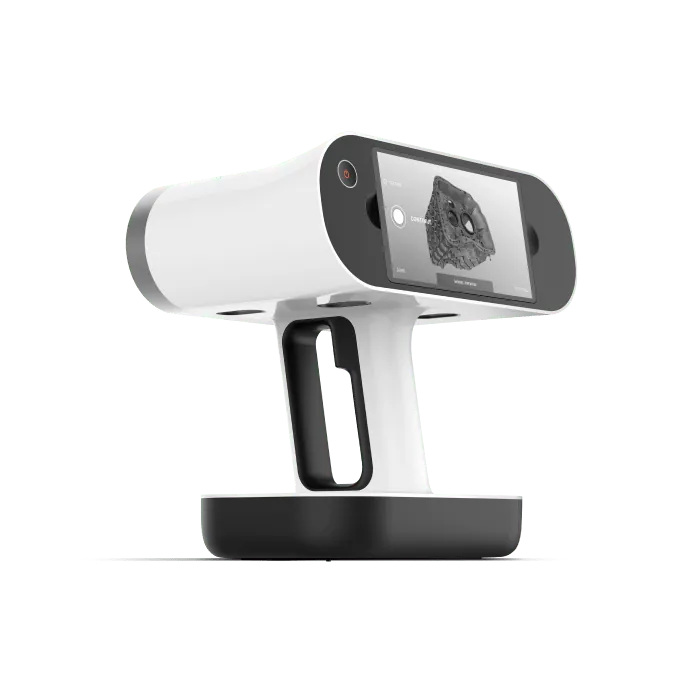
Artec Leo
- Best for
- The vehicles
- 3D point accuracy
- Up to 0.1 mm
- 3D resolution
- Up to 0.2 mm
- Capture
- Wireless, screen and processing onboard
- Capture speed
- Up to 35 million points/s (HD Mode)
- Typical time
- A vehicle's exterior or interior in under an hour
Leo records a vehicle at up to 0.1 mm without cables or a laptop, inside and out, and HD Mode handles dark and glossy paint; glass needs a scanning spray. Origin Forensics' figure — three to four hours per vehicle down to under one — comes from vehicle inspections of exactly this kind.
“With Leo, we get highly accurate scans that provide more than enough geometry data for any analysis we need to conduct. And then you add in the photo texture to make it real.”
See how a collision scene is captured and handed to the reconstruction — book a demo for your unit.
Book a demoQuestions practitioners ask
How much faster is it, really?
At vehicle inspections, Origin Forensics reported scans dropping from three to four hours with a tripod laser scanner to under one with Leo, and the team leaving knowing the capture was complete — processing still follows at the office.
Can it capture at night on an unlit road?
Yes. Both capture geometry in darkness; Leo carries its own light for colour, while Ray II's colour imagery needs light.
Does the data go into our reconstruction software?
Artec Studio exports OBJ, PLY, STL, E57 and other standard formats, so site and vehicle geometry lands in the analysis and simulation package you already use.
What about crush measurement?
The vehicle scan is compared against undamaged geometry to give crush profiles at any station, measured rather than estimated from a tape.
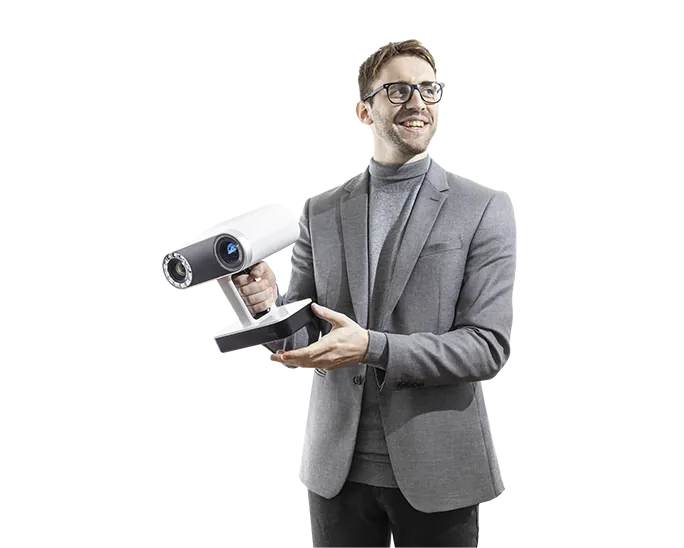
Tell us about the work you do
A forensic application specialist will come back with the device that fits it, the accuracy to expect at that scale, and how the data reaches your existing workflow.