
Explosion Investigation
A blast scene is a large, unstable area with evidence spread across it, and the analysis depends on where everything ended up. Recording that by hand takes days the scene does not have.
3D scanning captures the whole area from a safe distance — structural damage, debris field, seat of the blast — as geometry that supports the analysis afterwards.
 No sensitive case details required.
How is a blast scene documented in 3D?
Long-range scans from the perimeter record structural effect and the debris field in one coordinate system; handheld scans record the seat and key fragments — all before the scene is cleared.
 The whole areaDebris field, structure and surroundings in one coordinate system.
 From the perimeterCaptured where it is safe to stand.
 Distances that matterFragment positions and throw distances measured from the model.
 Before clearanceThe scene as found, kept.
Why blast scenes are recorded incompletely
The evidence at a blast scene is its distribution: how far fragments travelled, in what directions, what the structure did. That is a large area to measure, it is unsafe, and there is pressure to clear it. Traditional documentation is a compromise between coverage and time, and the analysis is built on whatever coverage was achieved.
Artec Ray II records the area from a tripod out to 130 metres, in about 1.7 minutes per dome, from positions on the perimeter — geometry day or night, while its colour imagery needs light. Structural damage, the debris field and the surroundings are one dataset. Artec Leo records the seat of the blast and key fragments at close range where entry is permitted.
Fragment positions, throw distances and structural deflection are then measured from the model — repeatably, and after the scene has been cleared.
The workflow, end to end
Perimeter first. Nothing inside the cordon until it is safe.
- 1. Capture the areaTripod scans from perimeter positions; overlapping domes cover the field.
- 2. Capture the seatHandheld detail of the seat and key items, once entry is authorised.
 3. MergeEverything in one coordinate system in Artec Studio.
- 4. MeasureFragment positions, throw distances, structural deflection.
- 5. ArchiveThe record that survives clearance.
Which scanner for this work
Range is the first requirement. Detail is the second.
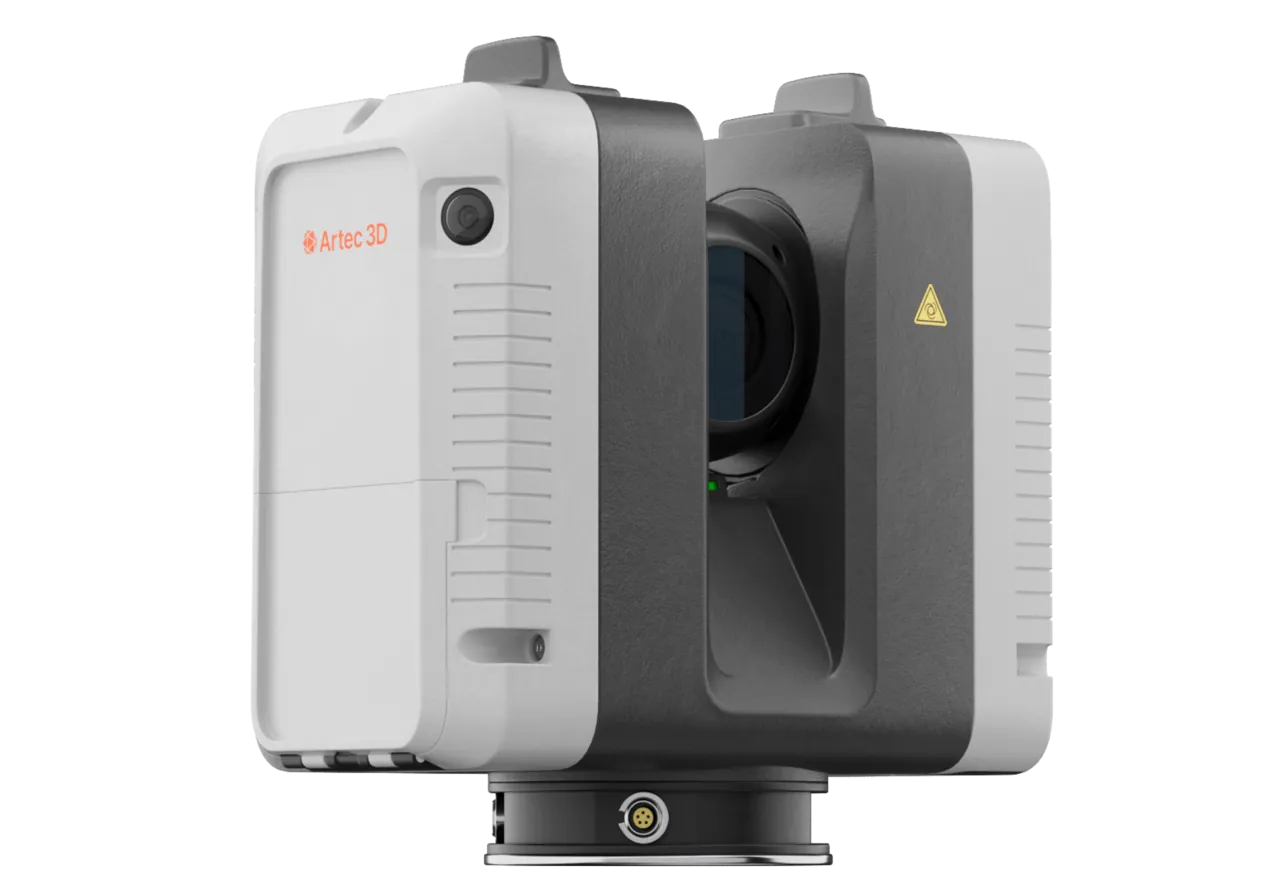
Artec Ray II
- Best for
- The debris field and the structure
- Accuracy
- 1.9 mm at 10 m
- Range
- 0.5–130 m
- Scan time
- About 1.7 minutes per position (2.7 with colour)
- Portability
- Wireless, tripod-mounted
Ray II captures large areas from a tripod out to 130 metres, in about 1.7 minutes per dome — geometry day or night; colour imagery needs light. 360° × 300° scans from several perimeter positions give one model of the whole field.
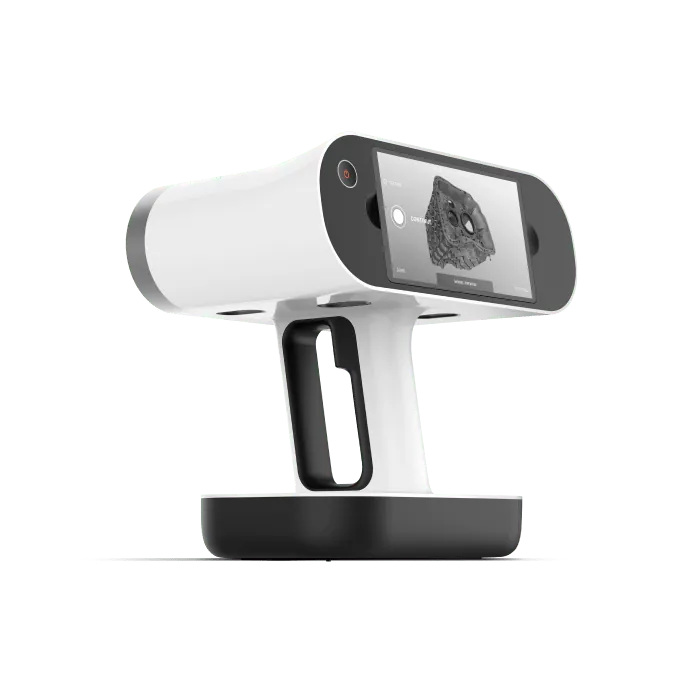
Artec Leo
- Best for
- The seat and key fragments
- 3D point accuracy
- Up to 0.1 mm
- 3D resolution
- Up to 0.2 mm
- Capture
- Wireless, screen and processing onboard
- Capture speed
- Up to 35 million points/s (HD Mode)
Where entry is permitted, Leo records the seat of the blast and significant fragments at up to 0.1 mm, wirelessly, without external power.
See how a blast scene is recorded from the perimeter as one measurable dataset — book a demo.
Book a demoQuestions practitioners ask
How large an area can be covered?
Ray II reaches up to 130 metres from each tripod position and covers 360° × 300°; several positions are registered into one model, so the practical limit is the perimeter you can safely work from.
Can we measure throw distances afterwards?
Yes. Every fragment recorded in the scan has a position in the model, and distances to the seat are measured from it.
Does it need daylight?
Not for geometry. Ray II is a laser scanner and measures in darkness; its colour imagery needs light.
How is this presented later?
As a measured model with the debris field and structure in one coordinate system — exported in standard formats to the analysis and presentation software you use.
Tell us about the work you do
A forensic application specialist will come back with the device that fits it, the accuracy to expect at that scale, and how the data reaches your existing workflow.