
Structural Collapse & Forensic Engineering
A failed structure is evidence that is also a hazard, and it will be demolished. The engineer needs its as-found geometry — deflections, displacements, the state of every connection — before that happens.
3D scanning records the structure from a safe distance in one visit, as a dataset the failure analysis can measure for as long as the case runs.
 No sensitive case details required.
How is a collapsed structure documented for forensic engineering?
Long-range laser scans from safe positions record the as-found geometry — displacements, deflections and member positions — as one model, measured against design drawings afterwards.
 From a safe distanceUp to 130 metres from a tripod; nobody under the structure.
 Deflection and displacementMeasured against design geometry, at any point.
 Before demolitionThe as-found state kept as a permanent record.
 For testimonyA model any expert can measure independently.
Why the as-found state is the evidence, and why it is lost fastest
In a structural failure, the geometry of the failed state is the evidence: how far a member deflected, where a connection separated, how the load path ran at the moment it stopped working. That state is dangerous to approach and is removed by demolition — often quickly, for safety. Photographs record appearance; the analysis needs dimensions.
Artec Ray II records the structure from a tripod out to 130 metres, in about 1.7 minutes per dome, with 0.4 mm range noise at 10 metres — read alongside the 1.9 mm accuracy figure at the same distance. Several perimeter positions give one model of the whole structure. Where a component can be reached safely, Artec Leo records it at up to 0.1 mm.
The model is compared against design drawings to give deflections and displacements at any point, and the comparison can be repeated by the opposing expert on the same file.
The workflow, end to end
Record from the perimeter first; approach only what is safe.
 1. Capture the structureTripod scans from several safe positions; overlapping domes cover the whole.
 2. Capture componentsHandheld detail of connections and failure surfaces where access is safe.
 3. MergeOne as-found model in Artec Studio.
- 4. Compare to designDeflections and displacements against drawings; failure surface geometry.
 5. Report and testifyMeasurements traceable to the model; the model as an exhibit, where the court allows.
Which scanner for this work
The structure is a long-range job. Components are a handheld one.
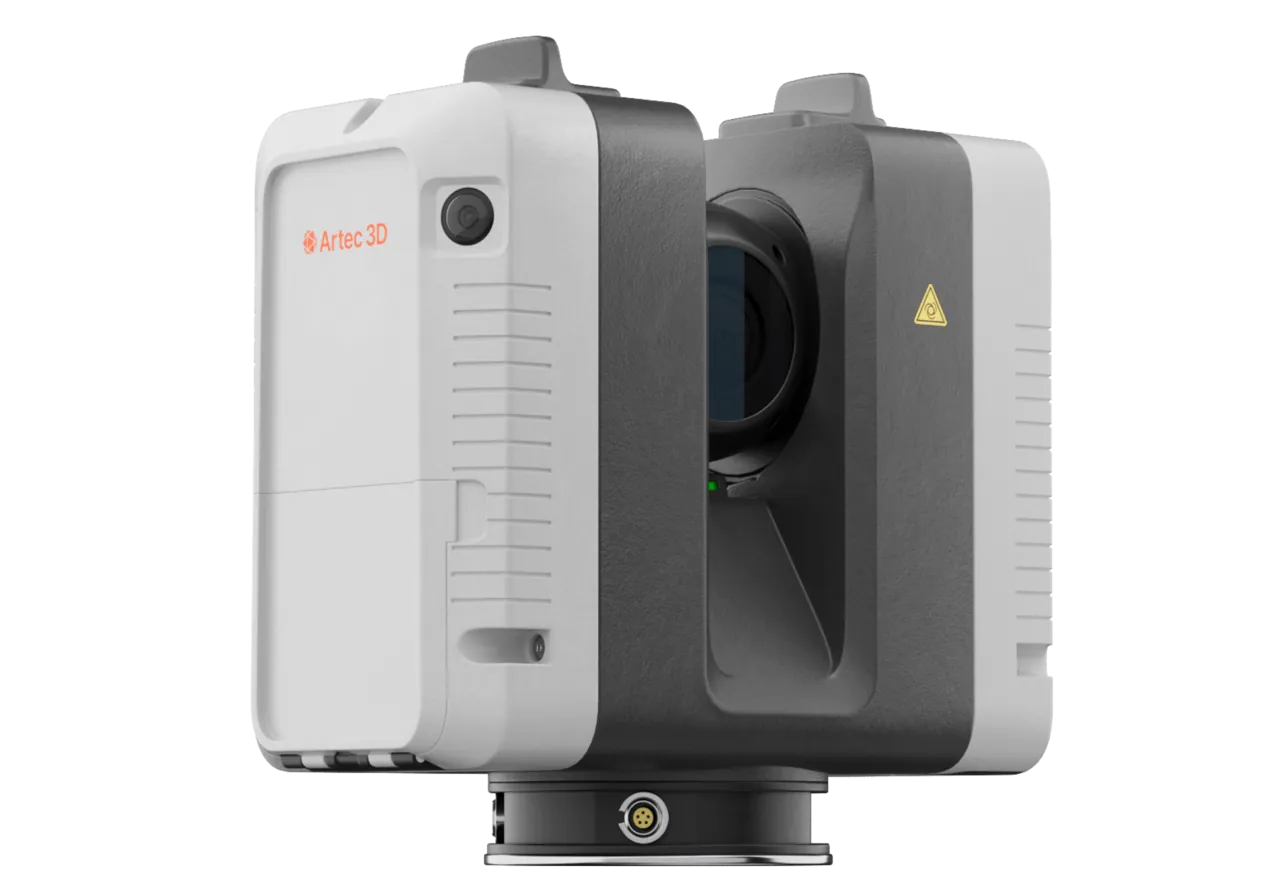
Artec Ray II
- Best for
- The structure, from a safe distance
- Accuracy
- 1.9 mm at 10 m
- Range
- 0.5–130 m
- Scan time
- About 1.7 minutes per position (2.7 with colour)
- Portability
- Wireless, tripod-mounted
Ray II records out to 130 metres from a tripod, in about 1.7 minutes per dome, with 0.4 mm range noise at 10 metres. Nobody stands under a compromised roof to get the measurement.
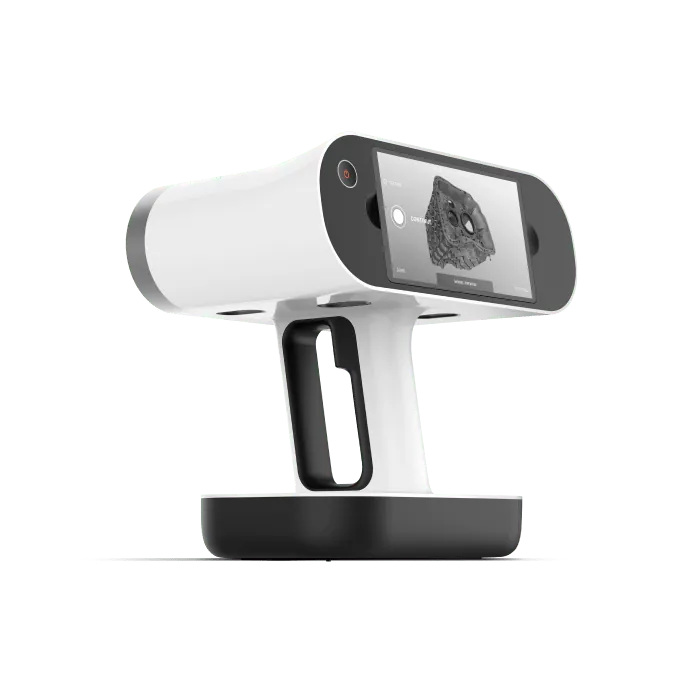
Artec Leo
- Best for
- Connections and failure surfaces
- 3D point accuracy
- Up to 0.1 mm
- 3D resolution
- Up to 0.2 mm
- Capture
- Wireless, screen and processing onboard
- Capture speed
- Up to 35 million points/s (HD Mode)
Where a component is safely reachable, Leo records it at up to 0.1 mm without cables or external power — a fracture surface, a bolt group, a bearing.
See a failed structure captured as as-found geometry from a safe distance — book a demo for your engineers.
Book a demoQuestions practitioners ask
Can the structure be recorded without anyone entering?
Yes. Ray II works from a tripod out to 130 metres; the interior is captured through openings from outside where entry is unsafe.
How accurate is deflection measurement at range?
Ray II states 1.9 mm accuracy at 10 metres and 5.3 mm at 40 metres, with 0.4 mm range noise at 10 metres. Read the figure at the distance you are working at.
Does the data go into structural analysis software?
Artec Studio exports E57, OBJ, PLY and STL, so the as-found geometry goes into the analysis and CAD tools the engineer already uses.
Is the model acceptable as an exhibit?
It is a measured record that another expert can examine independently. Admissibility rests with the court and on method and qualification, as with any expert evidence.
Tell us about the work you do
A forensic application specialist will come back with the device that fits it, the accuracy to expect at that scale, and how the data reaches your existing workflow.