Universities / Education
A department is accountable for teaching collections that wear out, cohorts that grow, and research that has to be reproducible by another group.
3D scanning answers all three at once — a digital collection every student can measure, a mock scene recorded once for every cohort, and capture at a stated accuracy that goes into a methods section.
No sensitive case details required.
Research resolutionUp to 0.05 mm handheld, 0.005 mm on the bench — with a specification to cite.
A collection that scalesOne specimen, every student, any campus; replicas printed from the file.
Specimens preservedHandled for scanning, then rarely again.
Mock scenes as datasetsEvery cohort works on the same measured scene and results are compared.
What changes for a department

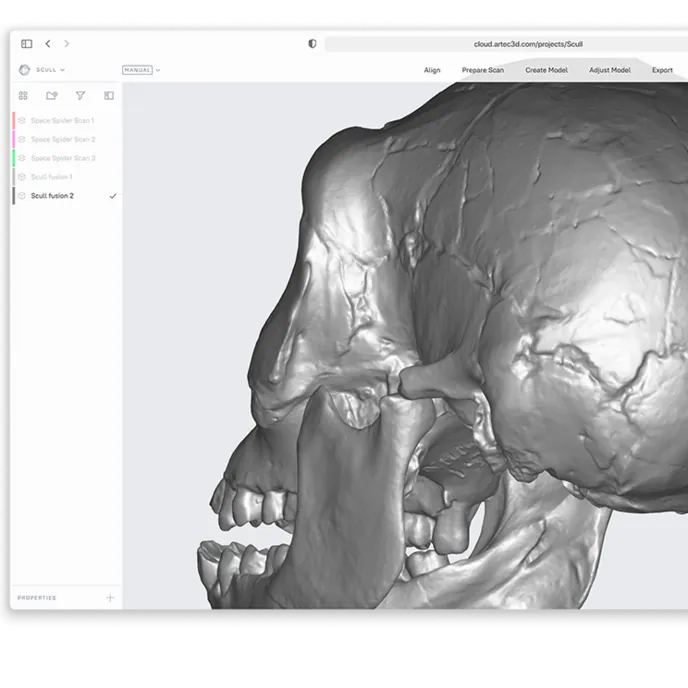
Osteology and trauma teaching: Skeletal material at 0.05 mm in colour; teeth and fragments at 0.005 mm; replicas printed for handling.
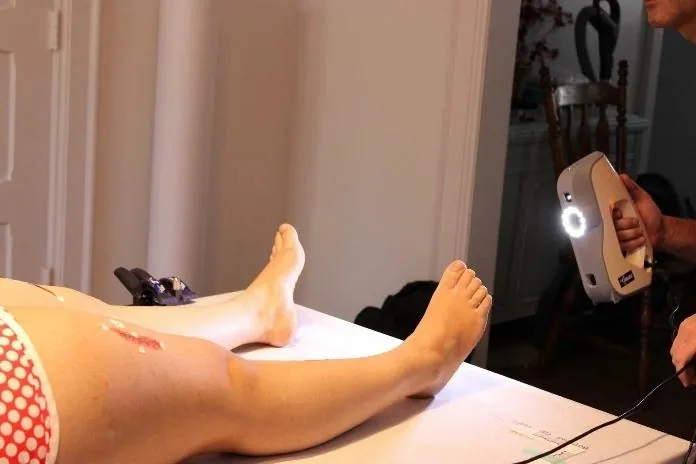
Scene work taught on real data: A staged scene captured once with tripod and handheld; students measure, reconstruct and present from it.
Measurement in the software: Students measure, section and compare in Artec Studio; exports go to any analysis or printing pipeline.
Publishable data: Stated accuracy and documented processing give reviewers the reproducibility they ask for.
Teaching, research, procurement — what a department weighs
Teaching collections are finite. A cranium handled by every cohort is a cranium that wears, and a rare pathology specimen cannot be in two seminar rooms. A scanned collection puts the specimen in front of every student on screen and, from watertight STL, in their hands as a printed replica. Forensic anthropology and skull and bone trauma describe what the models carry; forensic odontology covers dentition.
Scene work is taught the same way. A mock scene captured once with a tripod scanner and a handheld becomes the dataset a whole cohort measures, reconstructs and presents — the workflow under crime scene 3D scanning and 3D crime scene reconstruction, on real data, with comparable results year on year.
For research, the argument is the methods section: a device with a stated accuracy, processing documented in the project, a dataset another group can download and re-measure. Departments typically start with a fine-detail handheld for collections and add a scene scanner for teaching; educational configurations are quoted per department, and training and deployment describes what the first term looks like.
Peers already doing this
The figures are the customers' own, from their published case studies.
Which scanner for this work
Departments typically start with a fine-detail handheld for collections and add a scene scanner for mock scenes.

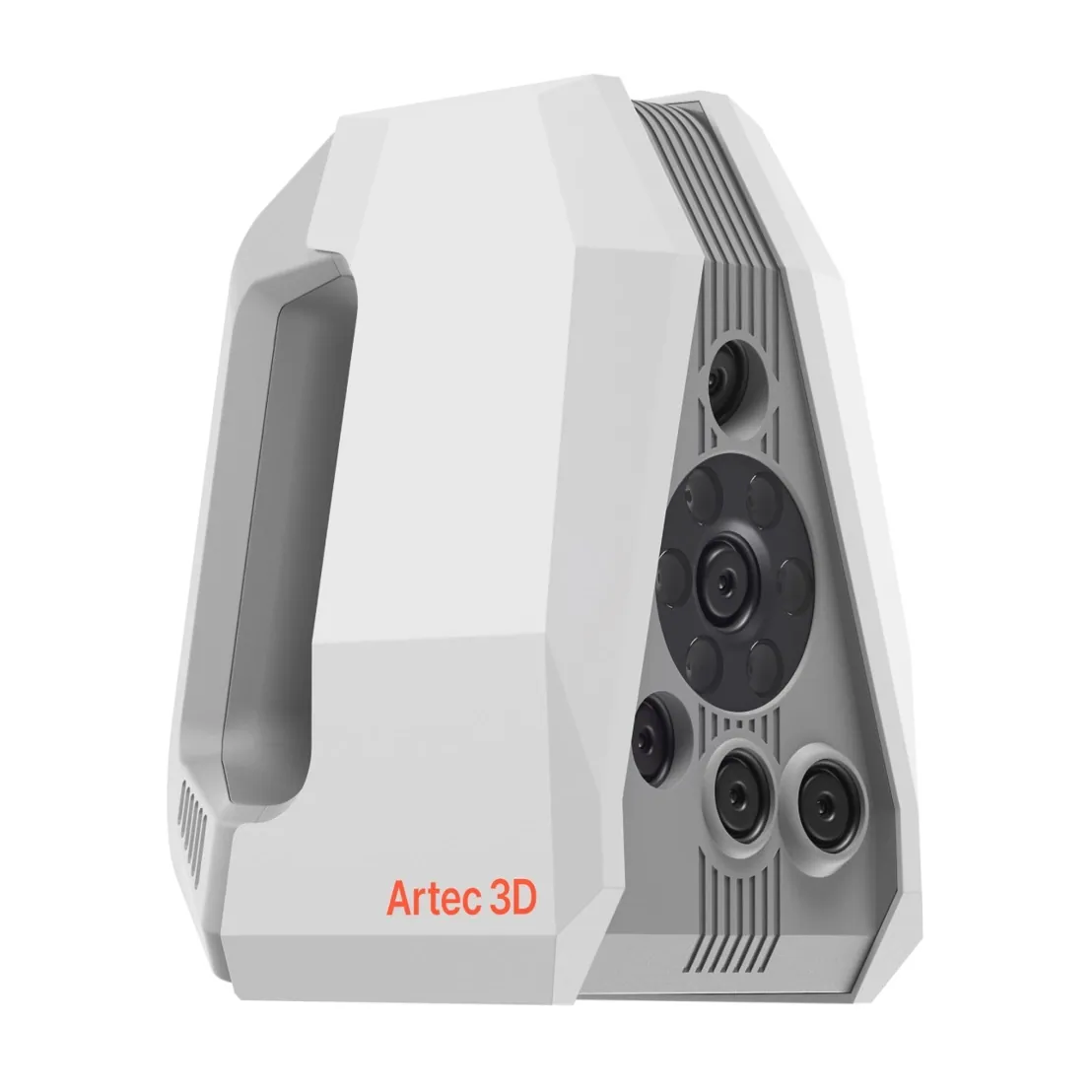
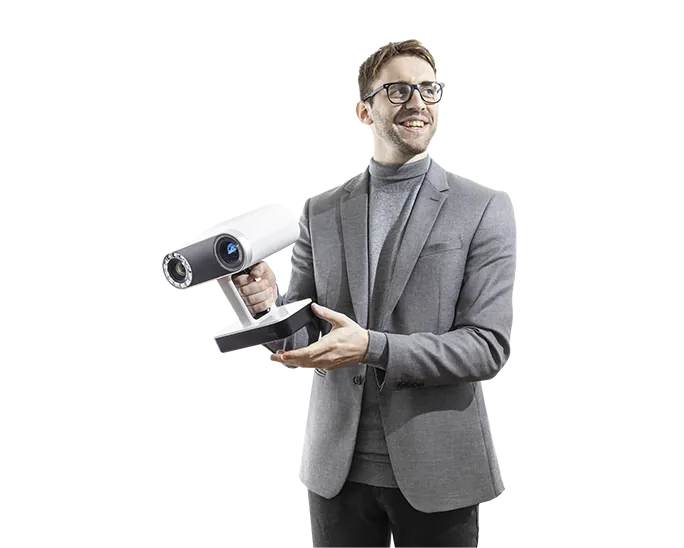
Artec Spider II
- Best for
- Teaching collections and research specimens
- 3D point accuracy
- Up to 0.05 mm
- 3D resolution
- Up to 0.1 mm
- Light source
- Blue structured light, no targets on the surface
- Portability
- Handheld, tethered to a laptop
Up to 0.05 mm accuracy and 0.1 mm resolution with colour — the standard for osteology and trauma work.

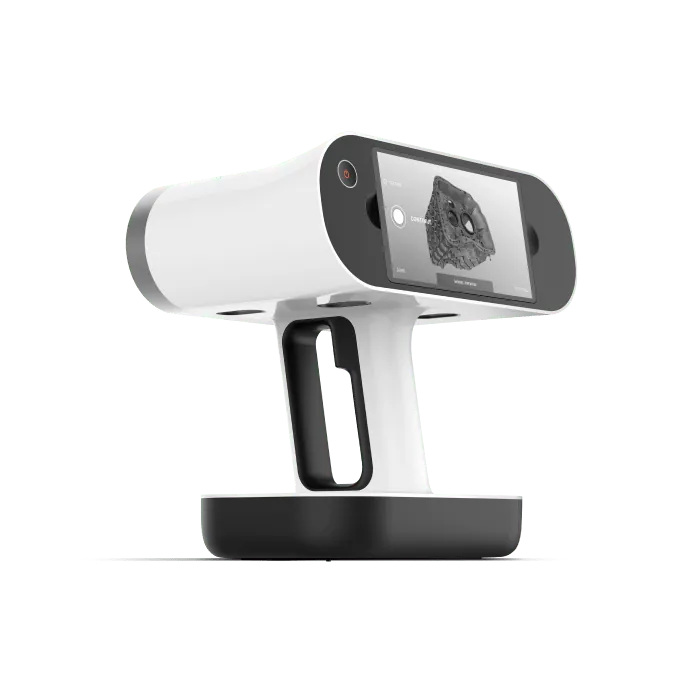
Artec Leo
- Best for
- Mock scenes and whole-body capture
- 3D point accuracy
- Up to 0.1 mm
- 3D resolution
- Up to 0.2 mm
- Capture
- Wireless, screen and processing onboard
- Capture speed
- 35 million points per second
Wireless, screen onboard, up to 0.1 mm; the device students learn scene capture on.

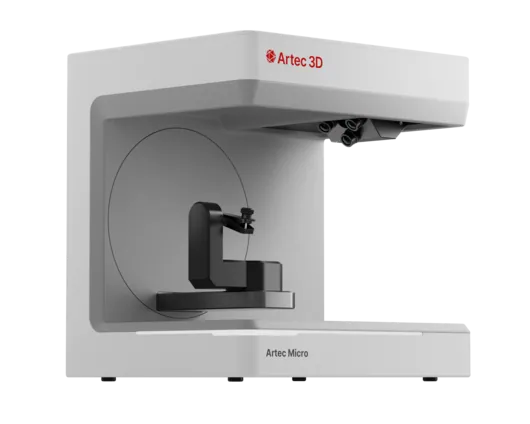
Artec Micro II
- Best for
- Teeth, fragments and small items
- 3D point accuracy
- Up to 0.005 mm
- 3D resolution
- Up to 0.04 mm
- Capture
- Desktop, fully automated turntable
- Object size
- Up to 200 × 200 × 150 mm
0.005 mm on an automated turntable for the finest research data.
See a digital teaching collection and a mock scene dataset in action — book a demo for your department.
Book a demoQuestions practitioners ask
Is there educational pricing?
Educational configurations are quoted per department; ask a specialist.
Can students operate the scanners?
Yes. Leo in particular is learned in a day and shows coverage on its screen; supervised use is normal in teaching settings.
Can we 3D print from the scans?
Yes. Watertight STL from Artec Studio prints as teaching replicas of fragile specimens.
Is the data suitable for publication?
Stated device accuracy and documented processing in the project give the reproducibility reviewers look for; the University of Toronto comparison of scanning against photography is one published example.

Tell us about the work you do
A forensic application specialist will come back with the device that fits it, the accuracy to expect at that scale, and how the data reaches your existing workflow.