
Skull & Bone Trauma
Trauma analysis reads mechanism from geometry: the shape of a fracture, the walls of a cut, the pattern of a blunt impact. Those features are millimetres deep and are lost to a photograph taken from the wrong angle.
3D scanning records the defect at 0.05 mm as measured form, compared directly against the implement suspected of causing it.
 No sensitive case details required.
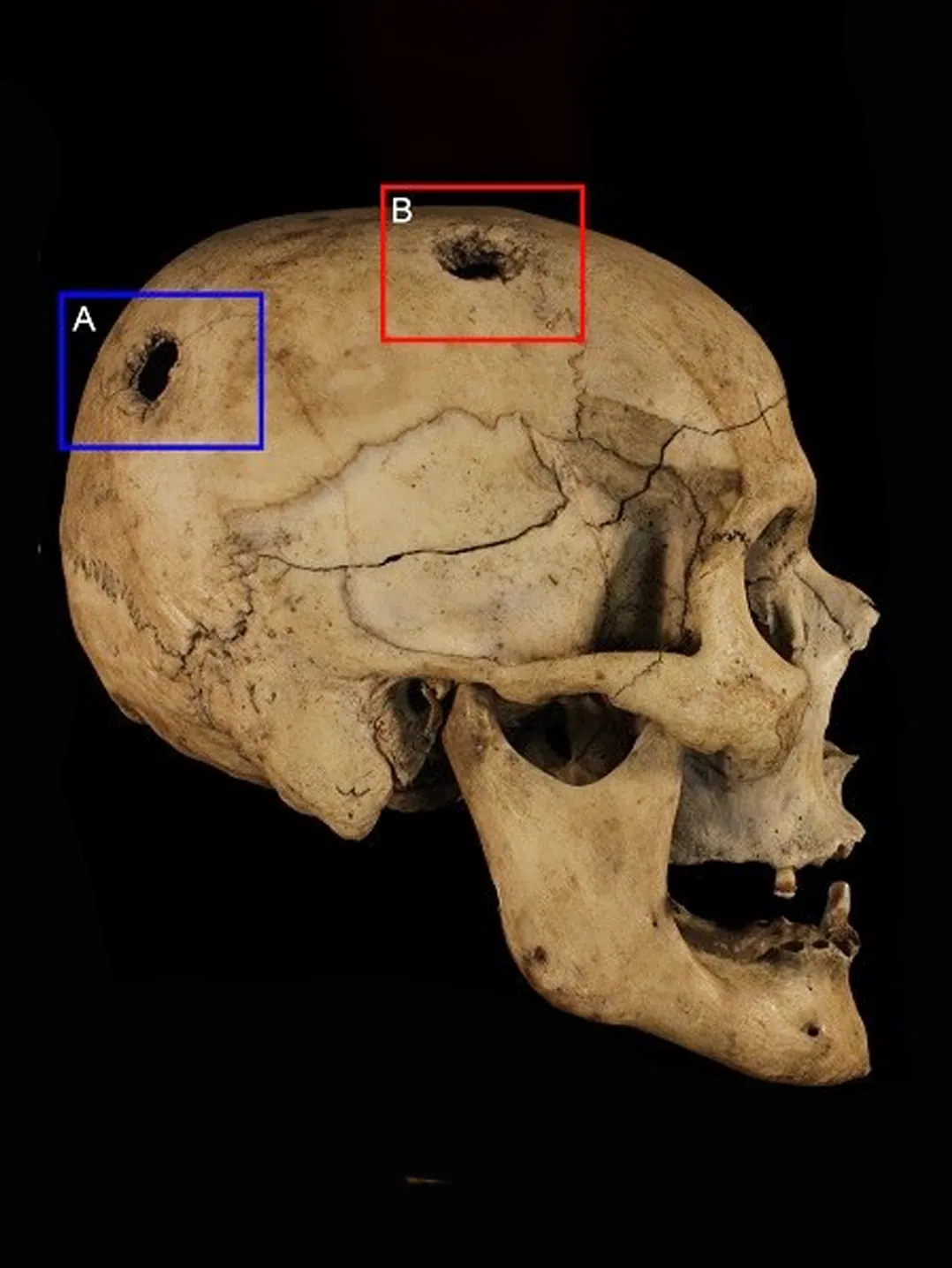
How is bone trauma documented in 3D?
The element is scanned at up to 0.05 mm without contact; fracture margins, kerf geometry and impact sites are measured on the model and compared against scans of suspected implements.
 Kerf and margin geometryWidth, angle and floor shape as measurements.
 Implement comparisonA scanned weapon fitted to the scanned defect.
 Handled lessMuch of the examination continues on the model.
 For courtShown in court where allowed, without the remains in the room.
Why trauma analysis wants a model, not a photograph
The features that distinguish sharp from blunt from ballistic trauma — kerf wall angle, floor shape, bevelling, radiating fracture pattern — are three-dimensional. A photograph shows them under one lighting angle; a second expert cannot rotate it. And the comparison that matters, defect against implement, is a fit of two shapes.
Artec Spider II records a skull or a long bone at up to 0.05 mm accuracy and 0.05 mm resolution with colour, without contact. A suspected implement is scanned the same way, and the two models are compared directly in Artec Studio or in the analysis software of choice. Artec Micro II records small fragments at up to 0.005 mm accuracy where the defect is on something that fits the desktop platform.
The result is a measured record that another examiner can turn, section and remeasure — and that can be shown in court, where the court allows, without the remains being present.
The workflow, end to end
Record the element, record the implement, fit one to the other.
- 1. Capture the elementSkull or bone at 0.05 mm with colour, handheld, without contact.
 2. Capture the implementThe suspected weapon scanned at the same resolution.
 3. ProcessWatertight models of both in Artec Studio.
- 4. CompareMeasure the defect; fit the implement; section the fit.
- 5. PresentThe comparison as an exhibit — a model, a section, a print.
Which scanner for this work
A skull is a handheld job at fine resolution. Fragments go to the bench.
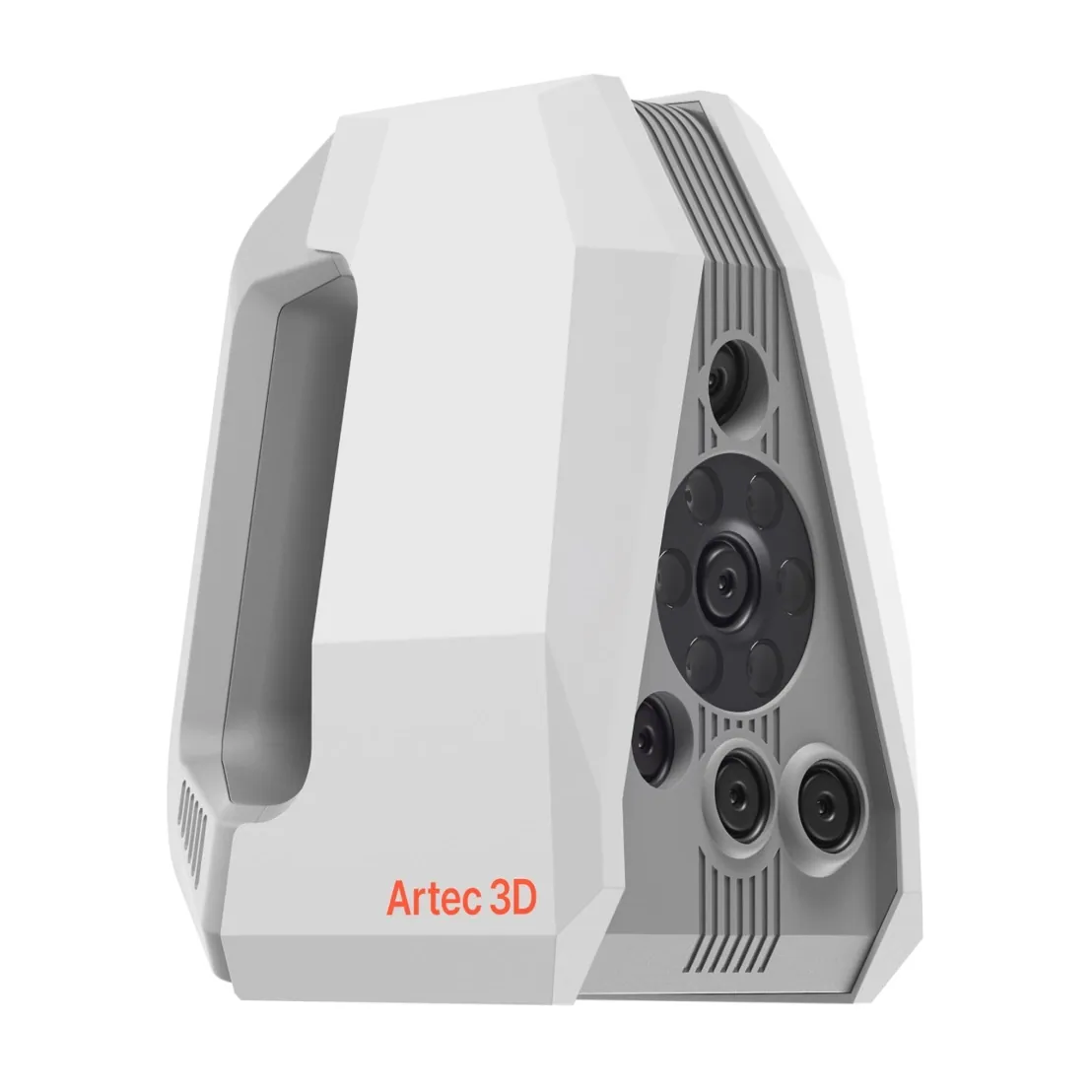
Artec Spider II
- Best for
- Skulls, long bones, implements
- 3D point accuracy
- Up to 0.05 mm
- 3D resolution
- Up to 0.05 mm
- Light source
- Blue structured light, no targets on the surface
- Portability
- Handheld, tethered to a laptop
Spider II records a defect and the implement suspected of causing it at up to 0.05 mm accuracy and 0.05 mm resolution, with colour — the level at which kerf walls and bevelling are measured rather than described.
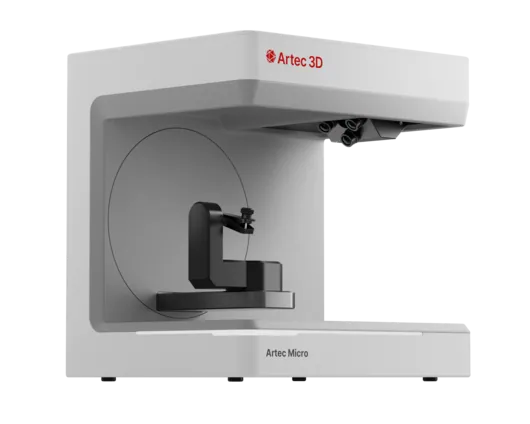
Artec Micro II
- Best for
- Fragments and small elements
- 3D point accuracy
- Up to 0.005 mm
- 3D resolution
- Up to 0.04 mm
- Capture
- Desktop, fully automated turntable
- Object size
- Up to 200 × 200 × 150 mm
Micro II records fragments at up to 0.005 mm on an automated turntable: a metrology-grade record of a small defect, with the fragment handled once.
See fracture margins and kerf geometry at 0.05 mm, compared against an implement — book a demo.
Book a demoQuestions practitioners ask
Can a weapon be matched to a defect?
The two scans are compared as shapes: the implement is fitted to the defect and the fit is measured and sectioned. The interpretation remains the examiner's; the geometry is what the scan supplies.
How fine a mark is resolved?
Spider II resolves 0.05 mm detail in place. Micro II reaches 0.005 mm accuracy for fragments that fit the desktop platform.
Is colour useful for trauma?
Yes — staining, haemorrhage traces and the difference between fresh and old fracture surfaces are colour information, captured with the geometry.
Can the model be 3D printed for court?
Yes. A watertight STL from Artec Studio prints as a replica a jury or a judge can hold, without the remains leaving the mortuary.
Tell us about the work you do
A forensic application specialist will come back with the device that fits it, the accuracy to expect at that scale, and how the data reaches your existing workflow.