
Facial Reconstruction
Facial approximation starts from the skull, and the skull is evidence: sending it to an artist, casting it or keeping it indefinitely each carries risk or may not be allowed.
A 3D scan at 0.05 mm gives the artist the skull as a file — for digital sculpting or a printed replica — while the original stays where it is.
 No sensitive case details required.
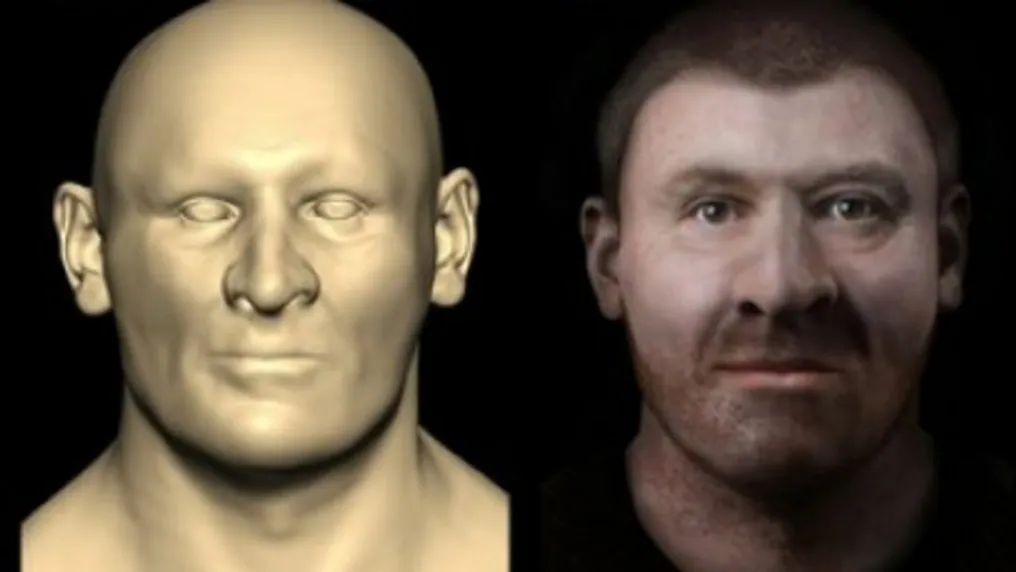
How does 3D scanning feed forensic facial reconstruction?
The skull is scanned at up to 0.05 mm with colour and exported as a watertight model; the artist sculpts on it digitally or on a 3D print, and the skull itself need not leave custody.
 Accurate base0.05 mm landmarks for tissue-depth placement.
 Skull stays in custodyThe artist works on a file or a print.
 Digital or physicalSculpt on screen, or print a replica.
 Re-approximate laterNew ancestry or age data — the base is still there.
Why the skull should be a file before it is anything else
Traditional facial approximation needs a cast of the skull, which means moulding material on a fragile, evidential object, or working on the skull itself with clay and tissue-depth markers. Both tie the work to the physical skull or a cast of it, and both put the artist and the evidence in the same room.
Artec Spider II records a skull at up to 0.05 mm accuracy and 0.05 mm resolution with colour, without contact, in minutes. The watertight model is exported for digital sculpting — landmarks placed, tissue depths applied, features built — or printed as a replica for a clay approximation. Artec Eva does the same faster at a coarser resolution where the case allows.
The scan is also a base that can be reused. If new information arrives about ancestry, age or build, the approximation is redone on the same model rather than on a skull that may have been released.
The workflow, end to end
Scan, export, approximate — and keep the base.
- 1. Capture the skullAt 0.05 mm with colour, contactless, including the mandible.
 2. ProcessWatertight model in Artec Studio; mandible articulated.
- 3. ExportOBJ or STL to the sculpting software, or to a printer.
 4. ApproximateDigital sculpt or clay on a printed replica.
- 5. ArchiveSkull released; the model kept for a second approximation.
Which scanner for this work
A skull is a fine-detail handheld job.
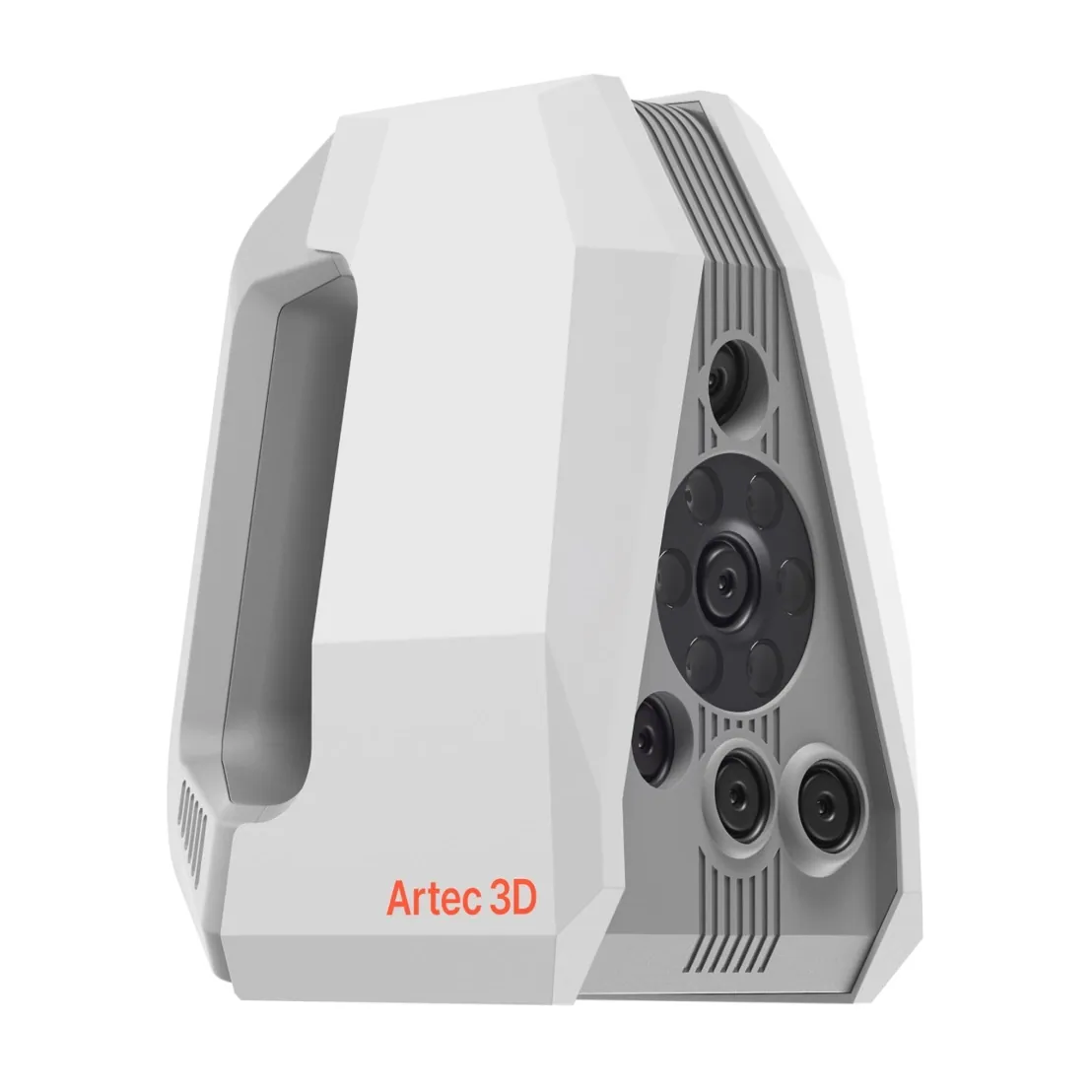
Artec Spider II
- Best for
- The skull, with colour
- 3D point accuracy
- Up to 0.05 mm
- 3D resolution
- Up to 0.05 mm
- Light source
- Blue structured light, no targets on the surface
- Portability
- Handheld, tethered to a laptop
Spider II records cranium and mandible at up to 0.05 mm accuracy and 0.05 mm resolution with colour, without contact — the landmark accuracy tissue-depth placement depends on.
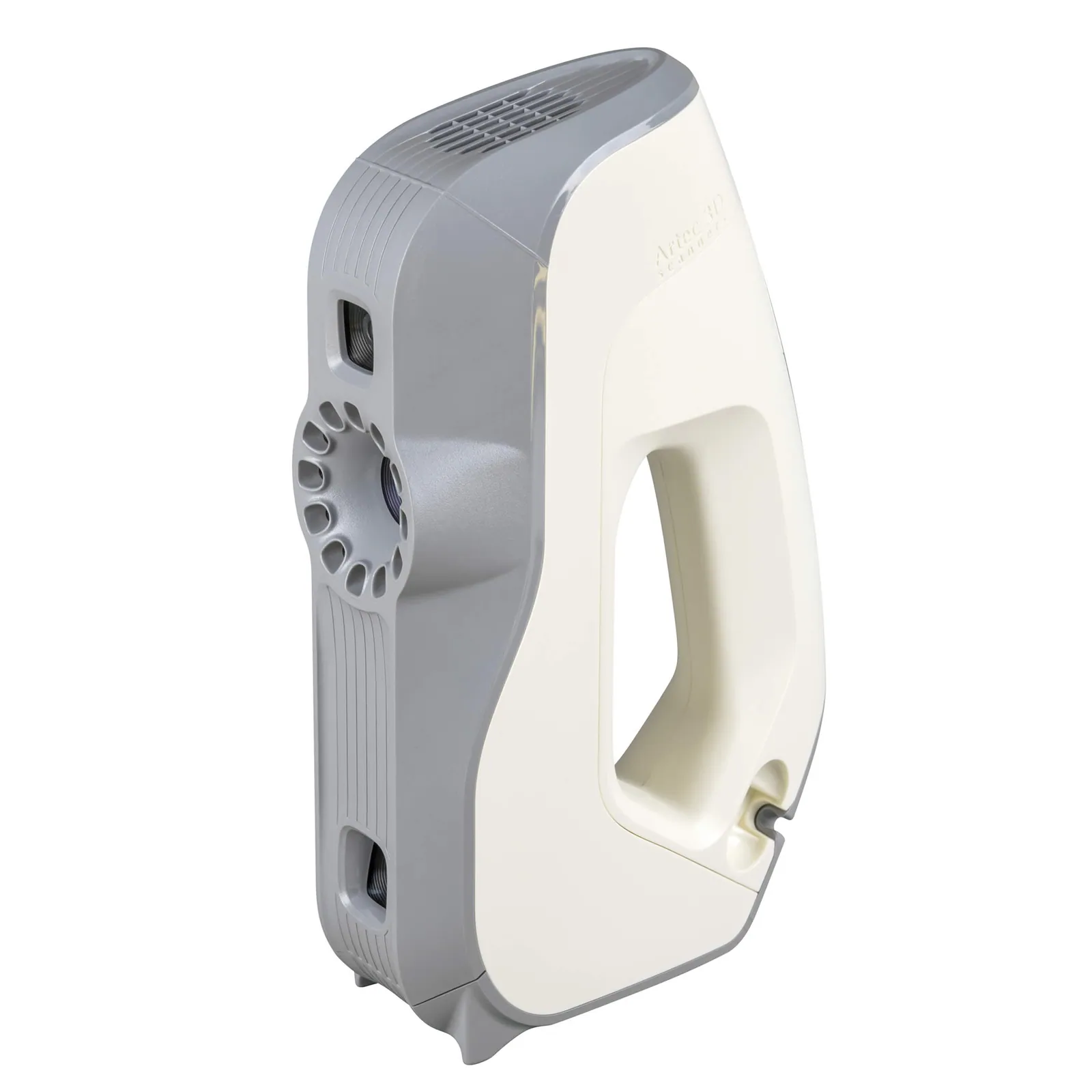
Artec Eva
- Best for
- Faster capture where the case allows
- 3D point accuracy
- Up to 0.1 mm
- 3D resolution
- Up to 0.2 mm
- Light source
- White structured light, full colour
- Portability
- Handheld, tethered to a laptop
Eva records a skull in colour in a few minutes at a coarser resolution — sufficient for many approximations, and faster when the skull is one of many elements to record.
See a skull scanned and handed to the artist as a file, without leaving custody — book a demo.
Book a demoQuestions practitioners ask
What software does the artist use?
Whatever they already use. Artec Studio exports OBJ, STL, PLY and WRL, which digital sculpting packages import directly.
Can the skull be 3D printed?
Yes. A watertight STL from the scan prints as a replica for clay approximation, at scale.
Is colour needed?
Not for the approximation itself, but it documents the skull as it was, which matters for the record and for any later examination.
Does the scan capture the mandible and dentition?
Yes; teeth are captured at the same resolution, and the mandible is scanned separately and articulated in software.

Tell us about the work you do
A forensic application specialist will come back with the device that fits it, the accuracy to expect at that scale, and how the data reaches your existing workflow.