
Human Skeletal Remains
A set of remains is examined by the anthropologist, the pathologist and perhaps an expert instructed by the defence — then released, reburied or repatriated on a deadline the case does not control.
3D scanning records the layout, each element and the relationships between them as one model, so later examinations, replicas and disclosure can start from the file.
 No sensitive case details required.
Why document skeletal remains in 3D?
Because the layout, the individual elements and their relationships are captured once as measurable colour geometry, and much of what follows — re-examination, review by the defence expert, court replicas — can continue on the model after the remains are gone.
 Layout as one modelThe skeleton as laid out, with every element in its measured position.
 Handled lessLater examinations start from the model, including the defence expert's.
 Survives releaseReburied or repatriated, the record and the replica remain.
 Court replicaA watertight model prints as an exhibit a jury or a judge can hold.
One record for a case that outlives the remains
The difficulty with skeletal remains as evidence is not any single element — it is the set. Which elements are present, how they relate, whether two individuals are commingled, what was found with them. That is recorded once, at layout, and the remains are then handled by everyone with a legitimate interest until a release date arrives that the investigation did not choose.
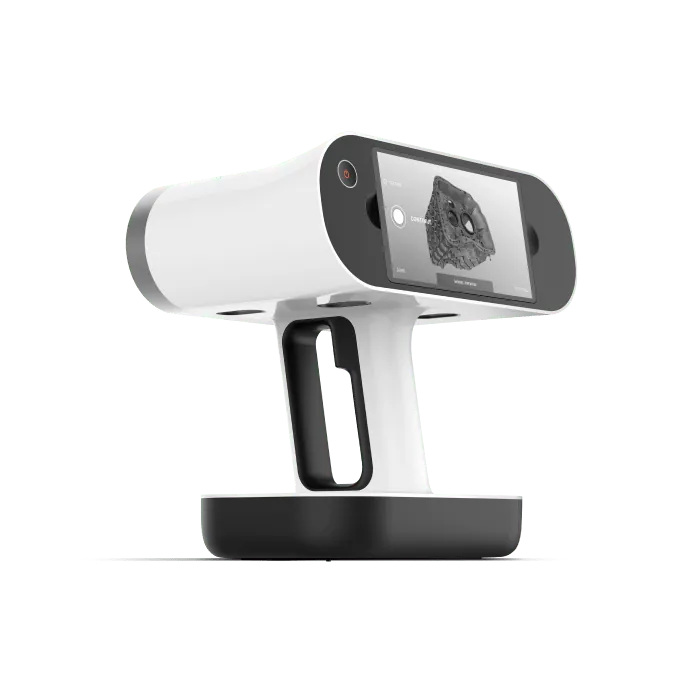
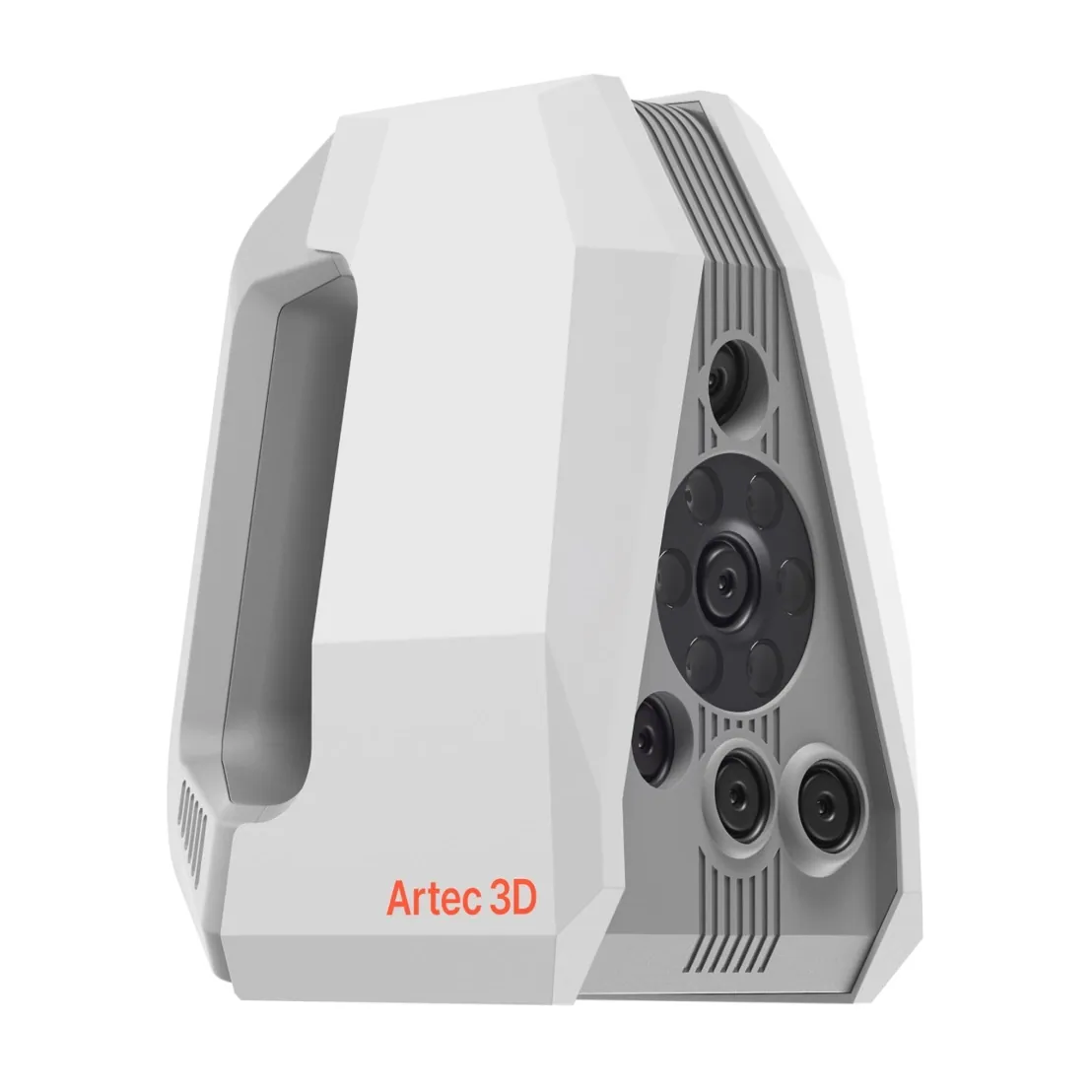
A wireless handheld — Artec Leo — records the laid-out skeleton as a single colour model, with each element in its measured position. Elements that carry trauma or metric value are scanned separately with Artec Spider II at up to 0.05 mm and registered into the layout, so the detail sits where the element lay. Commingled sets are sorted on the model as much as on the table.
The file then does work the remains cannot: the defence expert measures the same model, which reduces handling but does not replace a right to inspect the remains; a replica is printed for court; a geometric question raised after repatriation is answered from the archive. What the model does not do is replace the anthropologist — the biological profile and the trauma assessment are their own disciplines, described on their own pages.
The workflow, end to end
The set first, then the elements that matter, then everything else from the file.
- 1. Record the layoutThe skeleton as laid out, in one pass with a wireless handheld.
 2. Record key elementsElements with trauma or metric value at 0.05 mm, registered into the layout.
 3. Sort and registerCommingled sets separated on the model; inventory confirmed against the file.
 4. DiscloseThe same model to the defence expert, in open formats, alongside any right to inspect the remains.
- 5. Print and archiveA replica for court; the file kept after release or repatriation.
Which scanner for this work
The layout is a wireless handheld job; the detail is the fine one.
Artec Leo
- Best for
- The skeleton as laid out
- 3D point accuracy
- Up to 0.1 mm
- 3D resolution
- Up to 0.2 mm
- Capture
- Wireless, screen and processing onboard
- Capture speed
- Up to 35 million points/s (HD Mode)
Leo records a laid-out skeleton at up to 0.1 mm without cables or a laptop, in colour, with coverage confirmed on its screen element by element. Commingled sets are recorded together and sorted on the model.
Artec Spider II
- Best for
- Elements with trauma or metric value
- 3D point accuracy
- Up to 0.05 mm
- 3D resolution
- Up to 0.05 mm
- Light source
- Blue structured light, no targets on the surface
- Portability
- Handheld, tethered to a laptop
Spider II records individual bones at up to 0.05 mm accuracy and 0.05 mm resolution and registers them into the layout, so the detail an examination needs sits where the element lay.
See a laid-out skeleton documented as one measurable model, then printed as a court replica — book a demo.
Book a demoQuestions practitioners ask
How long does a laid-out skeleton take to record?
It depends on the set and the detail needed. As a reference, Dr Dennis Dirkmaat reported that scanning a set of bones took him an hour or less with Artec Space Spider, against a full afternoon with his previous scanner; elements needing higher resolution are scanned separately and registered into the layout.
Can commingled remains be separated on the model?
The model records every element in position and at scale, so sorting by size, side, age indicators and articulation continues on screen alongside the table work — and the record of what was found together is kept.
How does the defence expert get access?
They receive the same file in open formats — OBJ, PLY, STL — and measure the same model. That reduces handling; it does not remove the defence's right to inspect the remains where the law provides it.
What if the remains have already been repatriated?
Then the model may be the only geometric record — which is the reason to scan before release, not after. A printed replica can still be made from it for court.
Tell us about the work you do
A forensic application specialist will come back with the device that fits it, the accuracy to expect at that scale, and how the data reaches your existing workflow.