
Crime Scene 3D Scanning
The scene is released once. Everything not recorded before that moment is reconstructed from photographs and memory — or not at all.
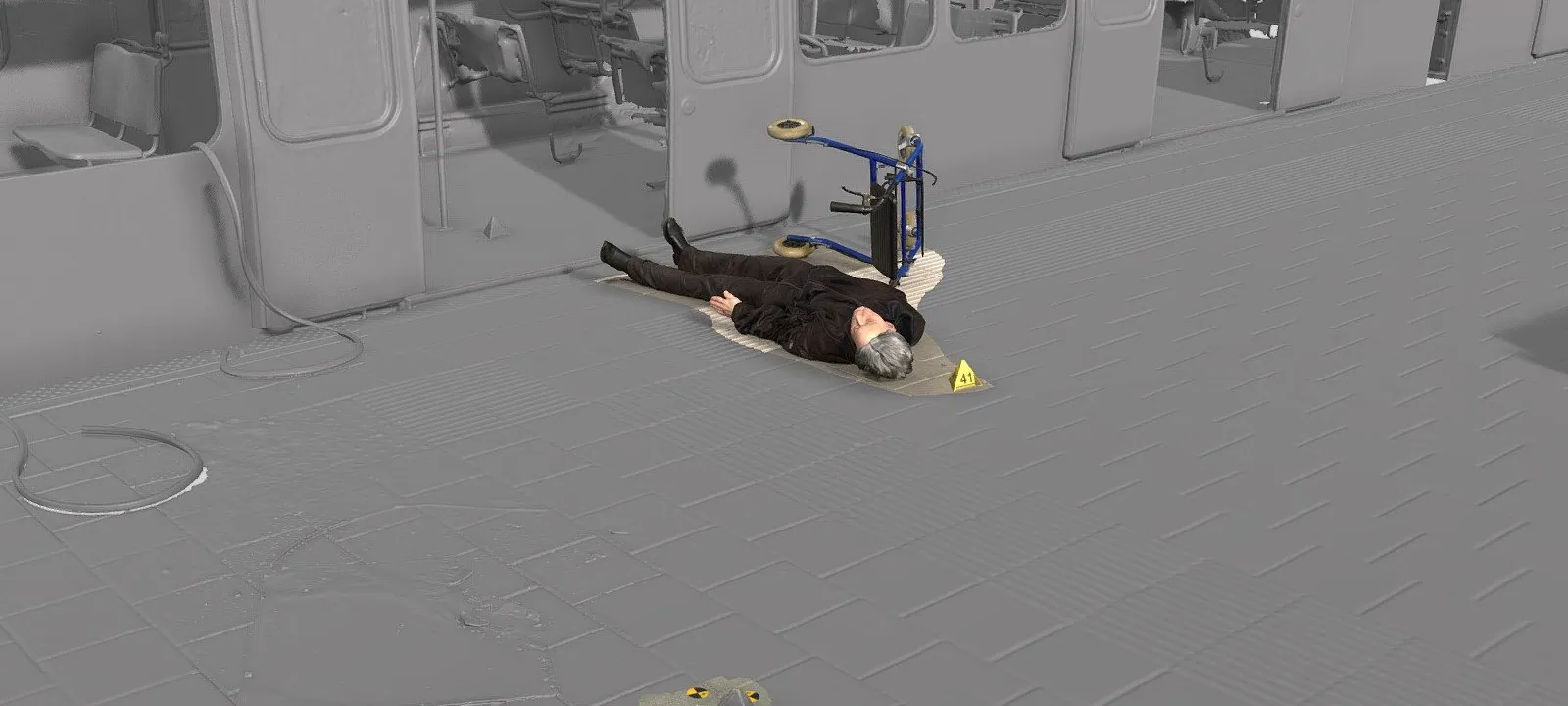
3D scanning records the scene as measurable geometry: the surfaces in view of each scanner position, the distances between them and the sightlines across them, captured contactlessly in minutes.
 No sensitive case details required.
How is a crime scene scanned in 3D?
A tripod scanner captures the room from a few positions in minutes; a handheld scanner then records the detail that matters at close range. The two register into one measurable model.
 Nothing is touchedNo markers, targets or spray. The scene is recorded exactly as found.
 Whole scene, one datasetRoom, doorways, furniture and evidence in a single coordinate system.
 Minutes, not hoursAbout 1.7 minutes per scanner position (2.7 with colour); a body in minutes.
 Measure after releaseAny point, distance, area or angle, once the scene is gone.
Why the order of work decides what survives
The first minutes at a scene are spent deciding what to record and in what sequence, because every step — placing a marker, lifting an item, walking a path — changes what the next photograph shows. Traditional documentation is a set of compromises made under time pressure, and the reconstruction is later built on exactly those compromises.
Scanning changes the sequence rather than adding to it. The wide capture goes first, before anything is moved, and takes minutes: Artec Ray II records each position in about 1.7 minutes (2.7 with colour), indoors or out, and a room typically takes two or three. Close-range capture follows for the detail that matters — a body, a weapon, a stain — and registers into the room scan. The result is one dataset in which nothing has to be re-derived.
A University of Toronto study that compared 3D scanning against photography documented 11 simulated injuries on a live participant in 26 minutes with Artec Eva, against 54 for photography and manual measurement; processing was done afterwards, and the model could be measured along curved skin.
The workflow, end to end
Wide first, then detail. Nothing is moved until the room is recorded.
- 1. Capture the roomTripod scan from two or three positions. Every surface and item placed in one coordinate system, in a few minutes.
 2. Capture the detailHandheld, close range, over the body, the weapon, the marks. The on-device screen confirms coverage before you move.
 3. Register and fuseArtec Studio aligns the close-range captures into the room scan and fuses them into one model.
 4. Measure and annotateDistances, angles, areas and cross-sections taken from the model, with the measurement traceable to the file.
 5. Archive and shareStandard formats out; the model kept as the permanent record and shared with whoever needs it.
Which scanner for this work
Two devices, two scales. The room needs range and a 360° × 300° field from each position; the detail needs a handheld at close range.
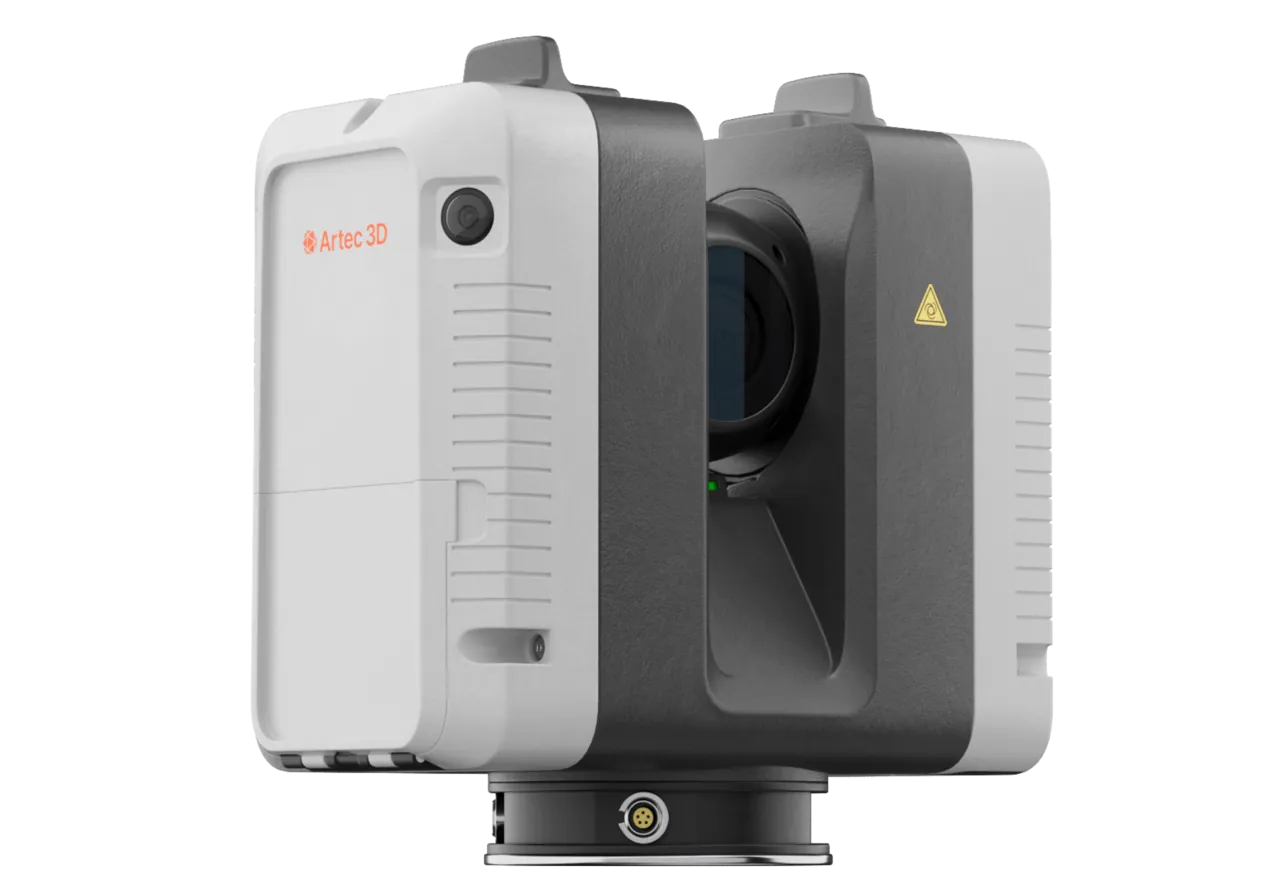
Artec Ray II
- Best for
- The whole scene — room, building, street
- Accuracy
- 1.9 mm at 10 m
- Range
- 0.5–130 m
- Scan time
- About 1.7 minutes per position (2.7 with colour)
- Portability
- Wireless, tripod-mounted
Ray II is what records the scene before anything moves. Each position takes about 1.7 minutes (2.7 with colour), from a tripod, indoors or outdoors, out to 130 metres; it records geometry day or night, while colour imagery needs light. It captures up to two million points a second, so the geometry is dense enough to measure from, and it needs no targets placed in the scene.
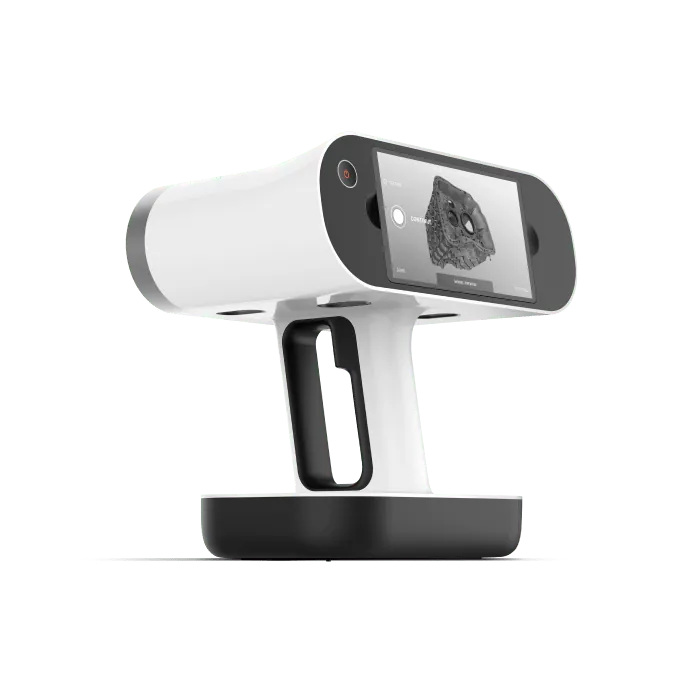
Artec Leo
- Best for
- The detail within reach — bodies, weapons, marks
- 3D point accuracy
- Up to 0.1 mm
- 3D resolution
- Up to 0.2 mm
- Capture
- Wireless, screen and processing onboard
- Capture speed
- Up to 35 million points/s (HD Mode)
- Typical time
- A body or a bullet hole in minutes
Leo records a body or a bullet hole in minutes: in a Dutch police exercise, a mannequin and its surroundings took five. No laptop, no cables, so the operator moves freely around the scene, and the built-in screen shows coverage as it builds, so gaps show up while the operator is still at the scene.
“With Leo, we get highly accurate scans that provide more than enough geometry data for any analysis we need to conduct. And then you add in the photo texture to make it real.”
See how a scene unit captures a whole room in minutes and measures it for years — book a demo built around your casework.
Book a demoQuestions practitioners ask
How long does scanning add to processing a scene?
It replaces time rather than adding to it. A Ray II dome takes about 1.7 minutes without colour and 2.7 with it; a room typically needs two or three, and a body a few minutes more. Origin Forensics reports that vehicle inspection scans which took three to four hours with a tripod laser scanner take under one hour with Artec Leo; the team leaves confident the capture is complete, and processing follows at the office.
Does the scene need to be lit?
Not for geometry. The scanners project their own structured or laser light: Ray II records the geometry of large indoor and outdoor scenes day or night, though its colour imagery needs light; the handheld units work in low light.
What if we miss something?
The handheld shows coverage on its own screen in real time, so gaps are visible while you are still at the scene. And the wide scan records every surface in view of its positions — including what nobody had thought to measure; small items get the handheld.
Which is captured first, the room or the detail?
The room, always — before anything is moved. Close-range detail then registers into that room scan, so every item is placed in the same coordinate system.
Tell us about the work you do
A forensic application specialist will come back with the device that fits it, the accuracy to expect at that scale, and how the data reaches your existing workflow.