
3D Scanning vs Photography
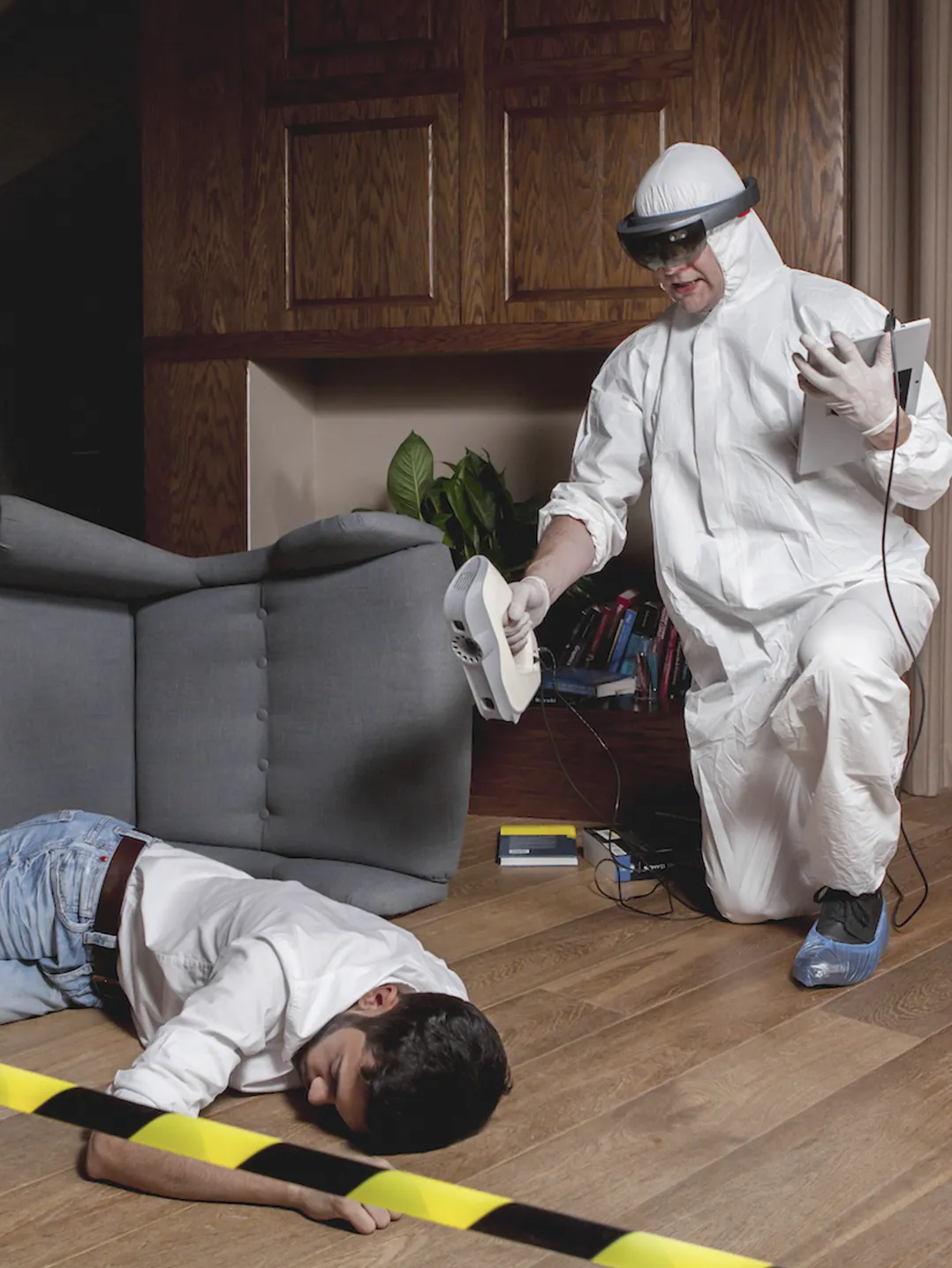
Forensic photography records appearance from the angles the photographer chose. 3D scanning records geometry from every angle, with appearance attached.
The University of Toronto tested the two head to head on 11 simulated injuries on a live participant: 26 minutes against 54, and a colour model that could be measured along curved skin.
 No sensitive case details required.
Is 3D scanning better than photography for forensic documentation?
For measurement after the fact, yes: a scan is geometry that can be measured later from any angle. In a University of Toronto study it was also faster — 26 minutes with Artec Eva against 54 for photography and manual measurement, documenting 11 simulated injuries on a live participant. Photography remains the tool for specific close-up appearance.
How they compare
Compared on what each method leaves you with afterwards.
| 3D scanning (Artec Eva, as in the Toronto study)Colour geometry of the whole surface. | Forensic photographyAppearance from chosen angles. | |
|---|---|---|
| What is recorded | Geometry and colour, every angle | Appearance, from the angles taken |
| Time in the Toronto study | 26 min for 11 simulated injuries; processing afterwards | Nearly an hour, with manual measurement |
| Measurement afterwards | Any distance, any angle, along curved skin | Only in the plane of the scale, approximate |
| New angle afterwards | Yes — rotate the model | No |
| Scale | Inherent in the data | A ruler in the frame |
| Choose this when | The record: complete, measurable, reviewable later. | Still right for specific appearance detail; no longer the whole record. |
Offices that adopt scanning keep photography for specific purposes and make the scan the complete record.
What the Toronto comparison measured
The University of Toronto compared 3D scanning with Artec Eva against forensic photography for injury documentation as at autopsy, using 11 temporary tattoos simulating injuries on a live participant. The scan took 26 minutes; photography with manual measurement of the same injuries took 54, and the model was processed afterwards. Its measurements were as accurate as the manual ones, and the scan produced what the photographs could not: colour geometry that could be measured afterwards, along curved skin and from any angle, by anyone with the file.
That is the essential difference. A photograph is a record of appearance at one angle under one light, with a scale that is only accurate in its own plane. A scan is a record of shape with appearance attached; a measurement not taken at the time is taken later. A distance between two injuries on a curved limb, the true size of a pattern injury, the position of an item relative to a wall — all measured, not estimated.
Photography does not disappear. Close-up appearance under controlled light, ultraviolet and infrared imaging remain photographic tasks. What changes is which one is the complete record.
The figures behind the verdict
See how a 3D record of injuries compares with your photography protocol, minute for minute — book a demo.
Book a demoQuestions practitioners ask
Does the scan capture colour as well as a camera?
It captures colour texture with the geometry. Colour fidelity depends on the lighting at capture, as with photography; the difference is that the scan also holds shape.
Can we still take photographs?
Yes, and offices that scan still do, for specific detail and for alternative-light imaging. The scan becomes the complete record; photography becomes targeted.
Where does the 26 vs 54 figure come from?
From a University of Toronto study, published in the Journal of the Association for Crime Scene Reconstruction (2017) and as an Artec case study: 11 simulated injuries on a live participant were documented in 26 minutes with Artec Eva against 54 for photography and manual measurement, with processing done afterwards.
Is the scan admissible like a photograph?
It is presented as a measured model or as views of it. Admissibility follows the court's rules on method and disclosure, as with any technical evidence.
Tell us about the work you do
A forensic application specialist will come back with the device that fits it, the accuracy to expect at that scale, and how the data reaches your existing workflow.