
3D Scanning vs Photogrammetry
Photogrammetry builds a 3D model from photographs. It needs many of them, taken well, with a scale reference in frame, and hours of processing before you know if it worked.
A structured-light scanner measures directly, with stated accuracy, and shows coverage on screen before you leave the scene.
 No sensitive case details required.
3D scanning or photogrammetry for forensic work?
Scanning for evidence, bodies and scenes that need stated accuracy and a result confirmed on site. Photogrammetry can match scanner accuracy on small evidence when done well, but it needs scale references, good light and processing before you know it worked; by drone, it covers outdoor areas too large for a tripod.
How they compare
Compared on what each demands at the scene and delivers afterwards.
| 3D scanning (Artec Leo, Spider II, Ray II)Direct measurement by structured light or laser. | PhotogrammetryModel computed from overlapping photographs. | |
|---|---|---|
| How it measures | Direct — pattern or laser | Indirect — computed from images |
| Accuracy | Stated: 0.05–0.1 mm handheld, 1.9 mm at 10 m tripod | Depends on images, references and software |
| Scale | Inherent | Needs references in frame |
| Lighting | Brings its own; geometry in darkness, Ray II colour needs light | Needs good, even light |
| Know it worked | On screen, at the scene | Hours later, after processing |
| Choose this when | Evidence, bodies, vehicles, rooms: wherever accuracy must be stated and confirmed. | Small evidence with scale references and time to process; large outdoor areas by drone. |
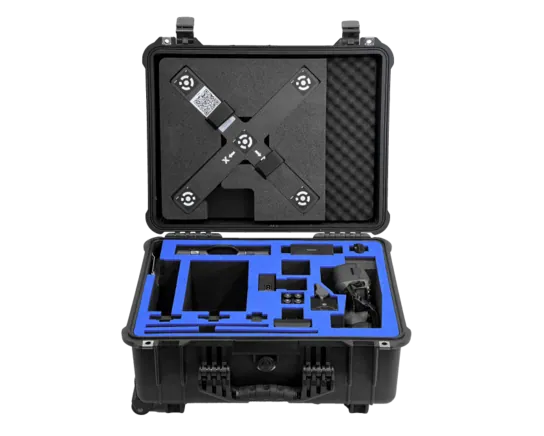
Artec Metrology Kit is a photogrammetry system for high-accuracy reference points on large objects — used alongside scanning to hold accuracy, or on its own as an optical measurement system.
Where photogrammetry is the right choice, and where it is a risk
Photogrammetry reconstructs shape from overlapping photographs. Done well — hundreds of images, even light, textured surfaces, scale bars in frame — it produces good models: on footwear impressions in an Artec case study it came close to a handheld scanner's result, and by drone it covers areas a tripod scanner cannot. Its weakness at a forensic scene is that you do not know whether it worked until processing is done, and by then the scene may have been released. Plain, dark or shiny surfaces are hard for it — as they are, to a lesser degree, for any optical scanner; poor light degrades it; accuracy depends on the references and the software rather than on a stated device figure.
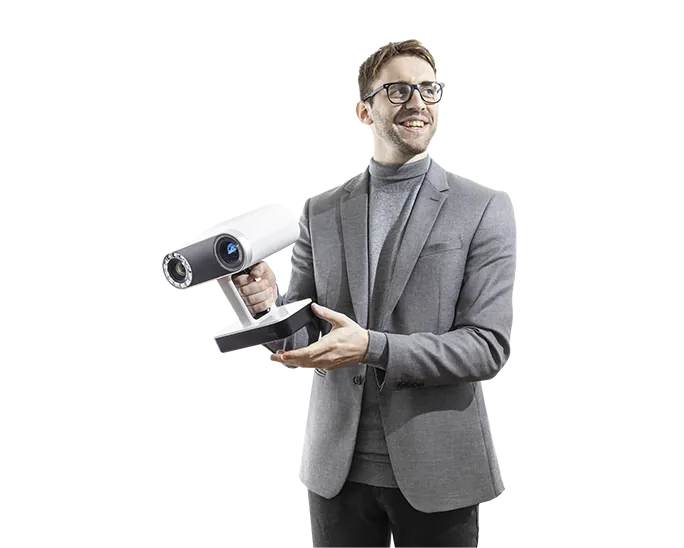
A structured-light or laser scanner measures directly. Artec Leo shows coverage on its screen as you scan; a gap is filled before you leave. Accuracy is a stated figure — up to 0.1 mm for Leo, 0.05 mm for Spider II, 1.9 mm at 10 metres for Ray II — that an expert cites in court. Scale is inherent, and the geometry does not depend on scene light.
Artec's own photogrammetry product, Metrology Kit, can work on its own as an optical measurement system, or alongside scanning, where its precise reference points hold global accuracy across large objects. At a forensic scene the two methods are best treated as complementary, not competing.
See dark and shiny surfaces scanned with stated accuracy and no scale references in frame — book a demo.
Book a demoQuestions practitioners ask
Is photogrammetry cheaper?
The camera may be. The cost is in operator skill, processing time, and the scenes where it fails and cannot be re-shot. A stated device figure, confirmed by your own validation, makes the result easier to defend.
Can scanning and photogrammetry be combined?
Yes. Artec Metrology Kit provides photogrammetric reference points that scans register to, holding accuracy across very large objects.
Does scanning work on plain or dark surfaces?
Mostly. Structured light and laser bring their own light, so they need far less surface texture than photogrammetry; Leo's HD Mode helps on dark and shiny surfaces, and very plain, flat areas still need care to keep tracking.
When is a drone the right tool?
For very large outdoor areas — a crash site along a kilometre of road, a search area — where coverage matters more than resolution. Ray II reaches up to 130 metres from each tripod position, less on dark surfaces.
Tell us about the work you do
A forensic application specialist will come back with the device that fits it, the accuracy to expect at that scale, and how the data reaches your existing workflow.