
Law Enforcement / CSI
A scene unit is accountable for two things that pull against each other: releasing the scene fast, and never being asked a question about it that the record cannot answer.
3D scanning is how units do both — one capture in minutes that the briefing, the analysis and the courtroom all work from. This page is about what changes for the unit; the capture itself is on the application pages.
 No sensitive case details required.
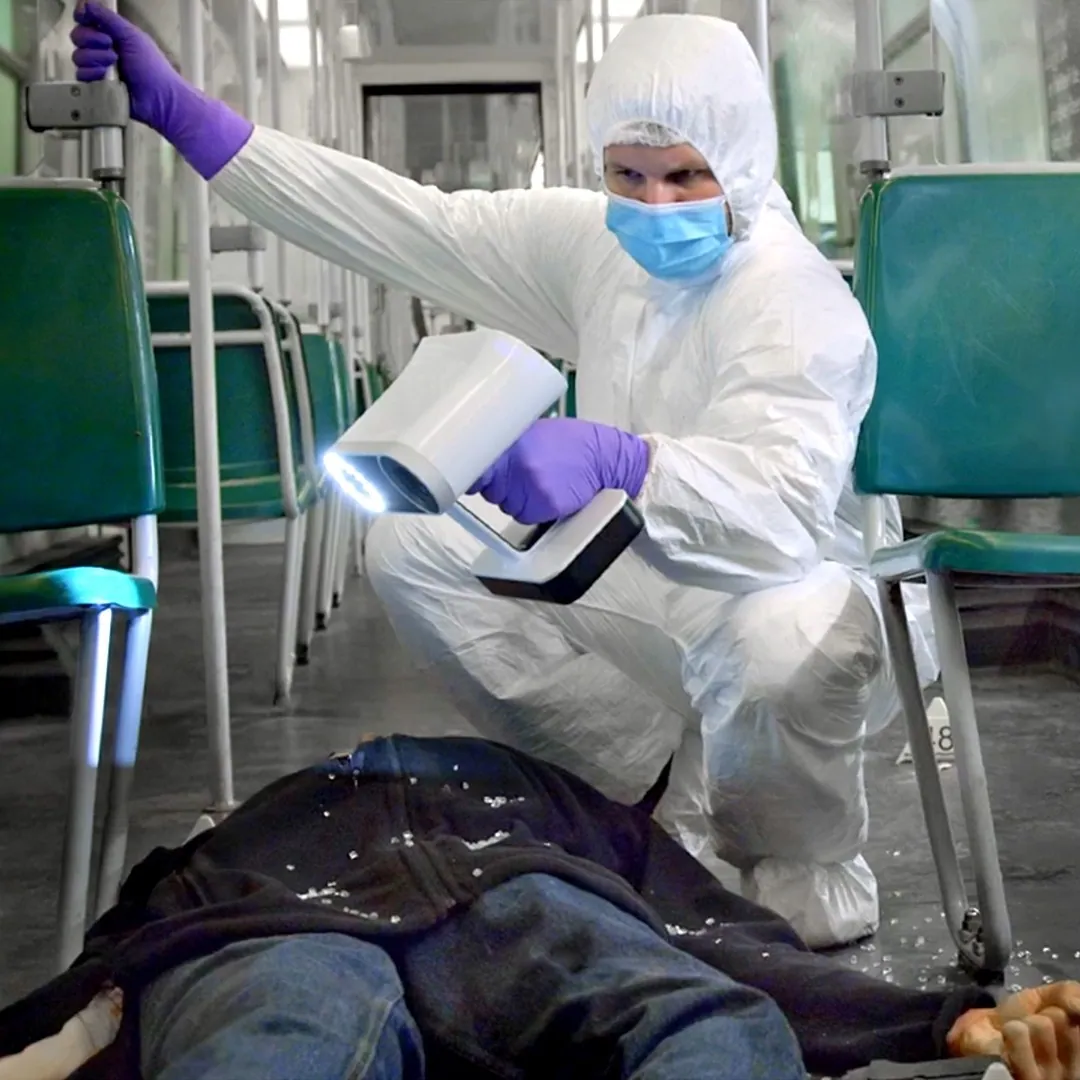
 Faster releaseWhole-room capture in minutes per tripod position; vehicles in under an hour.
 Measurements you can defendStated accuracy, recorded parameters, a file both sides can measure.
 One capture, many usersBriefing, reconstruction, sightlines and exhibits from the same dataset.
 Deployable in a unitA day of capture training, an SOP, storage in existing evidence management.
What changes for a scene unit

The room in minutes: The scene recorded from a few tripod positions before anything is moved — and the road or premises released sooner.

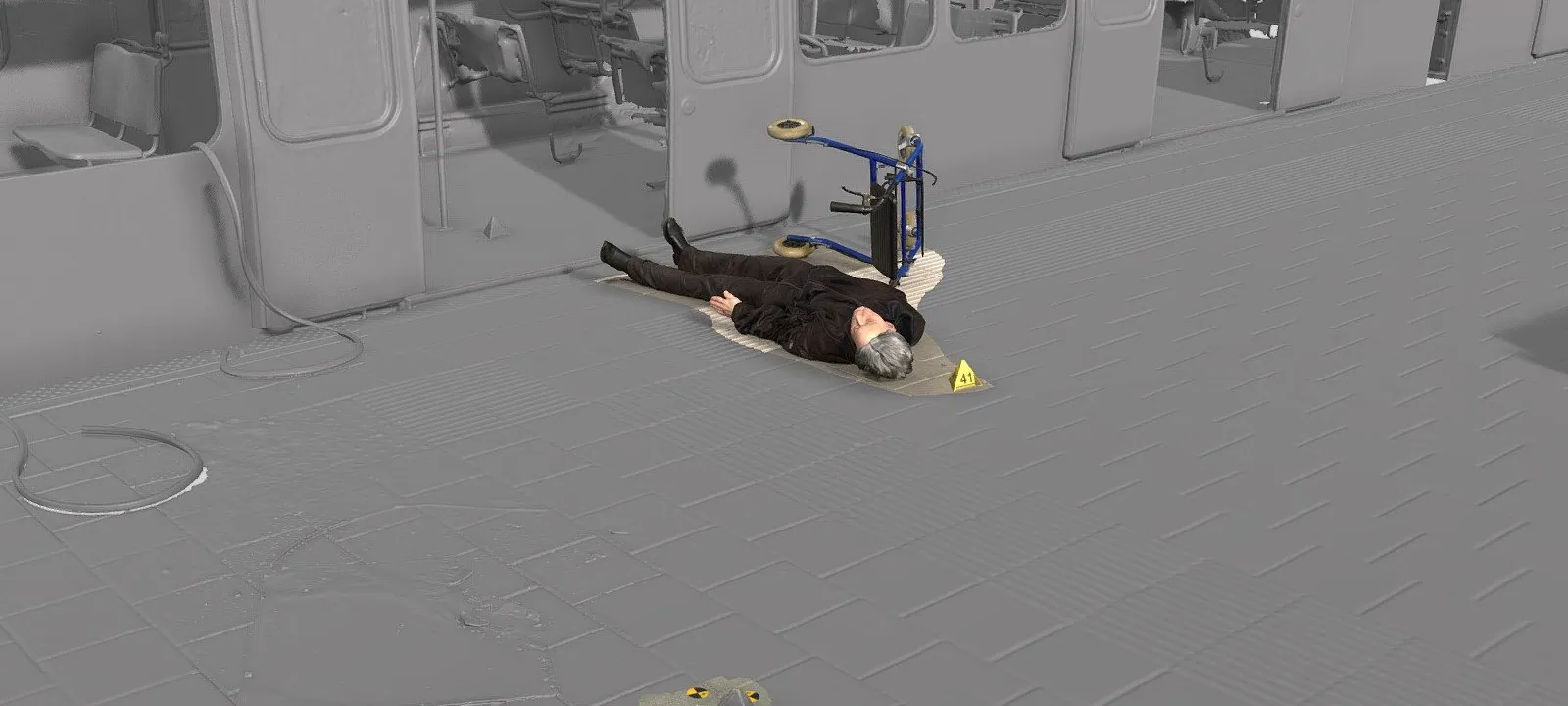
Evidence and bodies in position: Items, marks and bodies captured in place and registered into the scene, so position is measured, not sketched.

Questions answered later: A distance, a sightline or a trajectory raised months later is measured from the model, not from memory.

A scene you can return to: The model records the scene as found; a new theory is tested on it, not on a repainted room.
Where a scene unit is accountable, and what the model changes
A scene unit answers for the release decision, for the completeness of the record and for the measurements the case will be argued on. Traditionally those pull against each other: the faster the release, the thinner the record. Crime scene 3D scanning removes the trade-off — the tripod scan records every surface visible from its positions in minutes, and the handheld records the evidence in position before it is lifted.
The same dataset then serves everyone downstream. Shooting scene reconstruction and line-of-sight analysis run on measured geometry; the courtroom exhibit is a view of the same model the analysts used; the defence expert receives the same file. Nothing is redrawn between stages, so there is no transcription for cross-examination to attack.
Deployment is a unit decision, not a device one: one or two named operators trained thoroughly, an SOP written from a validation study, and storage sized for scan projects inside the unit's existing digital evidence management. Units that follow that sequence move to live scenes once the validation study and SOP are signed off.
Which scanner for this work
Many scene units run one tripod scanner and one handheld.
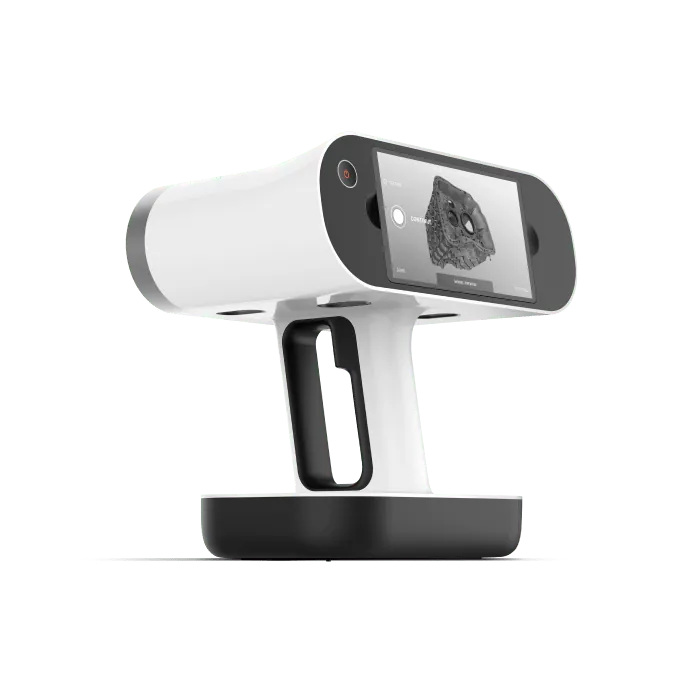
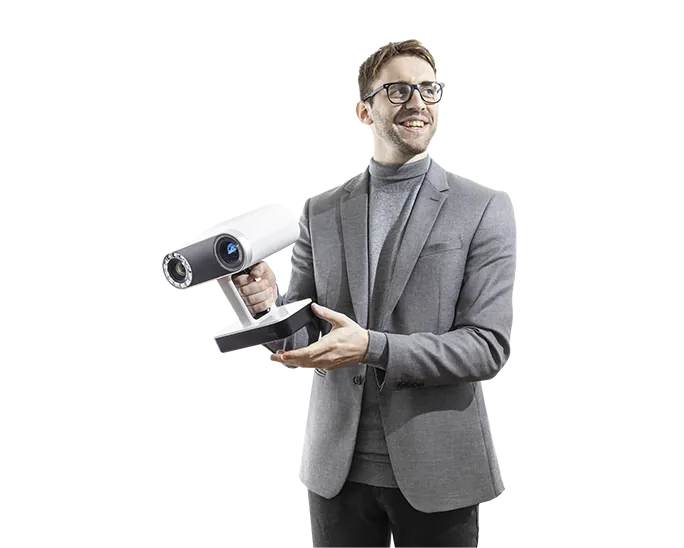
Artec Leo
- Best for
- Bodies, vehicles, evidence — the first handheld
- 3D point accuracy
- Up to 0.1 mm
- 3D resolution
- Up to 0.2 mm
- Capture
- Wireless, screen and processing onboard
- Capture speed
- Up to 35 million points/s (HD Mode)
- Typical time
- A body or a bullet hole in minutes
Wireless, screen and processing onboard, up to 0.1 mm. Works at a night scene with its own light and no laptop; HD Mode helps on dark and glossy surfaces.
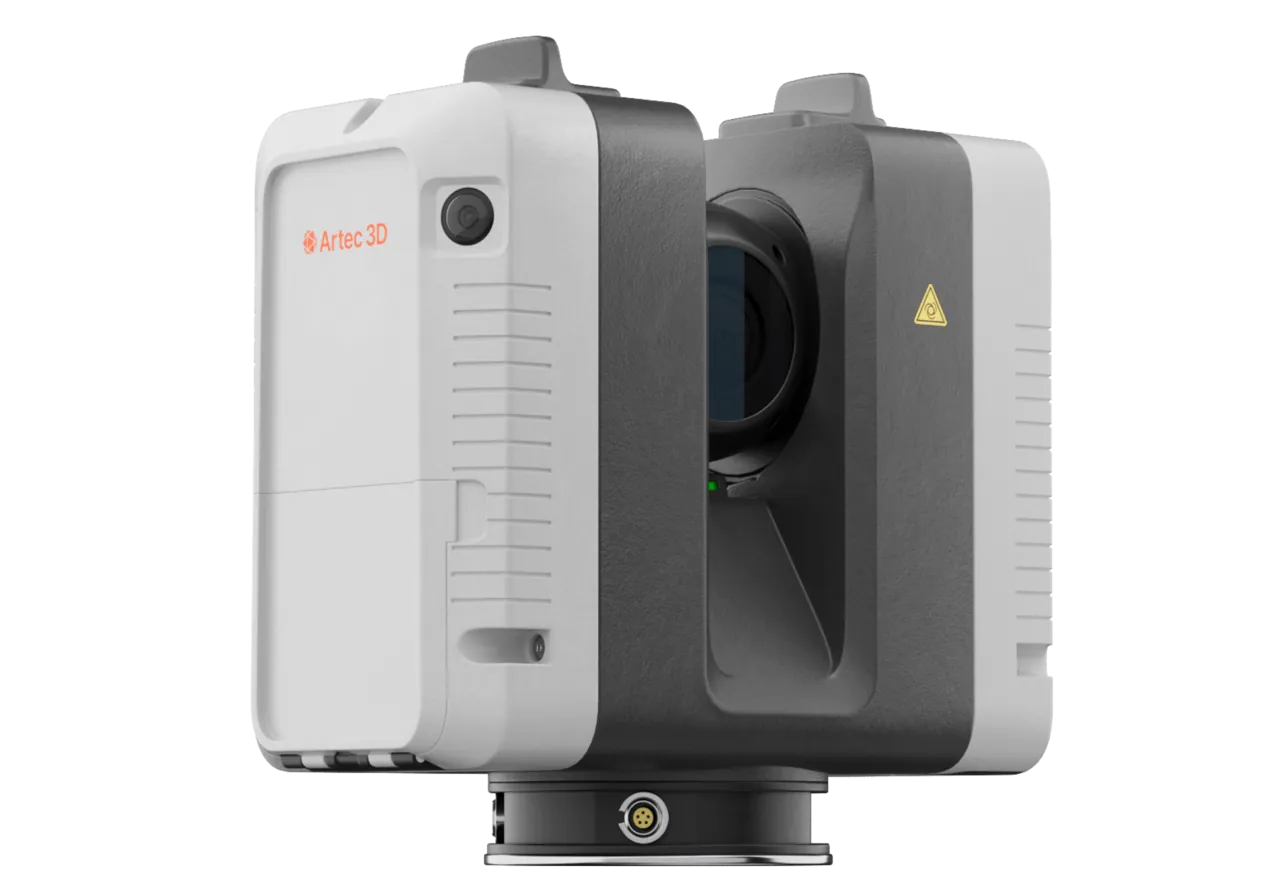
Artec Ray II
- Best for
- The scene as a whole
- Accuracy
- 1.9 mm at 10 m
- Range
- 0.5–130 m
- Scan time
- About 1.7 minutes per position (2.7 with colour)
- Portability
- Wireless, tripod-mounted
A room in a few domes at about 1.7 minutes each (2.7 with colour), out to 130 m, at 1.9 mm accuracy at 10 m. Geometry day or night, colour needs light; no targets.
See how a scene unit releases faster and documents measurements it can defend — book a demo for your unit.
Book a demoQuestions practitioners ask
How much faster is scene documentation?
Whole-room capture takes minutes per tripod position; a vehicle's exterior or interior takes under an hour. Origin Forensics reported vehicle scans falling from three to four hours to under one.
What does it take to deploy in a unit?
A day of capture training with an Artec partner for one or two named operators, an SOP written from a validation study, and storage sized for scan projects. Live casework starts once the validation study and SOP are signed off.
Does it work at night and in the rain?
Both capture geometry in darkness; Leo also lights its own colour, while Ray II's colour needs light on the scene. Ray II is rated IP54; Leo has no published water rating, so protect it from rain. Wet surfaces scan; standing water is the limit for any optical method.
Where does the data live?
In your existing digital evidence management, sized for large files. Raw scans are retained, exports are hashed and logged — the same discipline as video evidence.
Tell us about the work you do
A forensic application specialist will come back with the device that fits it, the accuracy to expect at that scale, and how the data reaches your existing workflow.