
Shooting Scene Reconstruction
A trajectory is a line through space, and it is only as good as the two points that define it. A defect measured by hand and a scene measured by tape give you a line with a wide margin of error.
3D scanning records the defect geometry and the room together, so trajectory analysis starts from measured positions rather than from estimates.
 No sensitive case details required.
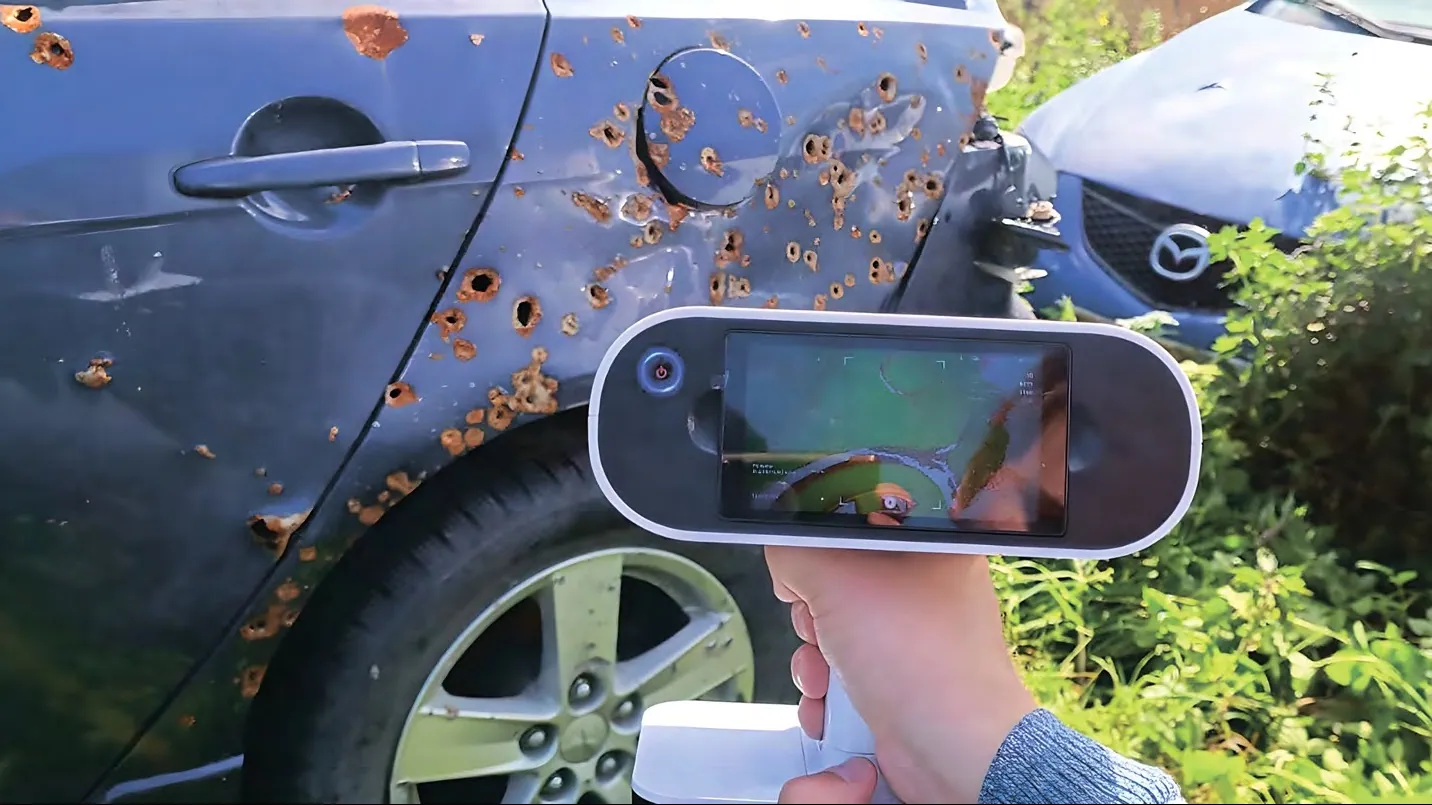
How does 3D scanning support shooting reconstruction?
Each bullet defect is captured in minutes at up to 0.1 mm, in position within a room scan — so entry, exit and trajectory are derived from measured geometry that can be re-examined later.
 Defect geometryEntry shape, exit shape and surface deformation, measured.
 In positionEach defect placed in the room, not in a photograph of a wall.
 Trajectory from dataLines derived from measured points, not from rods and string alone.
 Re-examine laterA second theory tested on the archived scene.
Why the margin of error matters more here than anywhere
Trajectory rods and string give a physical line while the scene exists. They cannot be re-placed once the scene is released, and the angle they show is only as reliable as the positions they were set to. A few millimetres of error at the defect becomes tens of centimetres at the far end of the room — enough to change where a shooter could have stood.
Scanning records the defect geometry and its position in the room at the same time. Artec Leo captures a bullet hole in minutes at up to 0.1 mm, wirelessly; the room scan places it. Trajectory analysis then starts from measured points and can be repeated by anyone with the file, including the opposing expert.
Where the court allows it, the scene is shown as recorded, with the lines drawn through measured geometry rather than over a photograph.
The workflow, end to end
The room first, then every defect, then the analysis on the merged model.
- 1. Capture the sceneRoom, vehicle or exterior recorded on a tripod before anything is disturbed.
 2. Capture each defectHandheld, close range, over every bullet hole, a few minutes each.
 3. RegisterDefects placed into the scene model in one coordinate system.
- 4. Derive trajectoriesLines from measured entry and exit geometry, with angles and positions recorded.
 5. PresentA model a court can follow, with each line traceable to a measurement.
Which scanner for this work
The defect needs detail; the room needs range. Many units use both.
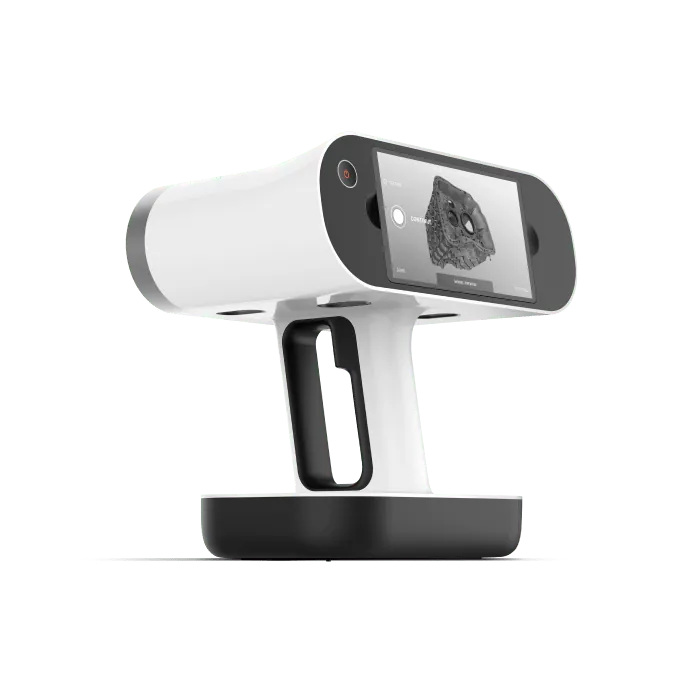
Artec Leo
- Best for
- Bullet defects and the objects around them
- 3D point accuracy
- Up to 0.1 mm
- 3D resolution
- Up to 0.2 mm
- Capture
- Wireless, screen and processing onboard
- Capture speed
- Up to 35 million points/s (HD Mode)
- Typical time
- A body or a bullet hole in minutes
Leo captures a bullet hole in minutes at up to 0.1 mm, with no cables and no laptop, so an operator moves around a vehicle or a room freely. HD Mode holds detail on black and shiny surfaces such as painted metal, which many optical scanners lose; glass remains hard for any optical scanner.
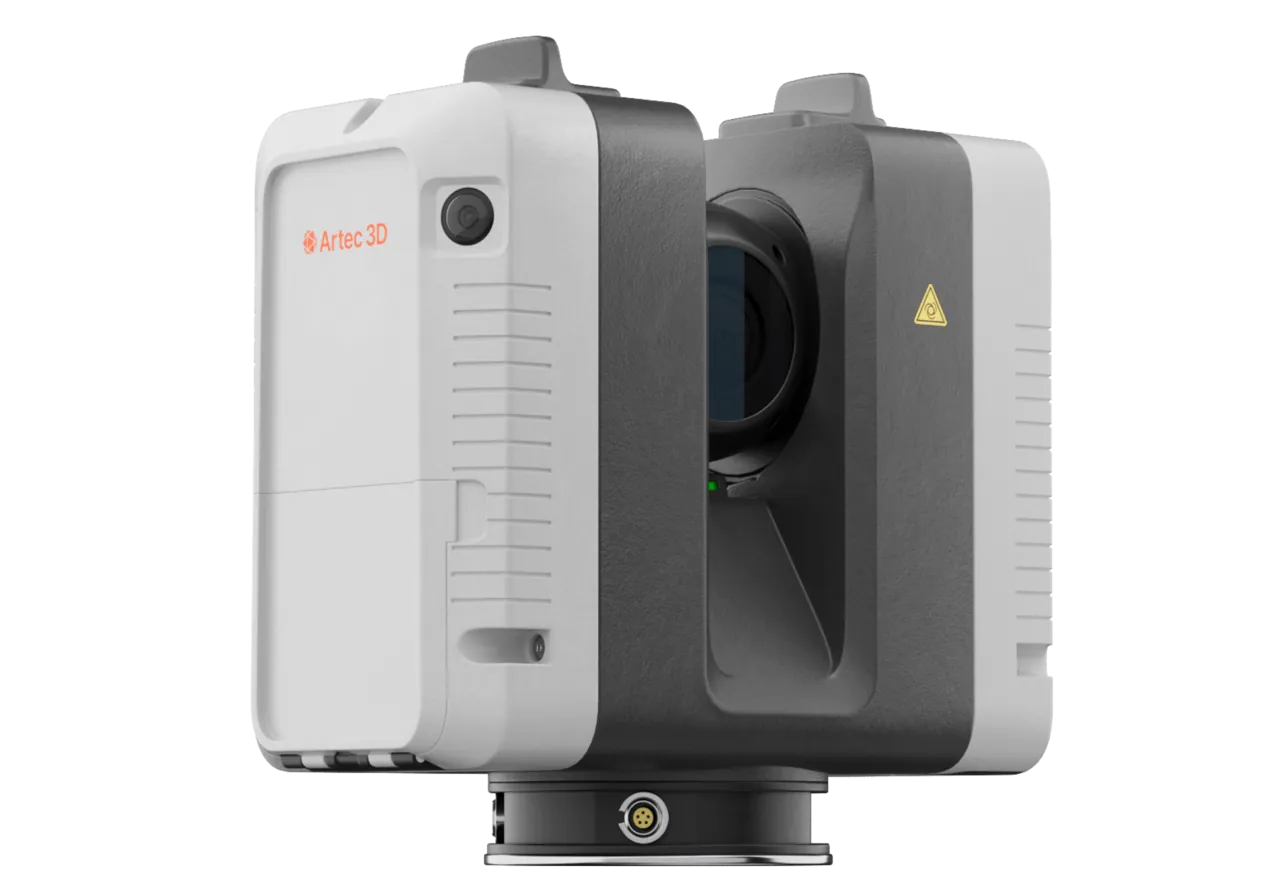
Artec Ray II
- Best for
- The scene the trajectory runs through
- Accuracy
- 1.9 mm at 10 m
- Range
- 0.5–130 m
- Scan time
- About 1.7 minutes per position (2.7 with colour)
- Portability
- Wireless, tripod-mounted
Ray II captures the room or exterior in about 1.7 minutes per position (2.7 with colour), out to 130 metres, so the far end of a trajectory sits in the same measured space as the defect. It needs no targets and records geometry day or night; colour imagery needs light.
See how bullet defects, trajectories and the room around them become one measurable dataset — book a demo.
Book a demoQuestions practitioners ask
Can it capture a defect in glass or painted metal?
Leo's HD Mode is built for black and shiny surfaces, such as dark or glossy paint on metal. Glass is harder: transparent surfaces need a scanning spray for any optical scanner, so whether to scan a defect in glass is a decision for your evidence procedure.
Do we still use trajectory rods?
Many units do, and scan the rods in place — which records the physical line as well as the geometry it was derived from. The scan adds a measured record the rods alone cannot leave behind.
How accurate is the trajectory?
It starts from defect geometry Leo records at up to 0.1 mm, placed in a room scan accurate to 1.9 mm at 10 metres. The angle still carries the uncertainty of defect interpretation, bullet deflection and registration, which the analysis must state.
Does this work on an outdoor scene?
Yes. Ray II records exterior geometry day or night out to 130 metres (colour imagery needs light), and Leo works on vehicles and surfaces in the field without external power.
Tell us about the work you do
A forensic application specialist will come back with the device that fits it, the accuracy to expect at that scale, and how the data reaches your existing workflow.