
Forensic Laboratories
A laboratory is accountable for its method: validated, documented, repeatable by another examiner, and defensible when the report is challenged.
3D scanning fits that discipline — a device with stated accuracy, an automated bench capture that keeps handling to a minimum, and a processing history kept with every project.
 No sensitive case details required.
 A method to validateStated figures, a study on your references, an SOP for accreditation.
 Bench throughputAutomated capture at up to 0.005 mm accuracy; operator time is mounting, one turn-over and processing.
 Less handlingThe examiner works on the model; the item stays in custody.
 Peer review by fileA second opinion is a transfer, not a transport.
What changes at the bench
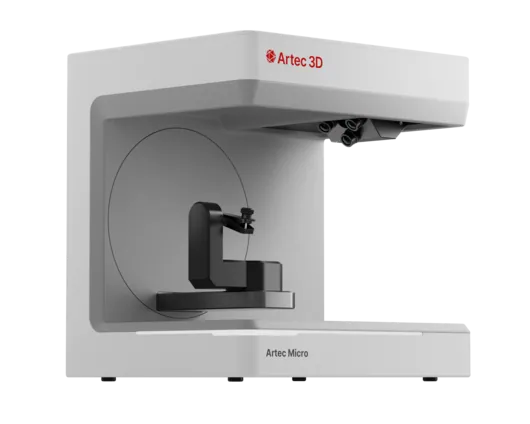

Automated capture: The item is fixed on the platform and the scanner runs the scan path; for a complete model it is turned over once and scanned again.

Comparison as geometry: Questioned against known — fragment against fragment, impression against shoe — overlaid and measured as shape and size.

History with every project: Raw scans and command history in the project, key parameters in the case notes; exports hashed for disclosure.

Reports a reviewer follows: Every figure in the report traceable to a measurement on a file another examiner can open.
Validation, throughput, reporting — the three things a laboratory measures a method by
A laboratory does not buy a scanner; it adopts a method. The first question is validation: does the device, as this laboratory runs it, produce the accuracy the report will claim? The validation and SOP page describes the study — reference objects, repeatability across operators, fixed processing — and how the figure to cite is read on the forensic scanning accuracy page.
The second is throughput. On the bench, Artec Micro II runs the scan automatically: fix the item on the platform, start, turn it over once for the underside, and process a model at up to 0.005 mm accuracy. Operator time is mounting and processing, so casework volume sets the pace rather than handling. Toolmarks, ballistics evidence and small evidence are the disciplines where that matters most, for the shape, size and position of a mark; striae for source attribution need micrometre-scale topography. Impression evidence comes to the bench as scans of footwear and tire impressions taken in place.
The third is the report. Every measurement in it traces to a file another examiner can open, and the chain of custody for that file — raw retained, processing documented, exports hashed — is the same discipline the laboratory already applies to digital evidence.
Which scanner for this work
Many laboratories start with the bench scanner or the fine-detail handheld — whichever the caseload points to.
Artec Micro II
- Best for
- Bench items — cases, projectiles, fragments, teeth
- 3D point accuracy
- Up to 0.005 mm
- 3D resolution
- Up to 0.04 mm
- Capture
- Desktop, fully automated turntable
- Object size
- Up to 200 × 200 × 150 mm
Up to 0.005 mm accuracy and 0.04 mm resolution on an automated turntable, for items up to 200 × 200 × 150 mm and 2 kg. The item is turned over once to scan its underside.
Artec Spider II
- Best for
- Marks, impressions, bone
- 3D point accuracy
- Up to 0.05 mm
- 3D resolution
- Up to 0.05 mm
- Light source
- Blue structured light, no targets on the surface
- Portability
- Handheld, tethered to a laptop
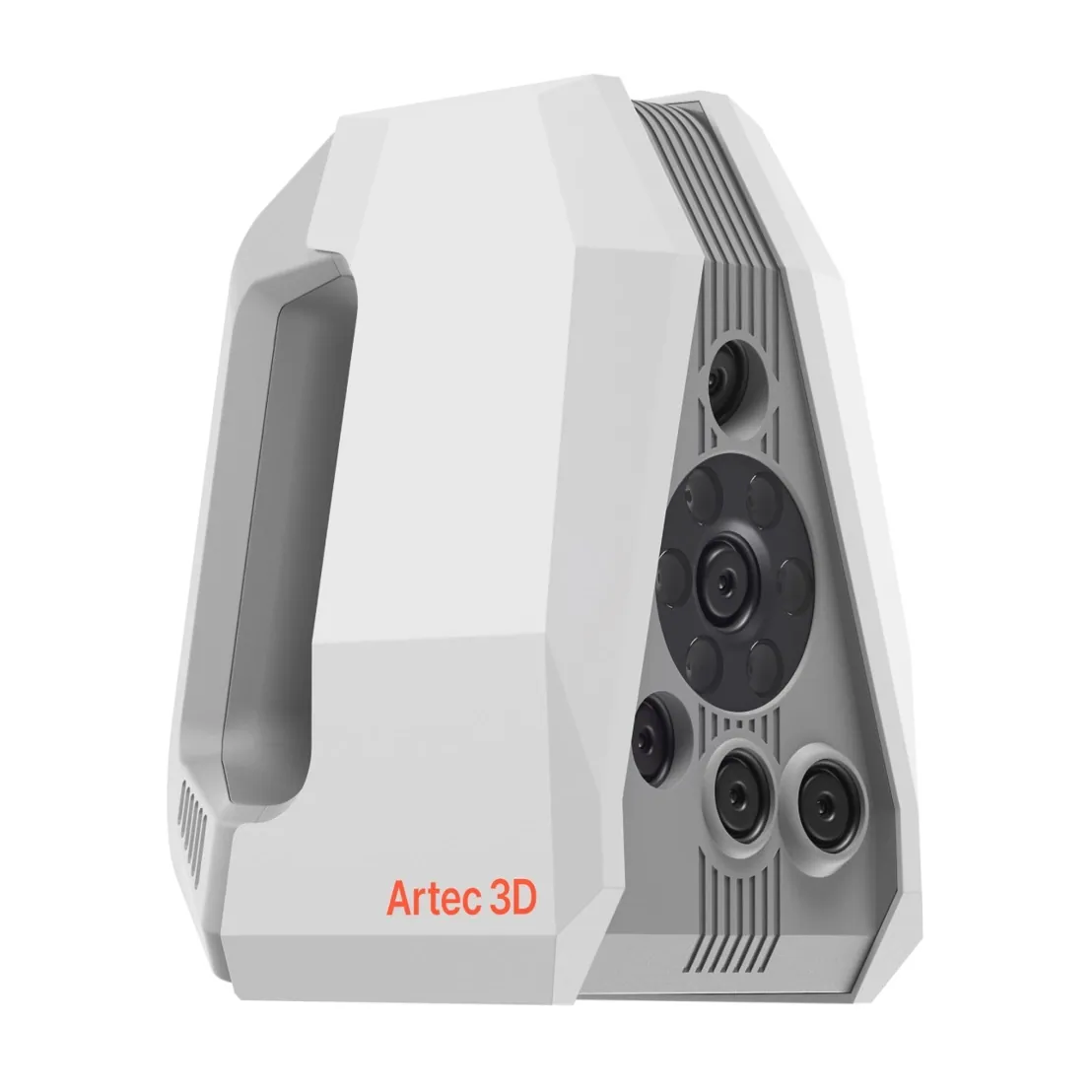
Up to 0.05 mm accuracy and 0.05 mm resolution with colour, handheld — for toolmarks, bite marks and impressions in place or on the bench.
See a validated bench method run on the evidence types your laboratory handles — book a demo.
Book a demoQuestions practitioners ask
How is the method validated for accreditation?
Reference objects of known dimension scanned under your conditions, repeatability across operators, fixed processing and an SOP — supported by an Artec partner. The validation and SOP page sets out the study.
What throughput can we expect on the bench?
Micro II runs the scan path automatically: fix the item on the platform, start, then turn it over once to capture its underside. Operator time is mounting and processing, so throughput is set by the caseload rather than by handling.
Does the item need preparation?
Minimal. Capture is optical and target-free; the item is fixed on the platform, and polished metal is the hard case for any optical scanner — test comparable items before casework.
What formats does our comparison software need?
For impressions, fractures and damage, Artec Studio exports OBJ, PLY, STL and E57, which analysis packages import directly. Firearm and toolmark topography systems use X3P, which Artec Studio does not write.
Tell us about the work you do
A forensic application specialist will come back with the device that fits it, the accuracy to expect at that scale, and how the data reaches your existing workflow.