
Tire Impressions
A tire impression is long, curved and shallow, and it degrades with the first vehicle that follows it. Casting a long track means several large casts in sections; photographing it flattens the depth that identifies the tread.
3D scanning records the whole run — depth, wear, direction and position — at walking pace, without contact.
 No sensitive case details required.
How are tire impressions documented in 3D?
A handheld scanner walks the track and records it as continuous geometry at 0.1 mm point accuracy (0.1 mm + 0.3 mm/m along the run) — tread depth, wear pattern and turning radius — placed in the scene by a wide scan.
 The whole runA track recorded end to end, not in overlapping frames.
 Depth and wearTread geometry, not a silhouette of it.
 Nothing touchedNo medium on a substrate that may also carry other evidence.
 Track width and radiusMeasurements that identify a vehicle class, from the model.
Why tire evidence is usually recorded poorly
The useful information in a tire impression is spread along its length: wear on one shoulder, a cut that repeats every rotation, the turning radius that constrains a wheelbase. Photography captures it as a series of frames that never quite line up. Casting covers the track in sections of up to about 90 cm, each taking one to two days to harden fully.
A handheld scanner records the track as continuous geometry. Artec Leo walks a run of several metres wirelessly, at 0.1 mm point accuracy (0.1 mm + 0.3 mm/m along the run), and the model holds depth as well as pattern — so wear and damage are measured, not inferred from shading. A wide scan places the track in the scene, so direction of travel and relation to the scene are geometry too.
Nothing is applied to the substrate, which matters when the same ground may carry footwear impressions or dropped items.
The workflow, end to end
Position first, then the run, then the detail.
- 1. Place the trackWide scan records where the track runs relative to the scene.
 2. Walk the runHandheld capture along the track, at walking pace, coverage on screen.
- 3. Capture the detailClose-range scan of the best-preserved section for wear and damage.
 4. ProcessFuse into one model with measurable depth along the full length.
- 5. MeasureTrack width, tread pattern, wear features, turning radius.
Which scanner for this work
A long run needs a handheld that moves freely; the identifying detail needs the finest one you have.
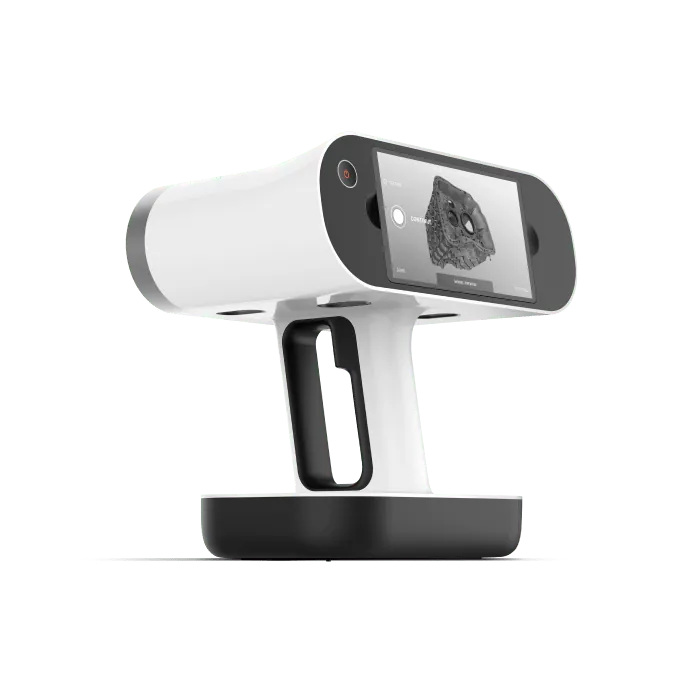
Artec Leo
- Best for
- The track, end to end
- 3D point accuracy
- Up to 0.1 mm
- 3D resolution
- Up to 0.2 mm
- Capture
- Wireless, screen and processing onboard
- Capture speed
- Up to 35 million points/s (HD Mode)
Leo records a run of several metres as one model, wirelessly, at 0.1 mm point accuracy (0.1 mm + 0.3 mm/m along the run). HD Mode helps on dark ground — test wet surfaces before casework — and the screen confirms coverage before the next vehicle arrives.
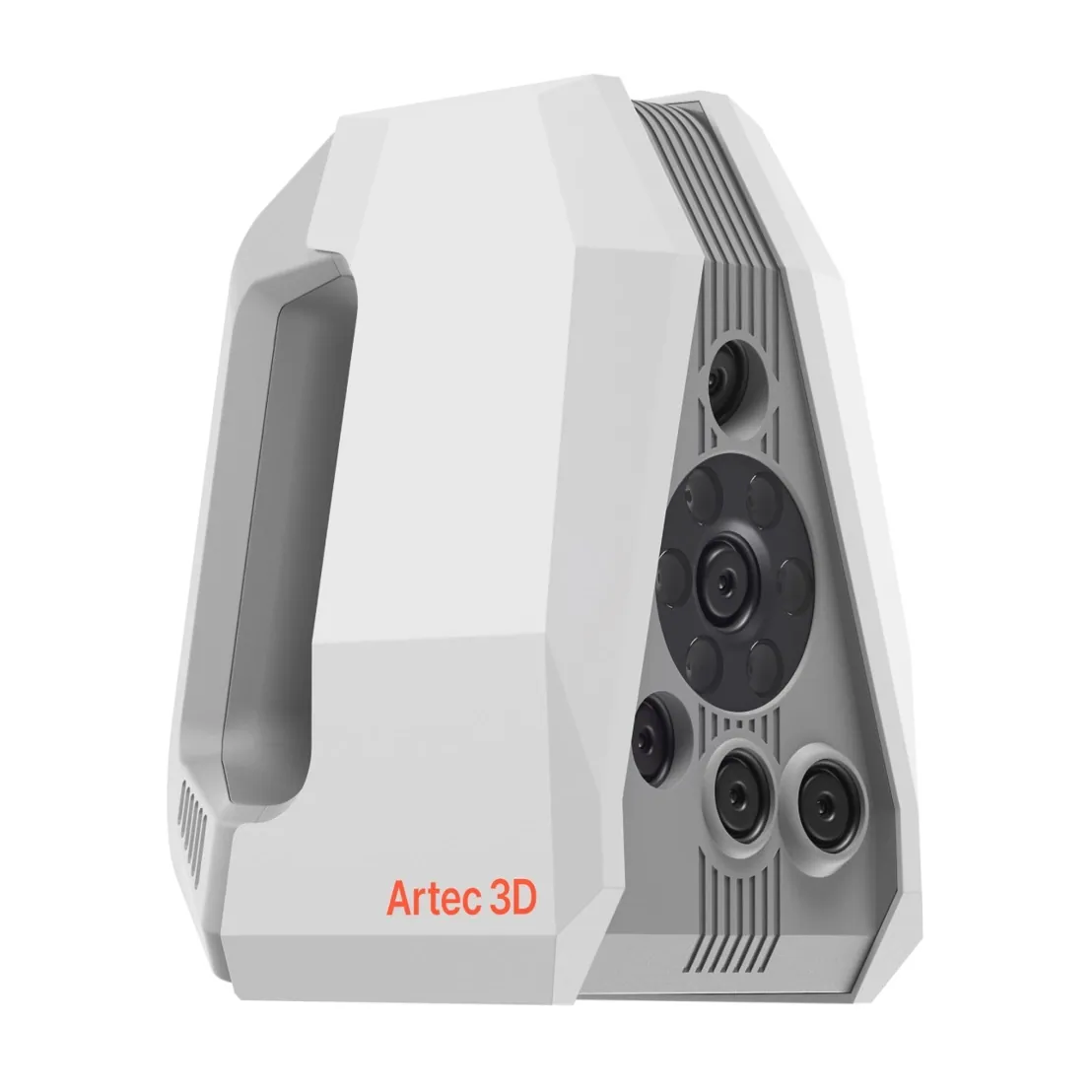
Artec Spider II
- Best for
- The best-preserved section
- 3D point accuracy
- Up to 0.05 mm
- 3D resolution
- Up to 0.05 mm
- Light source
- Blue structured light, no targets on the surface
- Portability
- Handheld, tethered to a laptop
Where a short stretch carries the identifying wear or damage, Spider II records it at up to 0.05 mm. That section is registered into the Leo run, so the detail sits in its measured position.
See a tire track captured end to end, depth and wear included — book a demo for your impression evidence.
Book a demoQuestions practitioners ask
How long a track can be captured?
Leo records continuously as the operator walks, so a run of several metres is one capture. Longer tracks are captured in sections and registered.
Does it work on wet or dark ground?
Leo's HD Mode helps on dark and shiny surfaces. Wet ground is harder, and standing water is difficult for any optical method — validate on your own conditions before casework.
Can we get the track width and turning radius?
Yes, both are measured from the model, and the wide scan gives direction of travel relative to the scene.
Is casting still needed?
Only if the laboratory wants a physical exemplar of a section. The impression is intact after scanning, so that remains possible.
Tell us about the work you do
A forensic application specialist will come back with the device that fits it, the accuracy to expect at that scale, and how the data reaches your existing workflow.