Best 3D scanners for crime scenes and forensics, job by job
There is no single best crime scene 3D scanner: a room, a body, a footwear impression and a cartridge case need different range and detail. What to look for, and which Artec scanner fits each forensic job.
A crime scene 3D scanner records a scene or an item as measurable 3D geometry, usually in colour, so distances and positions can still be taken after the scene is released.
No single scanner covers every job: a tripod laser scanner records rooms and outdoor scenes, handheld scanners record bodies, vehicles and evidence, and a desktop scanner records small items in the laboratory.
Judge a scanner on range, stated accuracy and resolution, colour and light, whether it needs contact or targets, portability, and the data and validation it gives you.
Among Artec scanners: Ray II for whole scenes, Leo for bodies and vehicles, Spider II or Neo for fine evidence, Eva for autopsy documentation and Micro II for small items in the laboratory.
Choosing a 3D scanner for forensic work starts with the work, not the scanner. A crime scene has two scales at once: the room, where positions and distances between objects matter, and the evidence, where a footwear impression or a toolmark is a fraction of a millimetre deep. Bodies, vehicles and laboratory items add their own demands.
This guide explains what a crime scene 3D scanner is, the six things that decide which one fits, and the Artec scanner whose specification matches each forensic job, with its limits stated next to its strengths.
What is a crime scene 3D scanner?
A crime scene 3D scanner is a device that records the shape of a scene or an object as millions of measured points, usually with colour, so the scene can be measured, viewed from any angle and presented long after it has been released. Two kinds are used in forensic work: terrestrial laser scanners, which record a room or an outdoor scene from a tripod, and handheld or desktop structured-light scanners, which record bodies, vehicles and individual items of evidence in finer detail.
A laser scanner measures distance by timing a laser pulse; a structured-light scanner projects a light pattern and reads how the surface distorts it. Both produce a point cloud or a mesh that software such as Artec Studio turns into a measurable model and exports in open formats such as E57, OBJ and PLY.
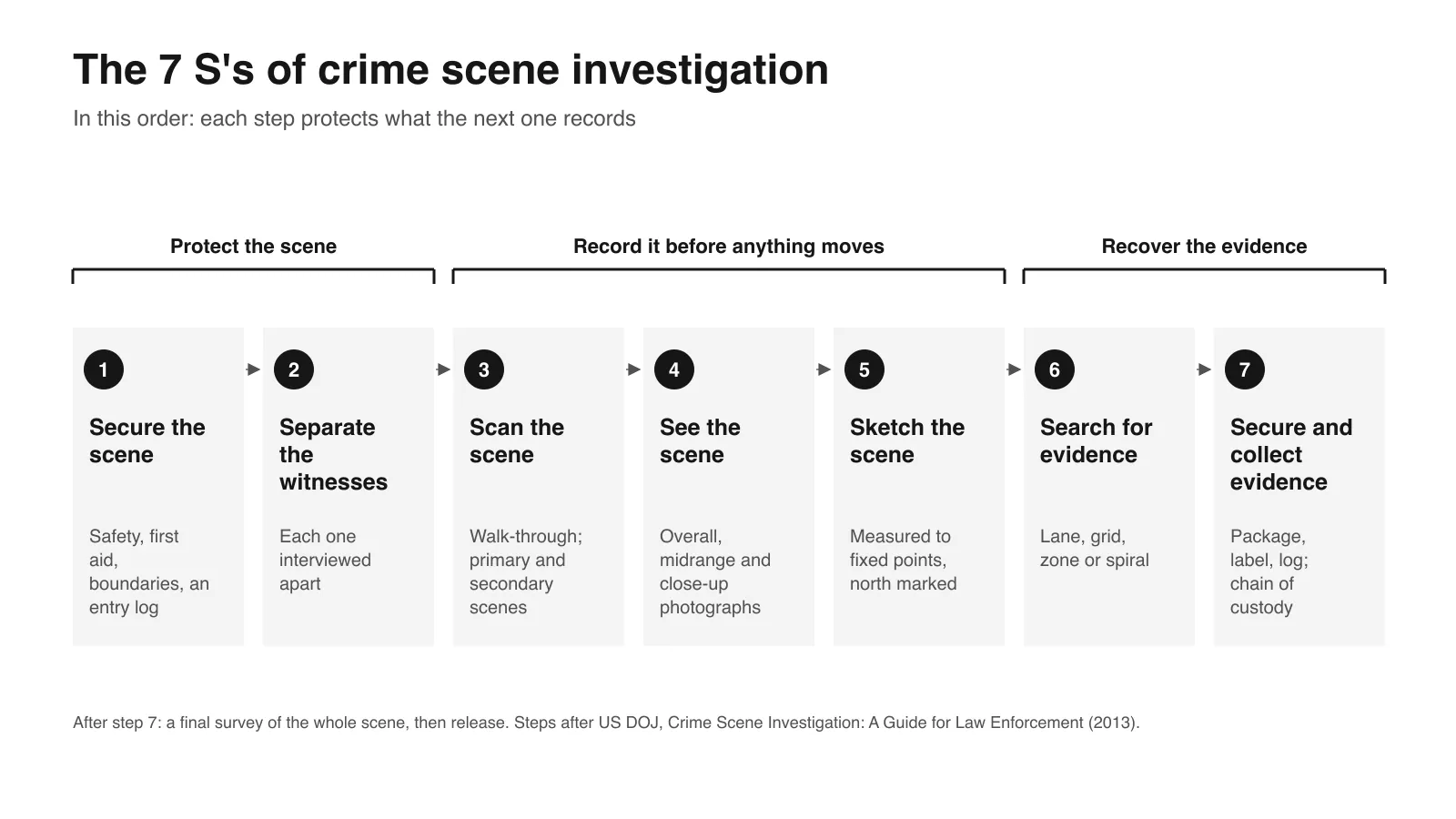
In the order of work at a scene, scanning belongs to recording the scene before anything is moved; the 7 S's of crime scene investigation show where it fits.
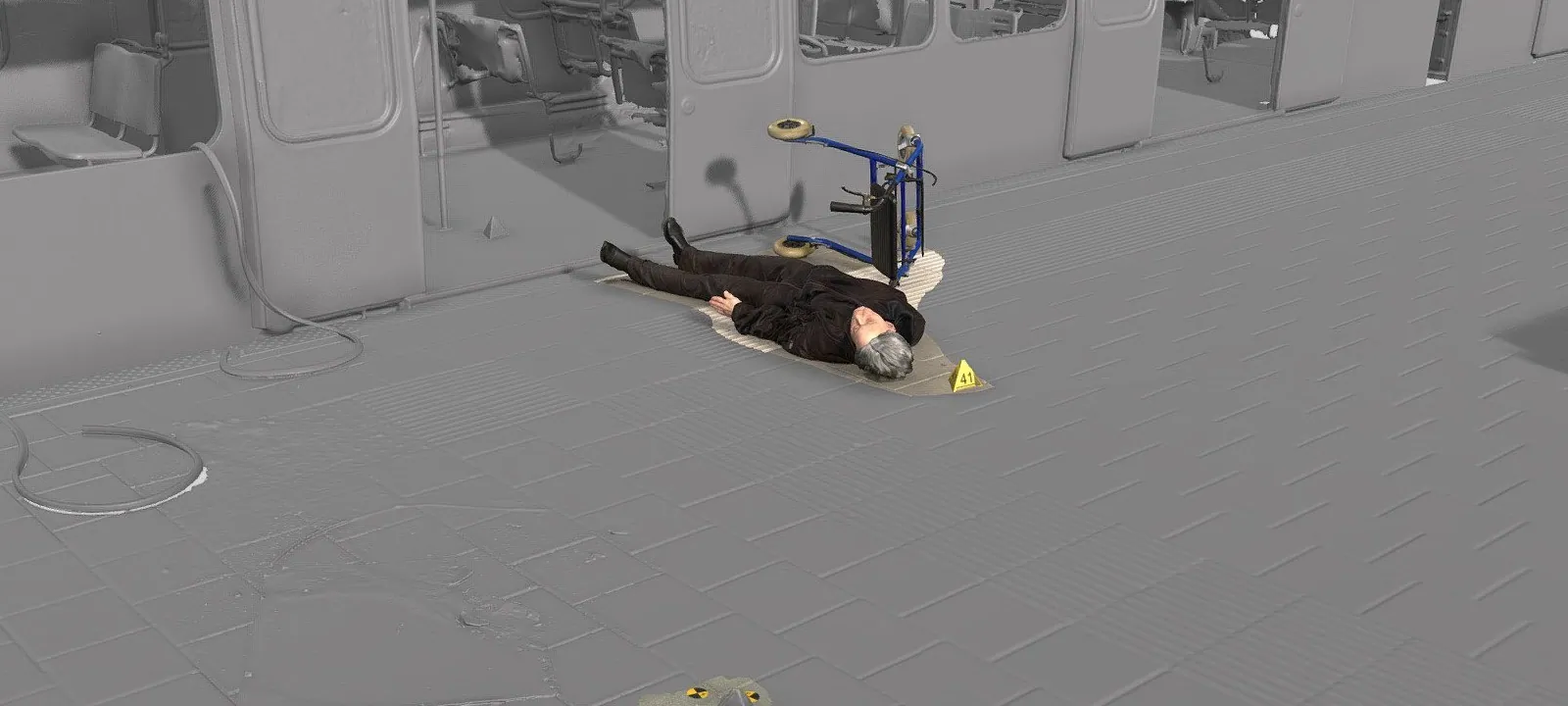
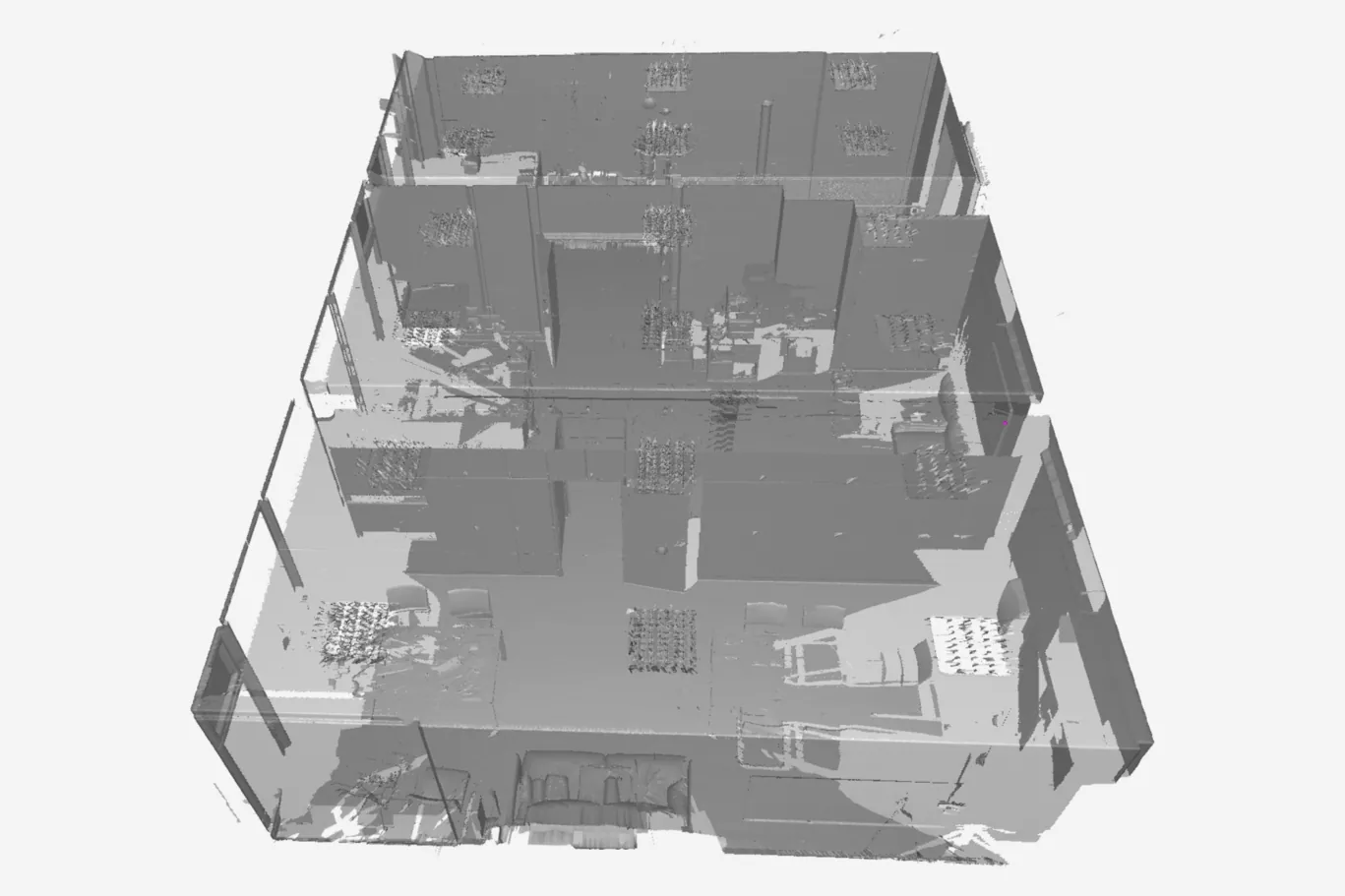
A Dutch police training crime scene as a 3D model made with Artec scanners: the room, the body and the evidence in measured positions.
How to choose a forensic 3D scanner: six things that decide it
Range and scale. A room or a street needs a scanner that measures tens of metres from a tripod; a footwear impression needs one that works 20 to 30 centimetres from the surface.
Accuracy and resolution, at a stated distance. Accuracy is how close each measured point is to its true position; resolution is the finest spacing the model can show. A long-range scanner's accuracy is quoted at a distance (Ray II: 1.9 mm at 10 m), a handheld's grows with the size of the object (Leo: 0.1 mm + 0.3 mm/m). How to read an accuracy figure explains the difference.
Colour and light. Bloodstains, burn patterns and bruising are colour, not shape. Handheld scanners carry their own light; a laser scanner measures geometry in the dark, but its colour cameras need light on the scene.
Contact and preparation. Optical scanners do not touch the evidence. Some reach their highest accuracy with reference targets placed near the object, which is a question for your evidence-handling procedure. Very dark, shiny or transparent surfaces are hard for any optical scanner; glass needs a scanning spray.
Portability and power. A scene may have no power and no room for a laptop. A fully standalone scanner, a wireless one and a tethered one each change how a team works at the scene.
Data, software and validation. A scan is only as useful in court as the record behind it: open formats for the other side, a documented workflow, and a validation study against acceptance criteria your unit sets.
The best 3D scanner for each forensic job
Each pick below is the Artec scanner whose specification matches the job. For a unit equipping from scratch, a scene scanner and a general-purpose handheld cover both scales a scene has; the others answer more specific casework.
Which Artec 3D scanner for which forensic job
Job
Artec scanner
Why it fits
Whole scenes: rooms, buildings, streets
Artec Ray II
Tripod laser scanner: 360° × 300° per position, out to 130 m, 1.9 mm at 10 m
Bodies, vehicles, larger evidence in place
Artec Leo
Wireless handheld, up to 0.1 mm; screen and storage onboard, no computer needed
Impressions, toolmarks, injuries, bloodstains
Artec Spider II
0.05 mm accuracy and resolution, 5 MP colour; tethered to a laptop
The same fine work without a cable
Artec Neo
0.05 mm without targets, 0.025 mm with them; Wi-Fi, a per-unit accuracy certificate
Bodies and injuries at autopsy
Artec Eva
0.1 mm accuracy, 0.9 kg, colour; a wide field of view for whole bodies
Small items in the laboratory
Artec Micro II
Desktop, up to 0.005 mm accuracy; items up to 200 × 200 × 150 mm
Scans from all six are merged and processed in one Artec Studio project and exported in open formats such as E57, OBJ and PLY.
Whole crime scenes, rooms and outdoor scenes: Artec Ray II
Our pick
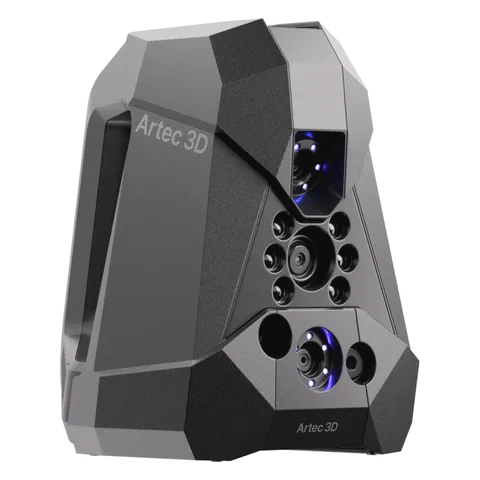
Artec Ray II
Tripod laser scanner
Range
Up to 130 m
Accuracy
1.9 mm at 10 m
Per position
About 1.7 min
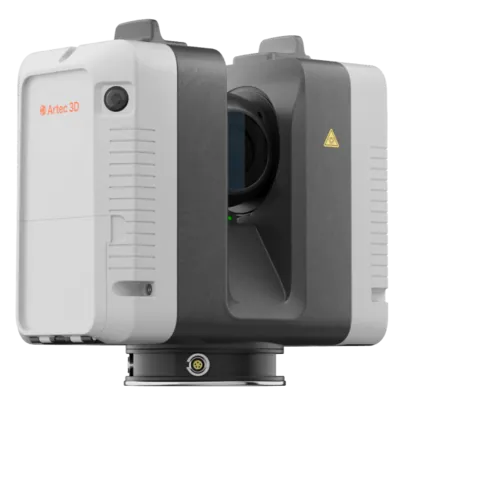
Ray II is a tripod laser scanner. From each position it records a 360° × 300° field out to 130 metres, with 1.9 mm accuracy at 10 metres, in about 1.7 minutes per position (2.7 with colour). A room typically needs two or three positions, so that furniture, doors and pillars hide nothing, and the positions are registered into one point cloud. Its laser measures geometry day or night; its 36 MP colour cameras need light on the scene. It is rated IP54 for outdoor work. See how a scene is recorded in crime scene 3D scanning.
Best for rooms, buildings, streets and collision scenes, bullet trajectories and sightlines across a scene. Not for the fine detail of a single item: its resolution is set in millimetres at 10 metres (3, 6 or 12 mm).
A whole apartment floor as one 3D model from Artec long-range laser scanning, shown in Artec Studio.
Bodies, vehicles and larger evidence in place: Artec Leo
Our pick
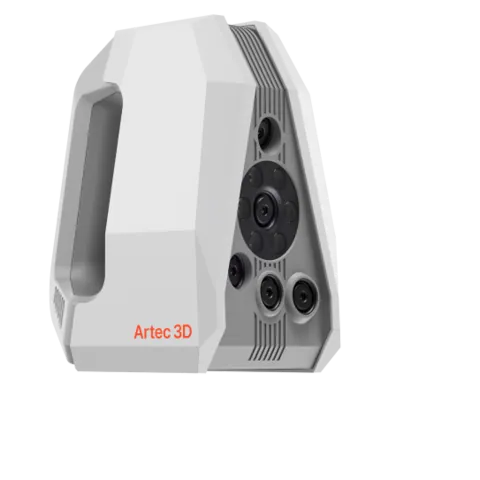
Artec Leo
Wireless handheld scanner
Accuracy
Up to 0.1 mm
Resolution
Up to 0.2 mm
Computer at the scene
Not needed
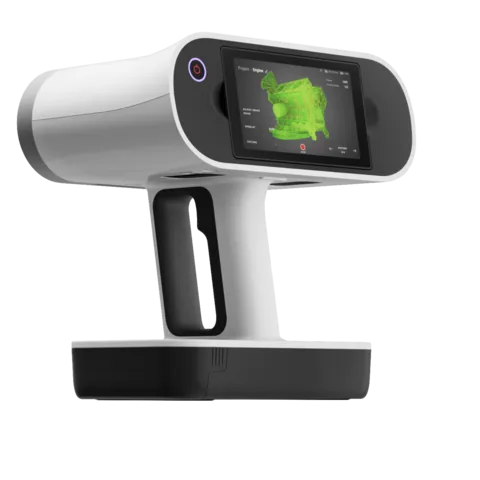
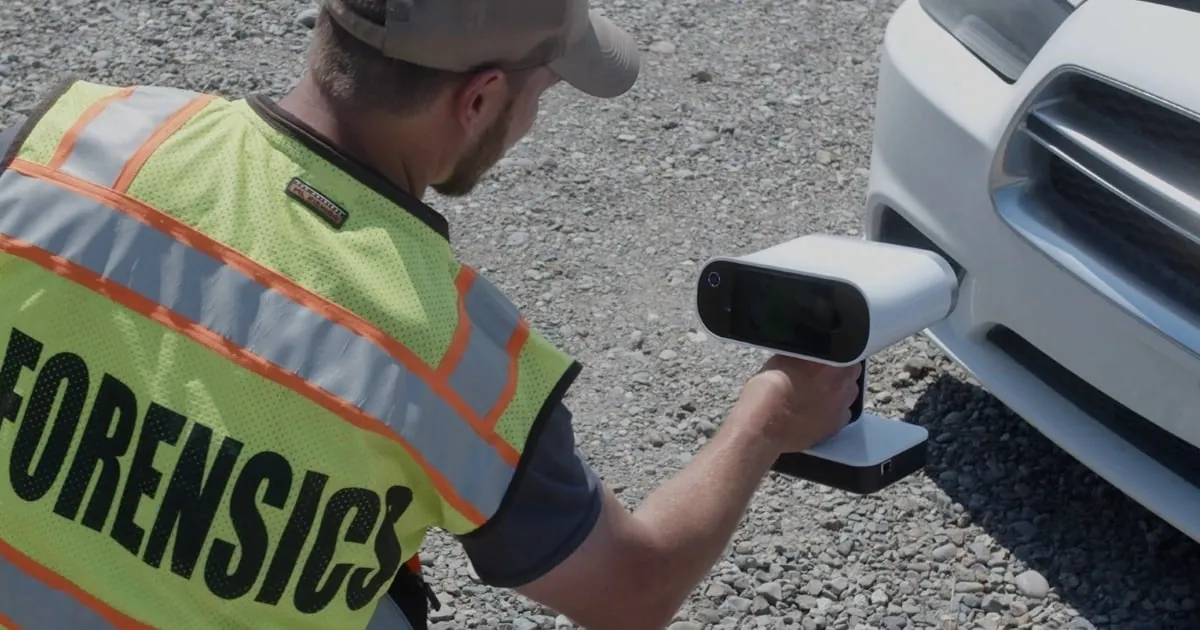
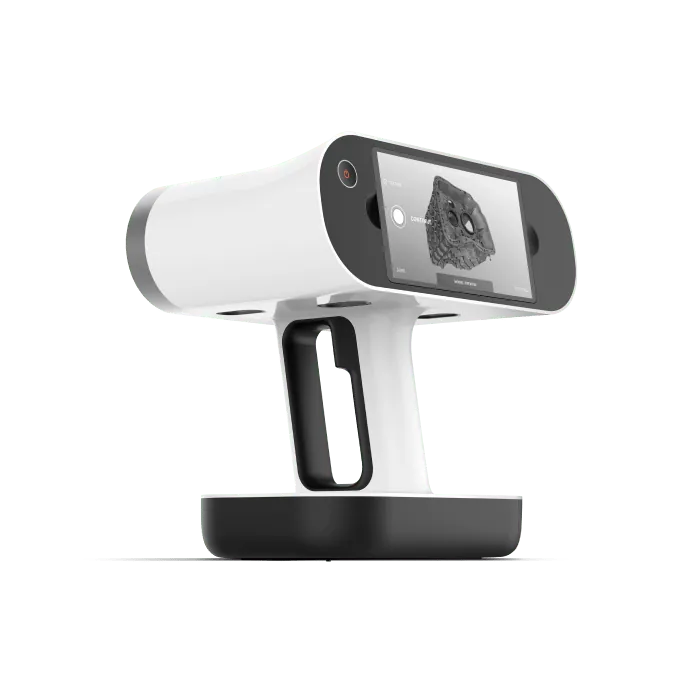
Leo is a wireless handheld scanner with its own 5.5-inch touchscreen, battery and 512 GB of storage, so it needs no computer at the scene. It records at up to 0.1 mm accuracy and up to 0.2 mm resolution, at up to 35 million points per second in HD Mode, which helps on black and shiny surfaces; glass needs a scanning spray. In a Dutch police exercise, a mannequin and its surroundings were scanned in 5 minutes. Origin Forensics reported vehicle inspections that took three to four hours with a tripod laser scanner taking under one with Leo.
Best for bodies at the scene, vehicles inside and out, rooms in detail, and items too large for a desktop scanner.
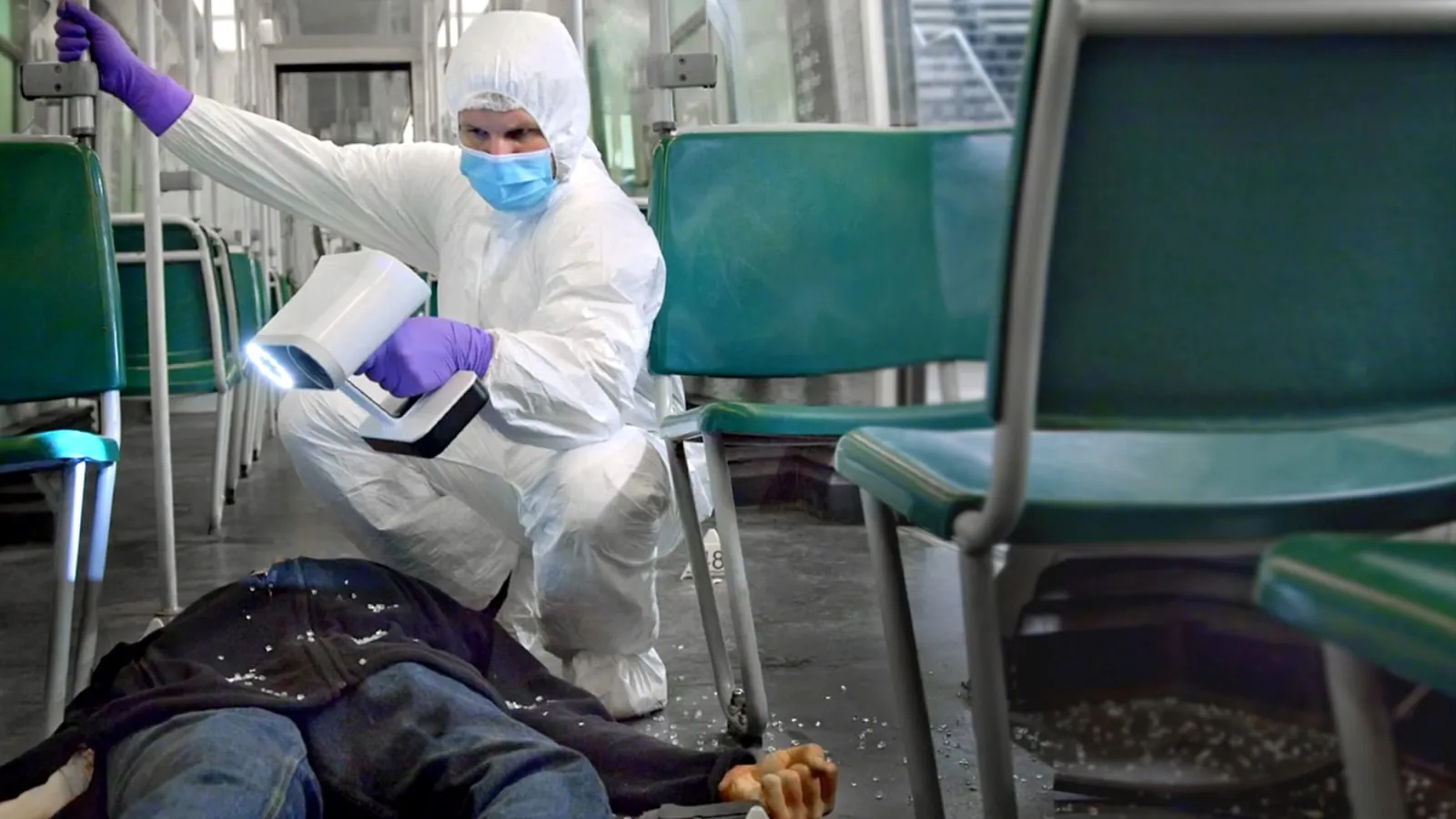
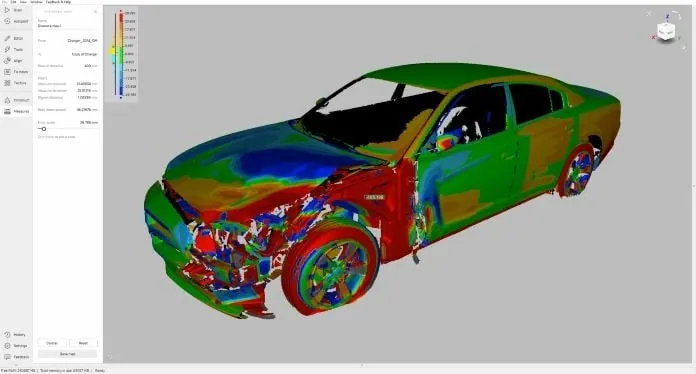
Forensic technician Kyle Rothwell of Origin Forensics scanning a wrecked Dodge Charger with Artec Leo.
Fine evidence at the scene: Artec Spider II, or Artec Neo without a cable
Our pick
Artec Spider II
Handheld scanner, tethered to a laptop
Accuracy
Up to 0.05 mm
Resolution
Up to 0.05 mm
Colour
5 MP texture
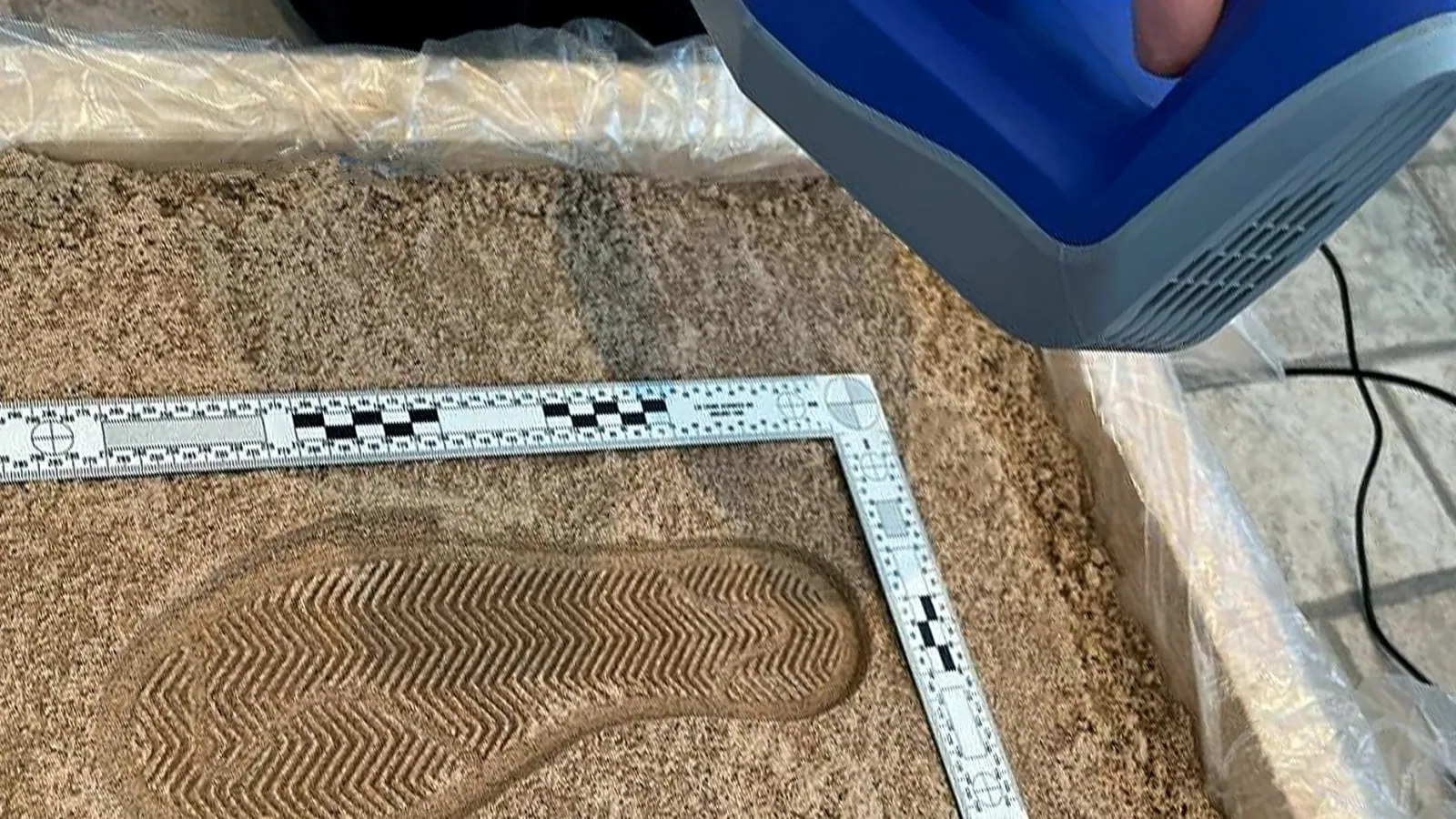
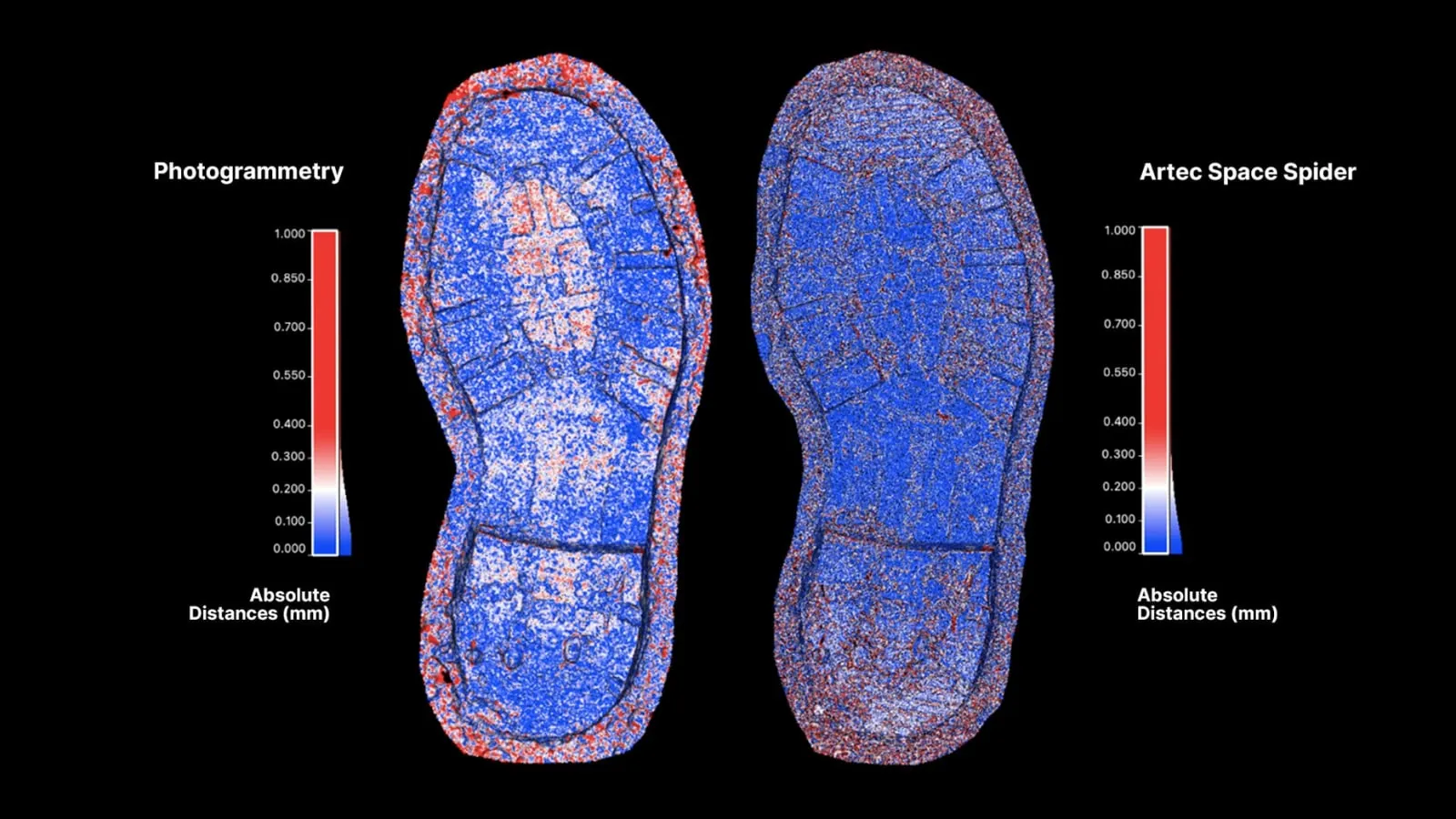
Spider II records small and medium items and surfaces at 0.05 mm accuracy and 0.05 mm resolution with 5 MP colour texture, working 19 to 30 centimetres from the surface and tethered to a laptop. That is the class of detail for footwear impressions, toolmarks, injuries, bloodstain patterns and fracture edges. In a published study, footwear impressions in soil and sand were scanned with the first-generation Space Spider in under a minute each, with 97% of points within 0.492 mm of the reference model; see footwear impressions.
Researcher Julia Harvey scanning a footwear impression with the first-generation Artec Space Spider in the study above. Photo: Eugene Liscio, P.Eng., ai2-3D Forensics.
Without a cable
Artec Neo
Wireless hybrid handheld scanner
Accuracy
Up to 0.05 mm
With targets
Up to 0.025 mm
Battery
40–50 min
Artec Neo, built for metrology-grade inspection, captures the same way without targets: 0.05 mm accuracy and resolution, 5 MP colour, the same working distance. It runs on batteries, with 40 to 50 minutes of continuous scanning and four batteries in the box, and connects over Wi-Fi to a computer up to 6 metres away. With reference targets placed around the object it reaches 0.025 mm + 0.035 mm/m, and every unit ships with its own accuracy certificate from Artec's ISO/IEC 17025-accredited laboratory, tested to VDI/VDE 2634 Part 3. Neo was built for industrial inspection; in forensic work its case is a scene where a cable is a problem, or a measurement that has to stand on a certified figure.
Both record a mark's shape, size and position. Comparing striations with a particular tool or firearm is done at micrometre scale, with a comparison microscope or a dedicated topography system. Bite injuries can be recorded for review, but bitemark comparison itself lacks a sufficient scientific foundation (PCAST, 2016; NIST, 2023).
Bodies and injuries at autopsy: Artec Eva
Our pick
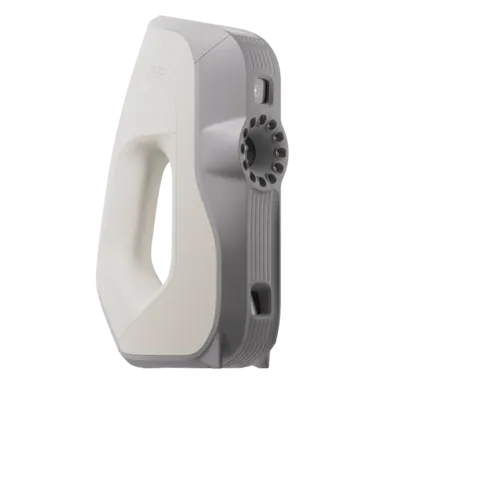
Artec Eva
Handheld scanner, tethered
Accuracy
Up to 0.1 mm
Weight
0.9 kg
Field of view
Up to 536 × 371 mm
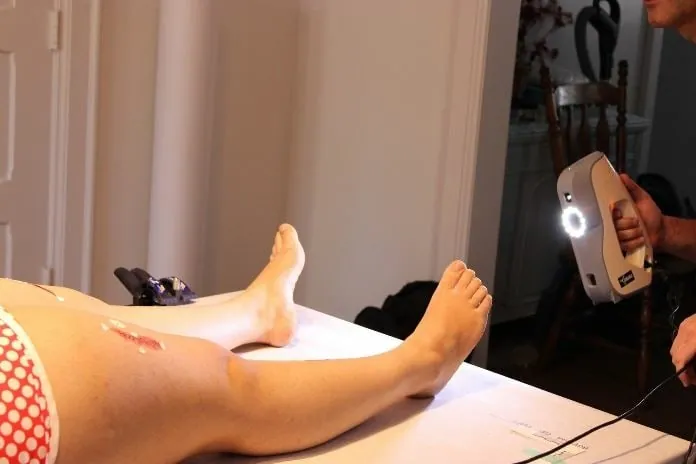
Eva is a 0.9 kg handheld scanner tethered to a computer, with up to 0.1 mm accuracy, up to 0.2 mm resolution and colour, and a field of view of up to 536 × 371 mm that suits whole bodies and large injuries. In a University of Toronto study, documenting 11 simulated injuries on a live participant took 26 minutes with Eva against 54 for photography and manual measurement, with processing done afterwards; Eva's measurements were as accurate as the manual ones, and the model could be measured along curved skin. See autopsy documentation; for a wound that needs finer detail, Spider II.
Artec Eva scanning a live participant in the University of Toronto study, which compared scanning with photography and manual measurement.
Small items in the laboratory: Artec Micro II
Our pick
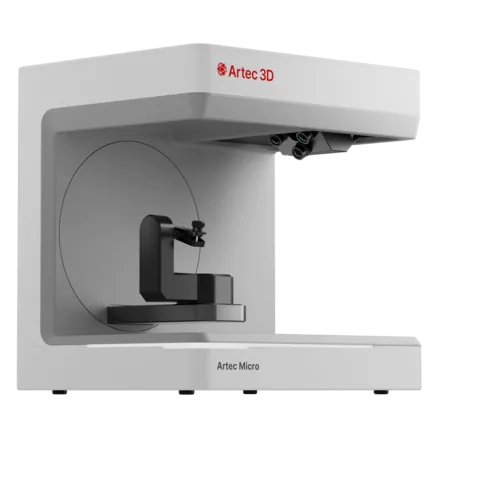
Artec Micro II
Desktop scanner
Accuracy
Up to 0.005 mm
Resolution
Up to 0.04 mm
Largest item
200 × 200 × 150 mm
Micro II is a desktop scanner. The item is fixed on an automated platform and scanned at up to 0.005 mm accuracy and 0.04 mm resolution, then turned over once to record its underside. It takes items up to 200 × 200 × 150 mm and 2 kg — cartridge cases, projectiles, fragments, teeth and small tools — and records their form for measurement and archiving. See small evidence.
Collisions and vehicles: Ray II with Leo
A collision has both scales. Ray II records the roadway, rest positions, sightlines and the debris field; Leo records the vehicles, inside and out, for crush and intrusion. Tyre marks on asphalt show in the laser's intensity and colour data rather than as geometry; gouges are geometry. Artec recommends Neo and Leo as a pair: Leo covers large surfaces quickly, Neo adds detail where tolerances matter. See crash vehicle scanning.
Origin Forensics inspects the crashed Charger's damage with a surface distance map in Artec Studio.
Artec Ray IIThe scene
Artec LeoBodies and vehicles
Artec Spider IIFine evidence
Type
Tripod laser scanner
Wireless handheld
Handheld, tethered
Working range
0.5–130 m
0.35–1.2 m from the surface
0.19–0.3 m from the surface
Accuracy
1.9 mm at 10 m
Up to 0.1 mm
Up to 0.05 mm
Resolution
3, 6 or 12 mm at 10 m
Up to 0.2 mm
Up to 0.05 mm
Capture
About 1.7 min per position (2.7 with colour)
Up to 35 million points/s (HD Mode)
Up to 8 million points/s
Computer at the scene
Not needed
Not needed: screen and storage onboard
A laptop
Best for
Rooms, buildings, streets, collisions
Bodies, vehicles, rooms in detail
Impressions, toolmarks, injuries, bloodstains
If you start with one handheld
Artec Leo
A wireless handheld scanner with its own screen and storage, so a scene, a body or a vehicle is recorded without a laptop or cables. Paired with a tripod scanner for whole scenes, it covers both scales a scene has.
Scans from different Artec scanners are merged and processed in one Artec Studio project: a handheld scan of a body or a bullet hole is registered into the room scan, so fine detail sits in its measured position, within the registration error recorded for the project. See the forensic point cloud workflow.
Ray II with Leo: the scene and its detail, at crime scenes and collisions.
Leo with Spider II or Neo: larger items and fine marks in the same case, such as a door and the toolmark on its lock.
Spider II or Neo with Micro II: evidence recorded where it lies, then small items in the laboratory.
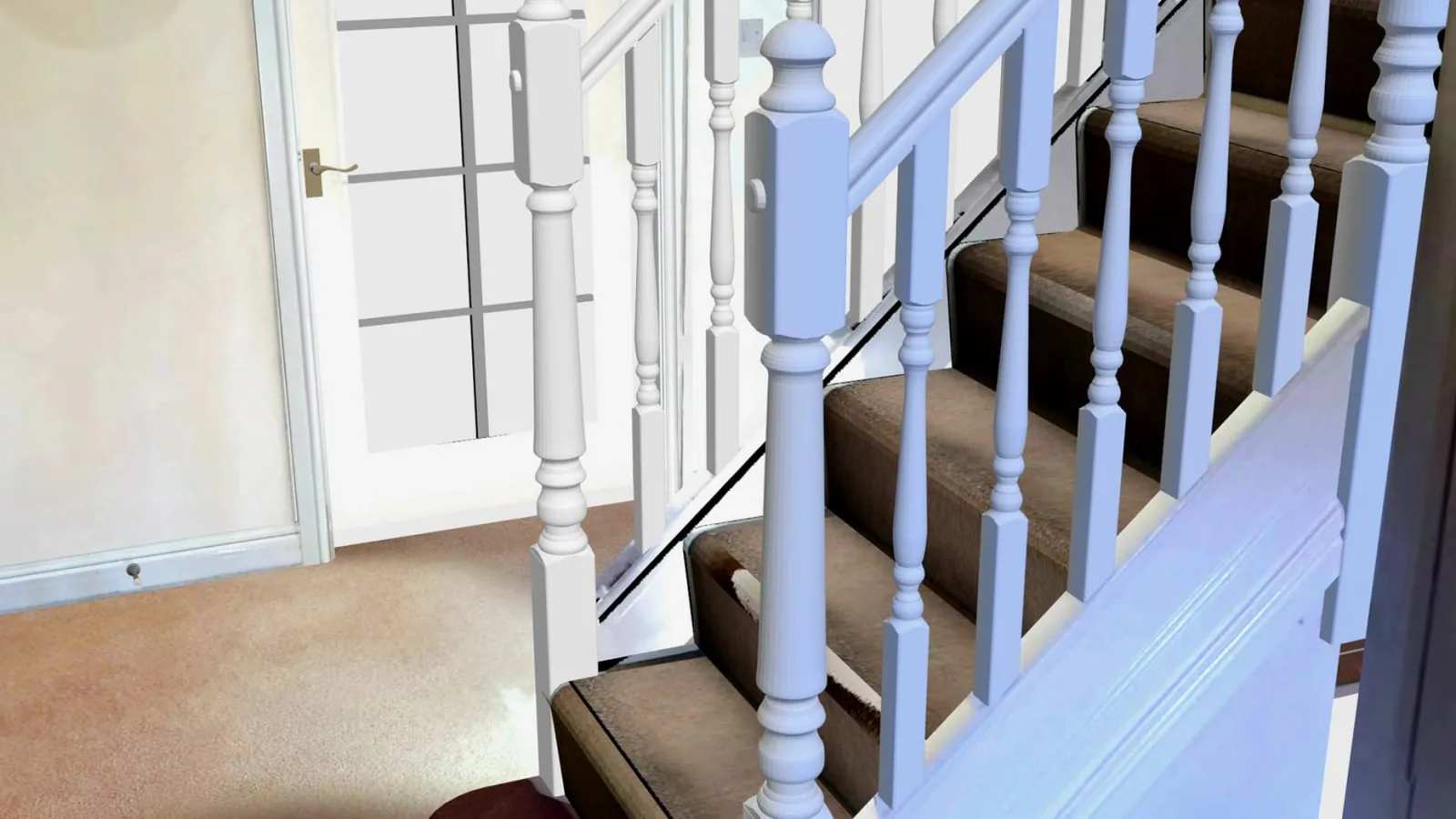
Combined-scanner 3D model of a staircase and its surroundings at a scene: Advanced Laser Imaging adds Artec handheld scans to LiDAR and photogrammetry data. Image courtesy of Advanced Laser Imaging.
3D scanner, phone LiDAR, photogrammetry or total station?
Phone LiDAR: phones publish no accuracy specification, and independent studies report errors from a few millimetres to centimetres depending on the app, the scene and the operator. It is a sketch or an orientation aid; evidence only with a validated method. See professional scanner vs smartphone LiDAR.
Total station: more accurate per point, at 1 to 2 mm plus a few ppm, but it records a few hundred points where a laser scanner records the whole surface. See laser scanner vs total station.
Photogrammetry: done well, it can match a scanner on small evidence, but it needs scale references, good light and processing before you know it worked; a scanner gives a stated figure and confirmation at the scene. See 3D scanning vs photogrammetry.
Casting: dental stone sets in a footwear impression in about 45 to 60 minutes, needs 24 to 48 hours to harden, and destroys an impression in soil; a scan first leaves the option to cast afterwards. See 3D scanning vs casting.
Distance from a reference model in the footwear impression study: photogrammetry (left) and the first-generation Artec Space Spider (right). 97% of points fell within 0.512 mm and 0.492 mm respectively. Photo: Eugene Liscio, P.Eng., ai2-3D Forensics.
How accurate is forensic 3D scanning, and how do you prove it?
Manufacturer figures are measured under defined conditions. Ray II states 1.9 mm at 10 metres, 2.9 mm at 20 and 5.3 mm at 40; the handhelds state 0.05 to 0.1 mm, growing with the size of the object. Micro II carries an ISO 12836 accuracy certificate, and every Neo ships with its own certificate.
In casework, what matters is the accuracy you can demonstrate: a validation study measuring known references with your scanner and your workflow, against acceptance criteria you set, with an estimate of measurement uncertainty, and the registration error recorded for every project. A manufacturer certificate is a starting point for that study, not a substitute. Admission is still the court's decision; see 3D scan evidence in the courtroom.
What does a forensic 3D scanner cost?
The class of device sets most of the price. A professional handheld or desktop 3D scanner of the kind used on evidence, bodies and vehicles costs roughly $10,000 to $40,000; a long-range tripod laser scanner for whole scenes costs roughly $60,000 to $100,000, depending on the region. A unit that buys both a scene scanner and a handheld spends about $100,000 to $140,000 on hardware.
Processing software, accessories, training and extended warranty come on top. Artec Studio is sold as a yearly subscription or a one-off licence, and premium packages include several years of it with the scanner. Against the cost sit the time saved at the scene and the measurements that remain available after release; what drives a forensic scanner's cost breaks it down.
Tell us what your unit documents most, and see the matching Artec scanner record it — scenes, bodies, vehicles or evidence.
It depends on the job. For whole rooms and outdoor scenes, a tripod laser scanner such as Artec Ray II; for bodies, vehicles and evidence in place, a wireless handheld such as Artec Leo; for footwear impressions, toolmarks and injuries, Artec Spider II or Artec Neo. A scene scanner and a handheld together cover both scales a scene has.
What is a crime scene scanner?
A device that records a crime scene or an item of evidence as measurable 3D geometry, usually with colour, so distances, positions and shapes can be taken after the scene is released. Tripod laser scanners record whole scenes; handheld and desktop scanners record bodies, vehicles and evidence in finer detail.
What technology do crime scene investigators use to document a scene?
Notes, photography and sketches with measurements taken by tape or total station, and 3D laser and structured-light scanners that record the scene's geometry. Each records something the others do not, which is why a scan supplements the photographs and notes rather than replacing them.
How much does a forensic 3D scanner cost?
Roughly $10,000 to $40,000 for a professional handheld or desktop 3D scanner, and $60,000 to $100,000 for a long-range tripod laser scanner that records whole scenes; prices vary by region. A unit with both a scene scanner and a handheld spends about $100,000 to $140,000 on hardware, plus processing software, accessories and training.
How accurate is 3D laser scanning at a crime scene?
Artec Ray II states 1.9 mm at 10 metres, 2.9 mm at 20 and 5.3 mm at 40; handheld scanners state 0.05 to 0.1 mm on the evidence itself. For casework, a unit verifies its own accuracy with a validation study and records the registration error of every project.
Can I use my phone as a 3D scanner for evidence?
Phones publish no accuracy specification, and studies report errors from millimetres to centimetres depending on the app, the scene and the operator. A phone scan can serve as an orientation aid; as evidence it needs a validated method, and it is far from the 0.05 to 0.1 mm of a professional handheld.
What is the best 3D scanner for scanning a human body?
At the scene, a wireless handheld such as Artec Leo records the body without cables or a laptop. At autopsy, Artec Eva is light and records colour; in a University of Toronto study it documented 11 simulated injuries on a live participant in 26 minutes against 54 for photography and manual measurement. For fine wound detail, Artec Spider II.
Do 3D scanners work in the dark and outdoors?
Artec Ray II measures geometry day or night and is rated IP54; its colour imagery needs light on the scene. Handheld scanners carry their own light. Artec Leo has no published water rating, so protect it from rain.
Tell us what you document — scenes, bodies, vehicles, impressions or laboratory items — and a specialist will show you the Artec scanner that fits, recording the kind of evidence you work with.