The CSI effect: what it is and what the research actually shows
The CSI effect is the claim that forensic TV dramas change what jurors expect from evidence. Surveys find high expectations, but studies of real verdicts have not found the acquittals prosecutors feared.
The CSI effect is the claim that crime dramas such as CSI raise expectations of forensic evidence, so jurors acquit when it is missing, or trust it too much when it is there.
In a survey of 1,027 prospective jurors in Michigan, 46% expected scientific evidence in every criminal case, yet that expectation rarely changed how they said they would vote.
Acquittal rates did not rise after CSI began in US federal courts or four large states; in Canada they had been rising long before the show, and studies in Canada and Australia found no harmful effect.
What did change was practice: prosecutors explain missing evidence and ask jurors about television, and investigators face pressure to collect evidence whether or not it is relevant.
Few television programmes have been blamed for as much as CSI: Crime Scene Investigation. Since the mid-2000s prosecutors, judges and journalists have said it changed how juries treat forensic evidence. The claim became known as the CSI effect, and it has been tested more than most claims made about television.
This guide explains what the CSI effect is, the six different claims hidden behind the name, what the research found, and what it means for the people who collect and present forensic evidence.
What is the CSI effect?
The CSI effect is the claim that television crime dramas, CSI: Crime Scene Investigation above all, have changed how people judge real forensic evidence: jurors expect it in every case and acquit without it, or treat it as more certain than it is. The same label is used for effects on victims, investigators, students and offenders.
Where the name came from
CSI: Crime Scene Investigation premiered in 2000 and was followed by CSI: Miami in 2002 and CSI: NY in 2004. On one night in 2006, according to Nielsen figures cited by Judge Donald Shelton, 30 million people watched CSI, and five of that week's top ten programmes were about scientific evidence in criminal cases (Shelton, NIJ Journal, 2008). As attorneys, judges and journalists began to blame the shows for acquittals, the media named the complaint the CSI effect.
By 2002 CSI was the most-watched programme in the United States. The term appears to have entered popular use late that year, in a Time magazine article about a growing public expectation that police labs can do everything TV labs can, which already raised the worry about jury pools. It appeared more often in 2004, and in 2005 media coverage exploded.
What mistaken notion do shows like CSI promote?
That forensic science is fast, certain and always available. On screen, almost every scene yields DNA or fingerprints, results arrive within hours, and examiners announce a definite match. In real casework, DNA and fingerprints are often absent or unusable, analysis can take weeks or months, and examiners tend to use less definite language, because absolute certainty is rarely possible. The show also merges jobs: its crime scene investigators interrogate suspects and make arrests, which in real agencies is the work of detectives and uniformed officers.
Six different claims called "the CSI effect"
The phrase is used loosely. Reviewing the media coverage, the criminologists Simon Cole and Rachel Dioso-Villa found six separate claims under it, each named after the people who tend to make it (Cole and Dioso-Villa, 2009):
Claim
Made by
What it says
Strong prosecutor's effect
Prosecutors
Jurors expect more forensic evidence and acquit when it is missing.
Weak prosecutor's effect
Prosecutors
Prosecutors, not jurors, change their behaviour, questioning jurors about their viewing, explaining why evidence is absent and requesting tests the law does not require.
Defendant's effect
Defence lawyers
Heroic portrayals of forensic scientists make jurors trust the prosecution's forensic witnesses too much.
Producer's effect
The show’s producers
The show's makers say it teaches viewers real science.
Educator's effect
Educators
The shows draw students into forensic science courses.
Police chief's effect
Police
Offenders learn from the shows how to avoid leaving evidence, for example by wearing gloves or using bleach.
Tested against verdicts, the first claim has not held up: no rise in acquittals attributable to CSI was found (US federal courts, four large states, Canada).
What complaint do prosecutors have about CSI-type shows?
That jurors now expect forensic evidence in every case and acquit without it. In 2005 the Maricopa County Attorney's Office in Arizona surveyed 102 prosecutors with jury trial experience; 38% reported at least one acquittal or hung jury that they blamed on missing forensic evidence. Yet the survey reported no change in the county's verdicts or acquittal rates. What had changed was how prosecutors prepared for trial.
What complaint do defence lawyers have?
The opposite one: that shows celebrating forensic scientists make jurors trust the prosecution's forensic witnesses too much. Cole and Dioso-Villa note that many legal scholars consider this defendant's effect just as plausible as the prosecutors' version, even though the media mention it less often.
Examples of the CSI effect
The examples usually given come from courtrooms, prosecutors' offices and beyond:
A juror who complained that the prosecution had not done a thorough job because "they didn't even dust the lawn for fingerprints", as recalled by Judge Donald Shelton.
A district attorney quoted by Shelton: "Jurors now expect us to have a DNA test for just about every case."
Prosecutors who, in closing arguments, called the higher standard of proof they felt held to the "TV expectation".
The Maricopa County Attorney calling on CBS to add a disclaimer that the programme is fiction, and the FBI producing a video about the effect.
A survey by Monica Robbers of about 290 prosecutors, defence attorneys and trial judges across the United States: 79% reported a specific case they felt forensic programmes had influenced, and 28% of those reports mentioned more use of witnesses who explain missing evidence.
Beyond the courtroom: offenders said to wear gloves or pour bleach on a scene after seeing it on television, and students choosing forensic science degrees.
Each of these shows what people believe or how they changed their own work. None, on its own, shows that television changed a verdict.
Is the CSI effect real? What the research shows
The short answer: the expectations are real, the extra acquittals are not. Four lines of evidence point the same way.
Why the CSI effect is controversial
Much of the evidence offered for the effect measures lawyers, not jurors. Surveys of prosecutors, defence attorneys and judges show what they believe and how they changed their own practice; they say little about how juries decide. The Maricopa study claimed "a significant CSI influence" on jurors, yet conceded that verdicts had not noticeably changed. Any real effect also has to be separated from the advances in forensic science that the shows depict (Cole and Dioso-Villa, 2009).
Jurors do expect a lot of forensic evidence
In 2006 Judge Donald Shelton and the criminologists Young Kim and Gregg Barak surveyed 1,027 people summoned for jury duty in Ann Arbor, Michigan, before any jury selection. 46% expected some kind of scientific evidence in every criminal case, 36% fingerprints, 32% ballistics and 22% DNA. The expectations rose with the type of case: 73% expected DNA in a rape case and 71% fingerprints in a breaking-and-entering case, so respondents were matching evidence to crimes rather than demanding everything everywhere.
Share of 1,027 prospective jurors in Ann Arbor, Michigan, who expected each kind of forensic evidence from the prosecution (Shelton, Kim and Barak, 2006 survey).
CSI viewers expected more than non-viewers of the evidence likely to be relevant to a crime, and less of the evidence that was not, so the authors suggest the viewers may simply have been better-informed jurors.
But expectations rarely decide verdicts
The question that matters is whether jurors acquit when those expectations go unmet. Shelton's team put 13 scenarios to the respondents. When the victim or other witnesses testified, they were more likely to convict than acquit even without scientific evidence, except in rape cases; when the prosecution relied on circumstantial evidence, they said they would want some scientific evidence first. Between CSI viewers and non-viewers, only 4 of the 13 scenarios showed differences, and those were inconsistent.
Acquittal rates did not rise
If jurors were acquitting because of CSI, acquittal rates should have risen after 2000. Cole and Dioso-Villa found no discernible increase in US federal courts. Charles Loeffler found none in four large states, and Benoît Dupont found no increase in Canada that could be attributed to CSI.
Viewers can be more critical, not more trusting
In a mock-trial study by N. J. Schweitzer and Michael Saks, 48 students read the transcript of a trial. Those who watched CSI were more critical of the forensic evidence, not more trusting, which the authors read as a sign of higher expectations of forensic science.
Outside the United States
Most of the research comes from countries that try serious crimes before juries; where judges decide cases alone, the question does not arise in the same form. In a Canadian survey of 605 jury-eligible college students, viewing habits did influence how some forensic evidence was treated. But neither that survey nor a study of real jurors after trials in Australia found a harmful CSI effect, and the Australian jurors assessed forensic evidence in a balanced, thoughtful way (Holmgren and Fordham, 2011).
The "tech effect": a better explanation
Shelton's team concluded that a broader "tech effect" explains what they saw. Computers, the internet and the media have put science into everyday life, so jurors arrive with a general sense of what science can do, and expect investigators to have used it. On this view, any change in jurors comes from real advances in forensic science, which the shows depict, rather than from the shows themselves.
The pressure reaches beyond the jury box. A 2022 systematic review of five studies, published in a forensic odontology journal, reported pressure on investigators to collect DNA at crime scenes whether or not it was relevant to the case, and growing public interest in forensic science (J Forensic Odontostomatol, 2022).
What courts and investigators do about it
Shelton described two possible responses, and prosecutors have made changes of their own.
Get the evidence jurors seek: equip police and other investigating agencies with up-to-date forensic technology, and give crime laboratories the capacity to cut backlogs.
Explain the evidence that is absent: when scientific evidence is not relevant, prosecutors need more convincing ways to say so. Some call a forensic technician to testify that the scene was dusted for fingerprints and none were found.
Ask about expectations at jury selection: prosecutors report questioning potential jurors about their television viewing.
Choose jurors on that basis: prosecutors with little forensic evidence may strike heavy CSI viewers, and defence lawyers may do the same when the case rests on forensic evidence. Cole and Dioso-Villa note that neither assumption is necessarily correct.
Where 3D documentation fits
The CSI effect cuts both ways for anyone presenting forensic evidence. Jurors expect modern, visual evidence, and the defence will test whether it is as certain as it looks. A 3D scan of a scene meets the first expectation honestly only if it also survives the second.
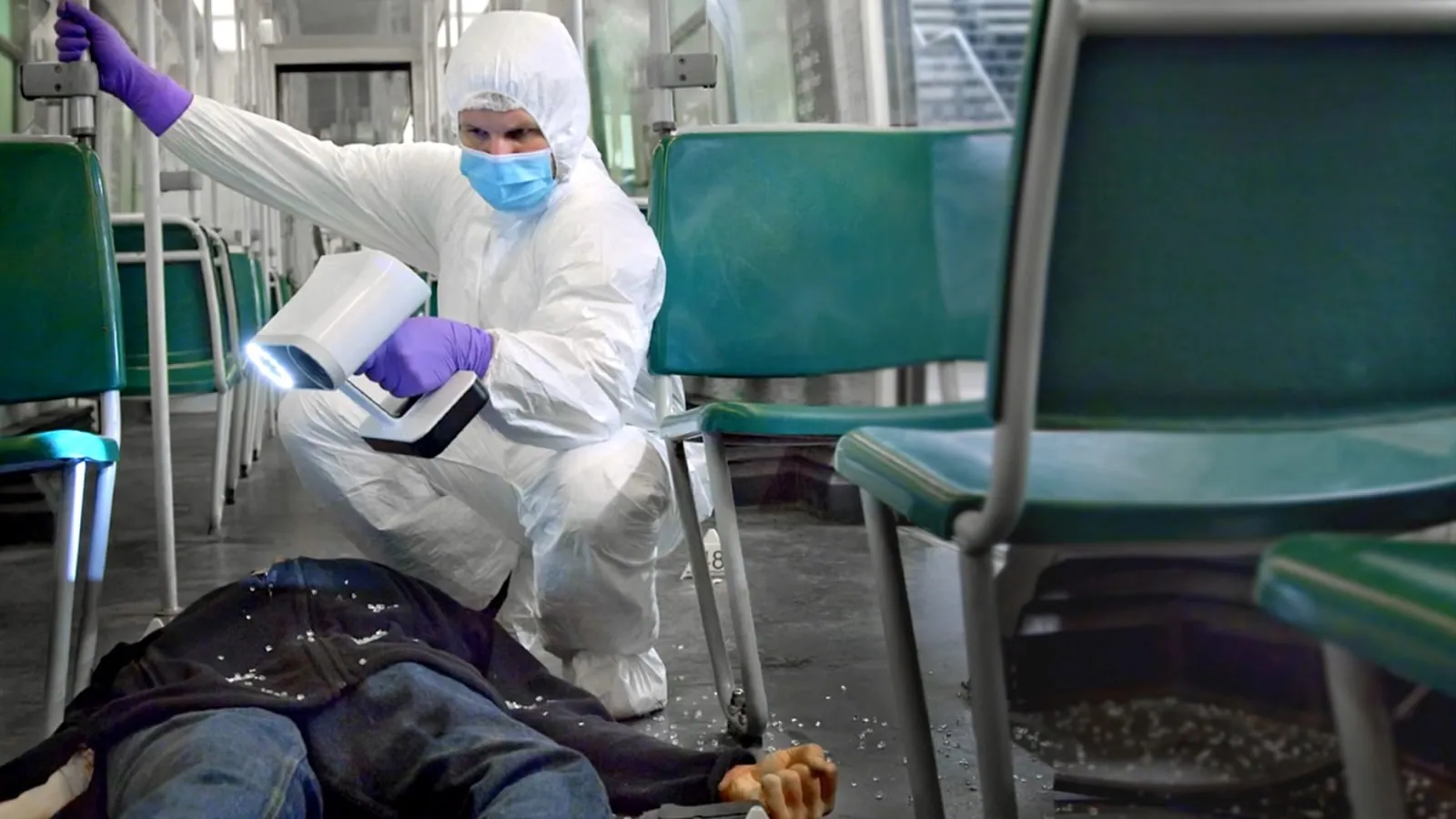
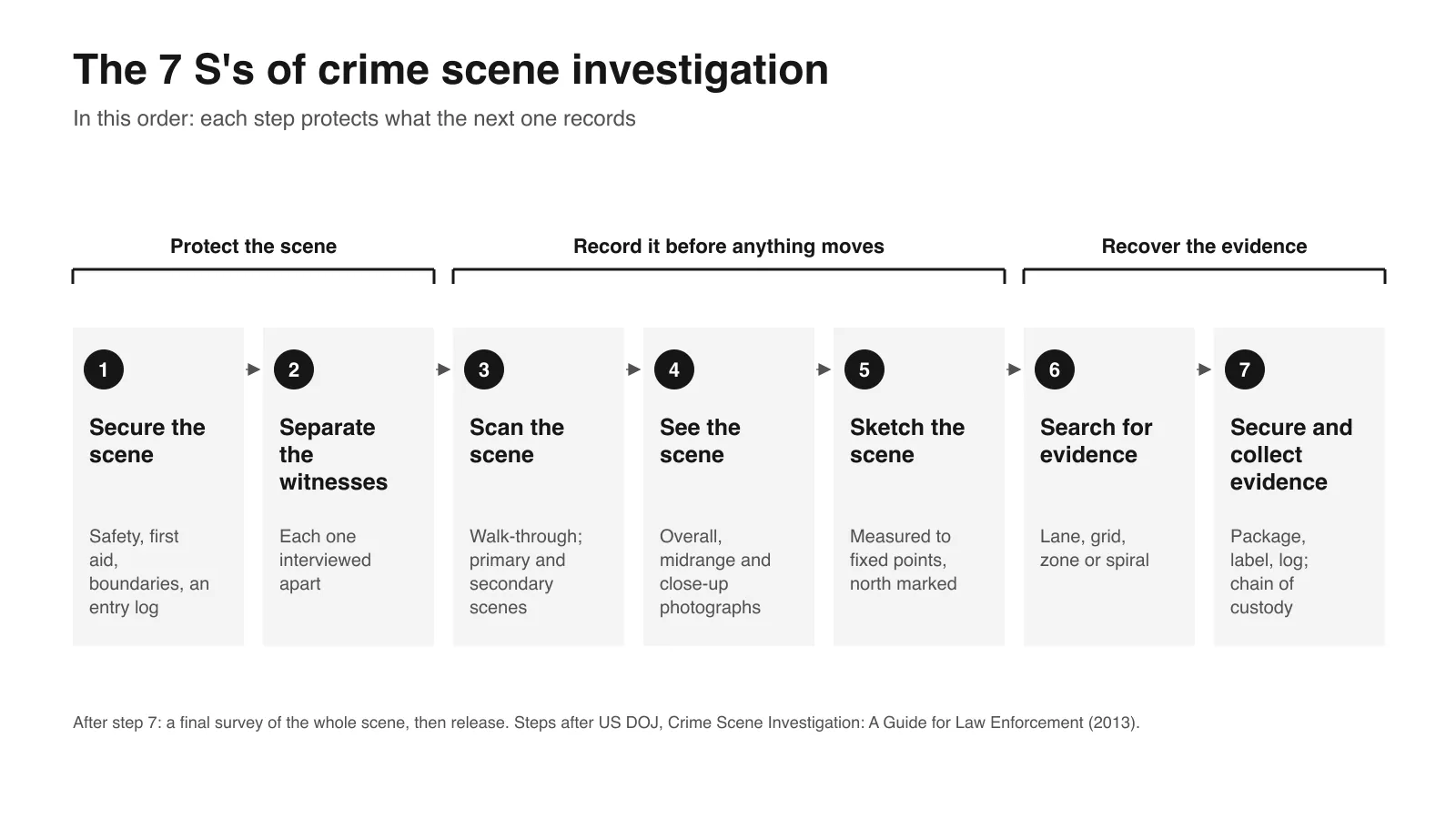
It starts at the scene: a complete record made before the scene is released lets a court see what was there and what was not; the 7 S's of crime scene investigation set out the order.
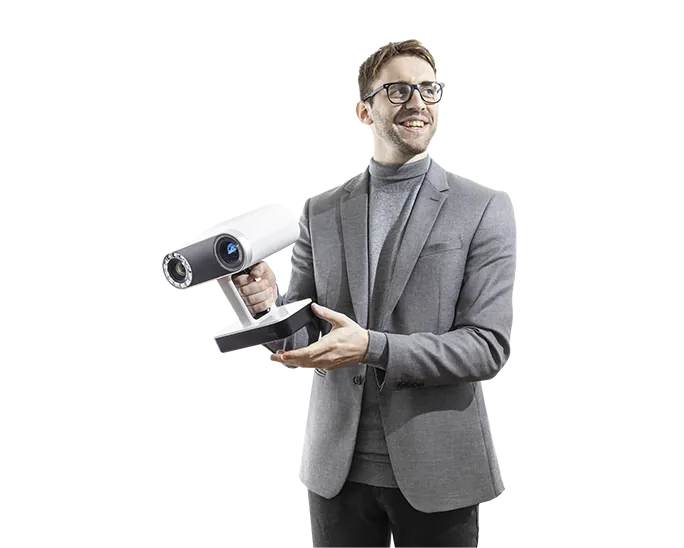
A scan records the scene as a measurable model that jurors can be shown and the other side can measure for itself. It needs what any expert evidence needs: a stated accuracy for the device used, a documented workflow and a validated method; see 3D scan evidence in the courtroom and validating 3D scanning for casework. Which scanner records which kind of evidence is compared in our guide to the best 3D scanners for crime scenes.
Used for courtroom exhibits
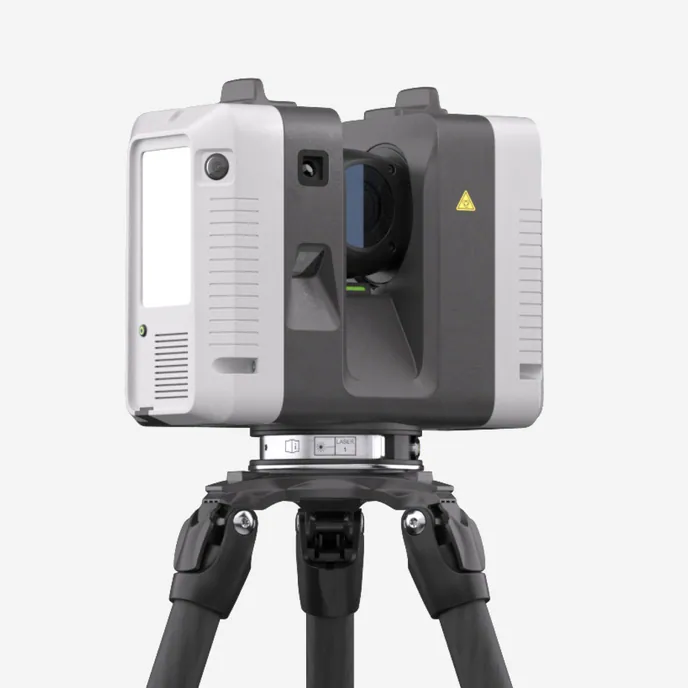
Artec Ray II
A tripod laser scanner that records a room or an outdoor scene with a stated accuracy, so the exhibit a jury is shown comes with the figure the defence will ask about. Paired with a handheld scanner for individual items, it keeps the whole scene in one measurable model.
The idea that watching crime shows like CSI makes jurors expect forensic evidence, such as DNA, in every case, and acquit when it is missing. Research has found high expectations, but not the extra acquittals.
Is the CSI effect real?
Partly. Jurors do expect a lot of forensic evidence, but studies of verdicts and acquittal rates in the United States and Canada, and of real jurors in Australia, have not found that those expectations lead to more acquittals. Judge Donald Shelton and his colleagues suggest a broader "tech effect" instead.
Can you give an example of the CSI effect?
A juror who complained that the prosecution had not dusted the lawn for fingerprints, as recalled by Judge Donald Shelton, or the 38% of prosecutors surveyed in Maricopa County, Arizona, who reported at least one acquittal or hung jury they blamed on missing forensic evidence. Both are claims about the effect, not proof that it changed a verdict.
Is the CSI effect good or bad?
Both are argued. Critics say it raises unrealistic expectations and pushes investigators to collect evidence that may not be relevant; others point to better-informed jurors and more students choosing forensic science.
How accurate is CSI?
Not very, as a picture of the job. On screen, results come within hours, evidence is nearly always found and a "match" means certainty, and the same investigators interrogate and arrest suspects. In reality, analysis takes much longer, evidence is often missing, and those roles are separate.
What does CSI stand for?
Crime scene investigation, or the crime scene investigator who does it: the specialist who documents a scene and collects its evidence. CSI: Crime Scene Investigation is the CBS series that gave the effect its name.
Tell us what you need to present, from whole scenes to single items, and see how a scan becomes an exhibit a jury can follow and an opponent can check.