
Choosing a Forensic Scanner
There is no best forensic scanner. There is the right first scanner for what your unit documents most — and it is decided by four questions.
Answer them and the choice usually makes itself. Where it does not, a forensic specialist has seen your situation before.
 No sensitive case details required.
How do you choose a forensic 3D scanner?
Ask what scale you document (a room or a wound), what detail you need (a position or a wound edge), where you work (a lab bench or a night scene), and what the output must feed. Each answer points at a device; the first purchase is the one your most common case needs.
 ScaleWhole scenes point to a tripod scanner; bodies and evidence to a handheld.
 DetailPositions need millimetres; marks and wounds need 0.05 mm.
 EnvironmentField and night scenes want wireless and self-lit; the bench wants a turntable.
 OutputPoint clouds for reconstruction, meshes for presentation, STL for printing.
The four questions, and where each answer leads
Scale first. If your unit's work is rooms, buildings, roads and outdoor scenes, you need a tripod laser scanner: Artec Ray II, up to 130 metres of range, about 1.7 minutes per position. If the work is bodies, vehicles, marks and items, you need a handheld: Artec Leo, wireless, up to 0.1 mm. Many scene units end up with both; the first purchase is the one your most common case needs.
The two mistakes units make are buying for the rare case and buying for the brochure. A tripod scanner bought for the one warehouse scene a year sits in its case while bodies and vehicles are photographed; a fine-detail handheld bought for its 0.05 mm figure is slow on a whole room. Buy for the case you attend most, and validate the shortlist on your own material before the purchase order.
Output last, and it is rarely the deciding factor: every scanner on this page feeds Artec Studio, which exports E57 and PTX for reconstruction software, OBJ and PLY for presentation, STL for printing. The question is only whether your downstream tools want point clouds or meshes, and Studio produces both.
Working through the four questions
In this order. Often the answer is clear by step three.
- 1. What scale?Scenes → tripod (Ray II). Bodies, vehicles, evidence → handheld (Leo).
- 2. What detail?Position → 0.1 mm (Leo). Marks, wounds, bone → 0.05 mm (Spider II). Bench items → 0.005 mm (Micro II).
- 3. Where?Field, night, no power → wireless and self-lit (Leo). Laboratory → turntable (Micro II).
- 4. What output?Point cloud or mesh — Artec Studio exports both to the software you already use.
 5. Then validateTest the shortlist on your own cases at a demo before the purchase.
Which scanner for this work
The devices the four questions point to.
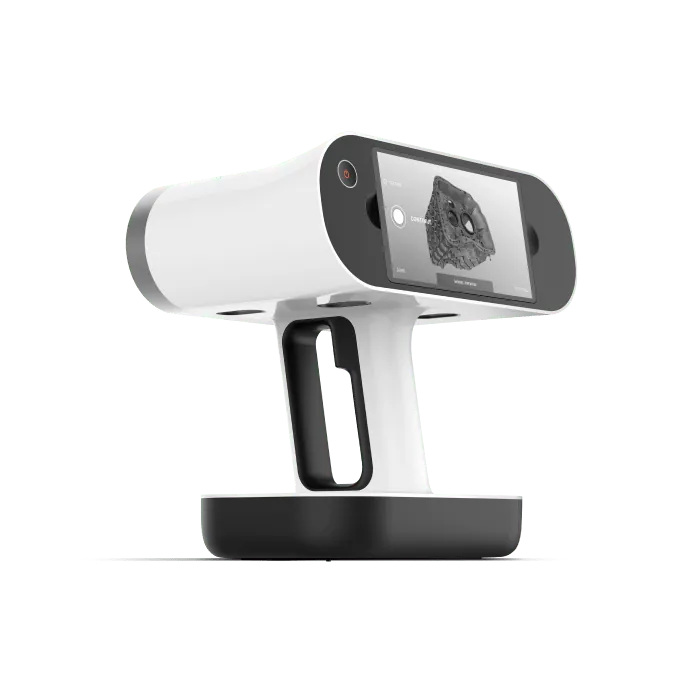
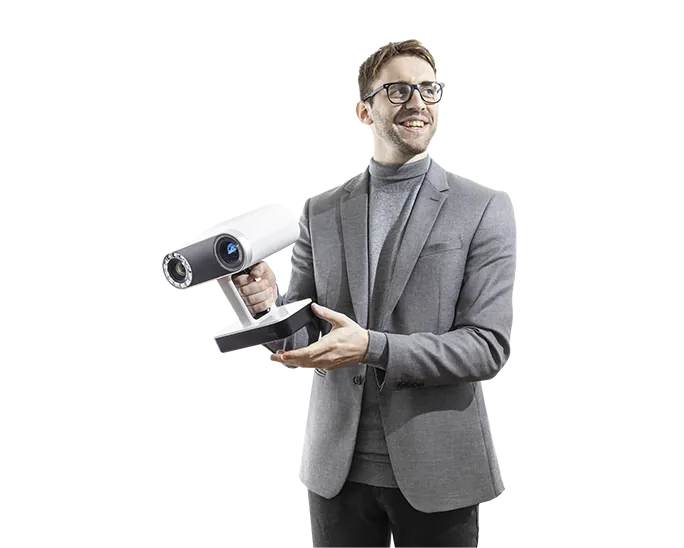
Artec Leo
- Best for
- Bodies, vehicles and evidence — the usual first handheld
- 3D point accuracy
- Up to 0.1 mm
- 3D resolution
- Up to 0.2 mm
- Capture
- Wireless, screen and processing onboard
- Capture speed
- Up to 35 million points/s (HD Mode)
Wireless, self-lit, screen onboard, up to 0.1 mm. The answer for scene units whose work is what is in the room rather than the room.
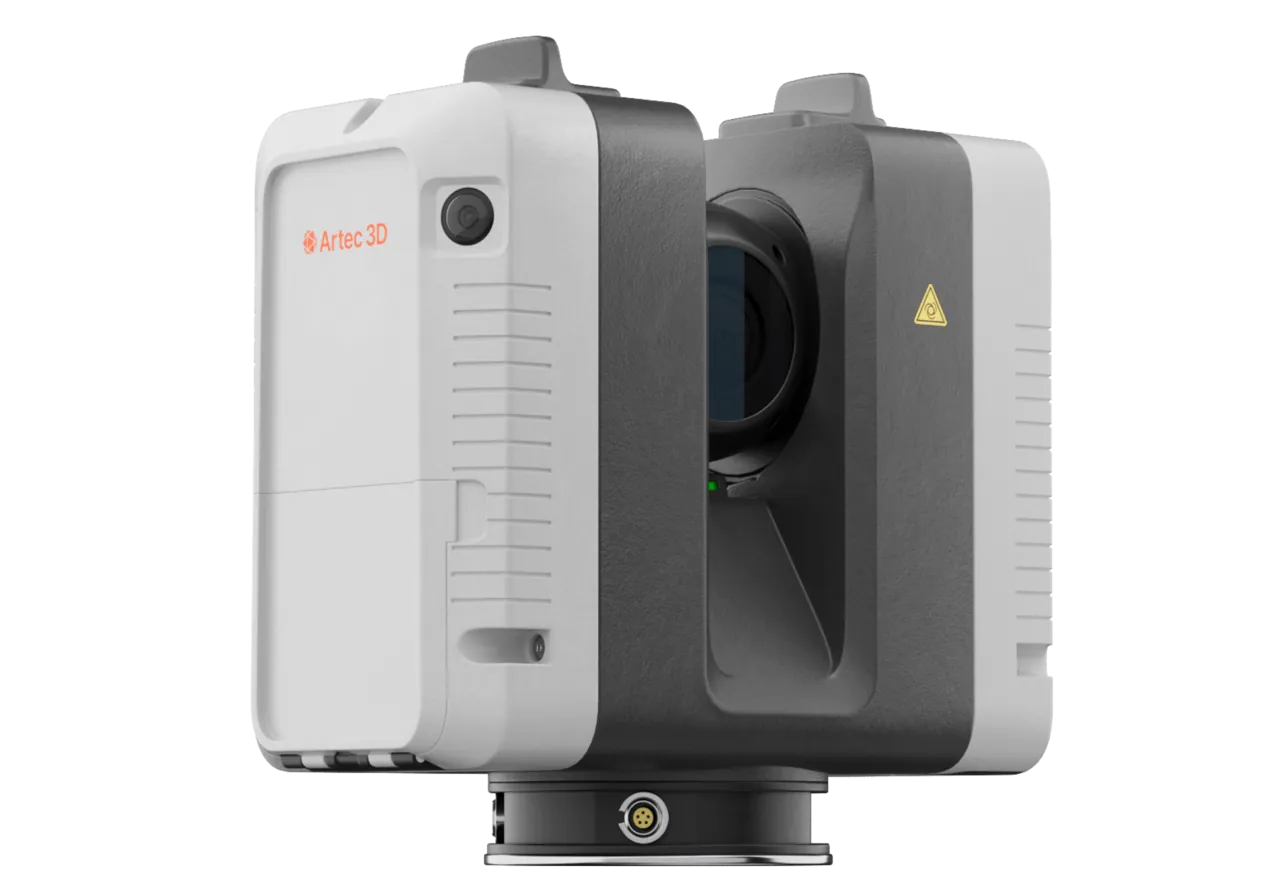
Artec Ray II
- Best for
- Scenes — the usual first tripod scanner
- Accuracy
- 1.9 mm at 10 m
- Range
- 0.5–130 m
- Scan time
- About 1.7 minutes per position (2.7 with colour)
- Portability
- Wireless, tripod-mounted
Up to 130 m range and about 1.7 minutes per position; geometry day or night, colour imagery needs light. The answer for units whose work is rooms, roads and structures.
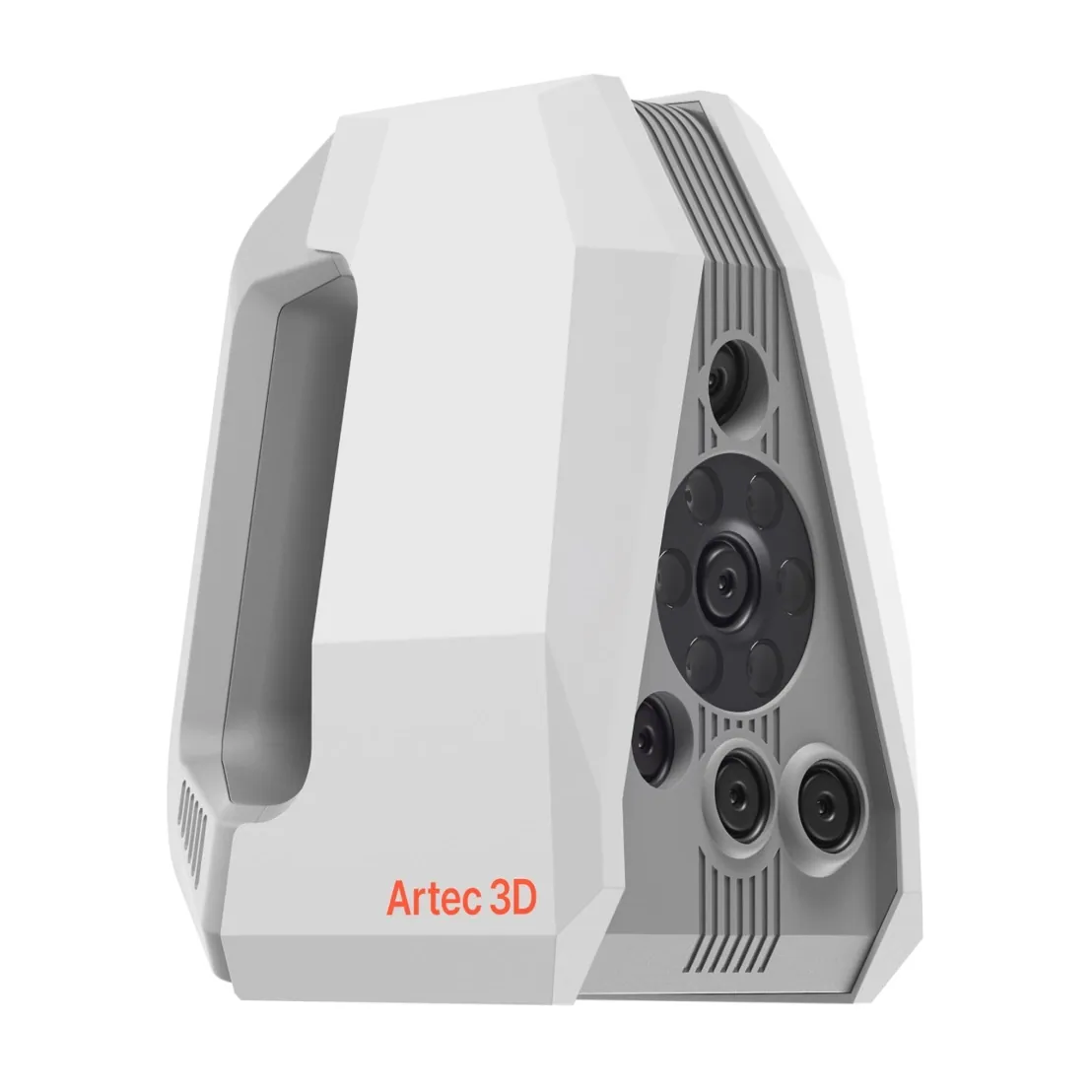
Artec Spider II
- Best for
- Fine detail — marks, wounds, bone
- 3D point accuracy
- Up to 0.05 mm
- 3D resolution
- Up to 0.05 mm
- Light source
- Blue structured light, no targets on the surface
- Portability
- Handheld, tethered to a laptop
Up to 0.05 mm at close range, in colour. The answer when the evidence is a mark's shape or a wound edge.
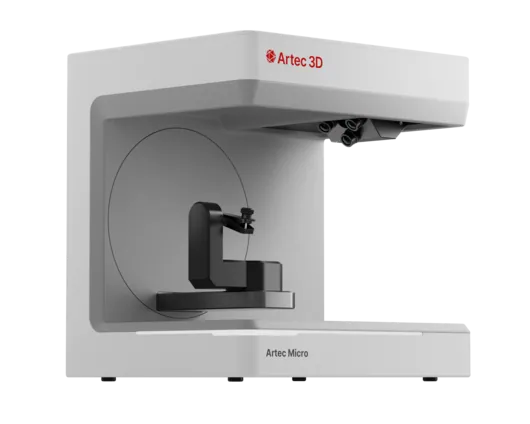
Artec Micro II
- Best for
- Laboratory bench items
- 3D point accuracy
- Up to 0.005 mm
- 3D resolution
- Up to 0.04 mm
- Capture
- Desktop, automated turntable
- Object size
- Up to 200 × 200 × 150 mm
Up to 0.005 mm accuracy on an automated turntable for cartridge cases, teeth and fragments. The answer for a laboratory rather than a scene unit.
Get the four questions answered on your most common case type — book a demo with a forensic specialist.
Book a demoQuestions practitioners ask
Which one scanner should a small unit buy?
The one your most common case needs. Scene units often start with Leo and add Ray II; laboratories often start with Spider II or Micro II. A specialist will tell you which in a short conversation.
Do we need a separate scanner for each job?
No unit buys everything at once. Start with the device your most frequent work needs; the others register into the same software when you add them.
Is software an extra decision?
Not really. Leo, Ray II, Spider II and Micro II all use Artec Studio, which exports to the reconstruction, analysis and presentation tools you already have.
How do we test before buying?
Book a demo and test the shortlist on realistic material — a vehicle panel, an impression, a specimen. The right device shows itself on your own case type.
Tell us about the work you do
A forensic application specialist will come back with the device that fits it, the accuracy to expect at that scale, and how the data reaches your existing workflow.