
Bloodstain Pattern Analysis
A stain's shape carries the angle it arrived at, and its position carries where it came from. Both are lost the moment the scene is cleaned — and a photograph preserves them only from the angle it was taken, on a flat image.
3D scanning records the stain and the surface together: the stain outline on 0.05 mm surface geometry, every stain's position in the room, and nothing touched to obtain it.
 No sensitive case details required.
Can 3D scanning be used for bloodstain pattern analysis?
Yes — the stain's outline on 0.05 mm geometry of the actual substrate, without contact, and its position in the room from a second scan.
 Stain and surface togetherThe ellipse and the substrate it sits on, in one dataset.
 No contact, no coatingNothing applied to the stain. The sample stays viable for DNA.
 Angles from geometryWidth-to-length ratios measured on the true surface, not on a flat image.
 Re-measurable laterNew questions answered from the archive, not a second visit.
Why photographs and stringing run out of precision here
Impact angle comes from the ratio of a stain's width to its length. On a 4 mm stain, a small error in reading either axis moves the derived angle by degrees, and those degrees compound when dozens of stains are projected back to an area of origin. A photograph taken at a slight angle to the surface distorts exactly the ratio the calculation depends on, and a scale bar in frame corrects for magnification, not for perspective.
Stringing reconstructs origin physically, in the room, while the room still exists. It cannot be redone once the scene is released, cannot be re-run with a corrected assumption, and cannot be shown in court except as photographs of string.
Neither method records the surface in three dimensions — yet a stain on textured wallpaper behaves differently from the same stain on gloss paint, and that surface geometry is part of the evidence. A handheld structured-light scanner records the substrate as found at 0.05 mm accuracy and 0.05 mm resolution, with the stain outline in the colour texture on top — no coating, no targets, so the sample stays viable for DNA. An NIJ survey records crime scene units adopting 3D scanning for exactly this: speed and efficiency in obtaining data for bloodstain pattern analysis. The same dataset also carries the wider scene, so the pattern is never measured in isolation from the room it sits in.
The workflow, end to end
Two captures at two scales, merged. The order matters: the pattern is documented before anything in the room is moved.
 1. Capture the roomA tripod scan from two or three positions places the room's surfaces, doorways and furniture in one coordinate system, at about 1.7 minutes per position (2.7 with colour).
 2. Capture each patternHandheld, close range, over each stain group. The laptop screen shows coverage in real time before you move on.
 3. Align and mergeArtec Studio registers the close-range patterns into the room scan, so stain positions and surface geometry share one model.
- 4. Measure and deriveEllipse axes, impact angles and area of origin, taken from the model and exported for the analysis package you already use.
 5. Present and archiveA measurable model for the report and the courtroom, and a permanent record that outlives the scene.
Which scanner for this work
Two scales, two devices. The stain needs close-range detail from a handheld; the room around it needs range.
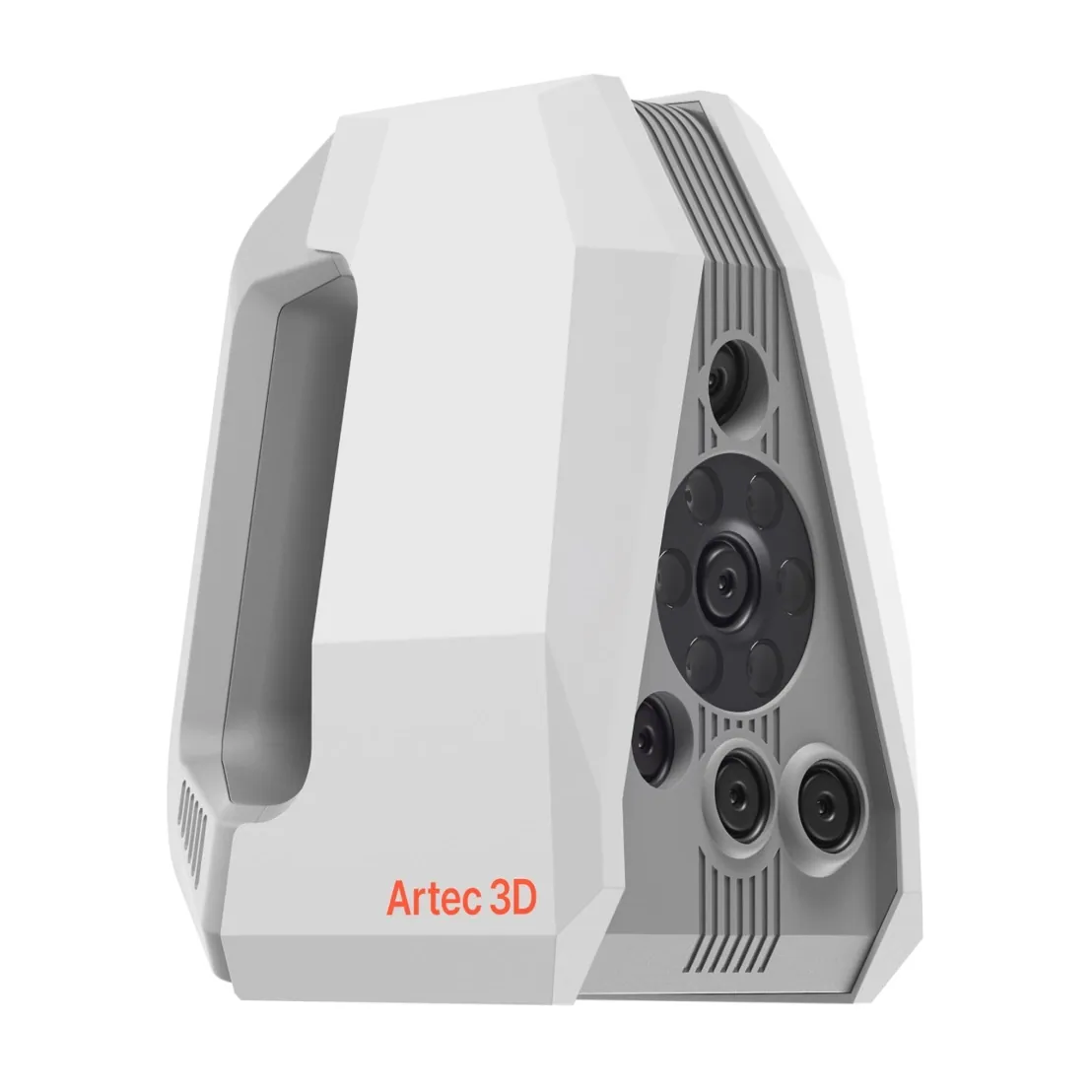
Artec Spider II
- Best for
- The stain itself — ellipse axes and substrate texture
- 3D point accuracy
- Up to 0.05 mm
- 3D resolution
- Up to 0.05 mm
- Light source
- Blue structured light, no targets on the surface
- Portability
- Handheld, tethered to a laptop
The impact angle is derived from axis readings on stains a few millimetres long. Stain outlines are read from the colour texture registered onto 0.05 mm geometry of the substrate, so a 4 mm stain's width-to-length ratio is measured on a true surface rather than a flattened photograph. Blue structured light holds up on the awkward substrates patterns actually land on — textured wallpaper, painted brick, carpet — and nothing is applied to the surface, so the stain stays viable for sampling.
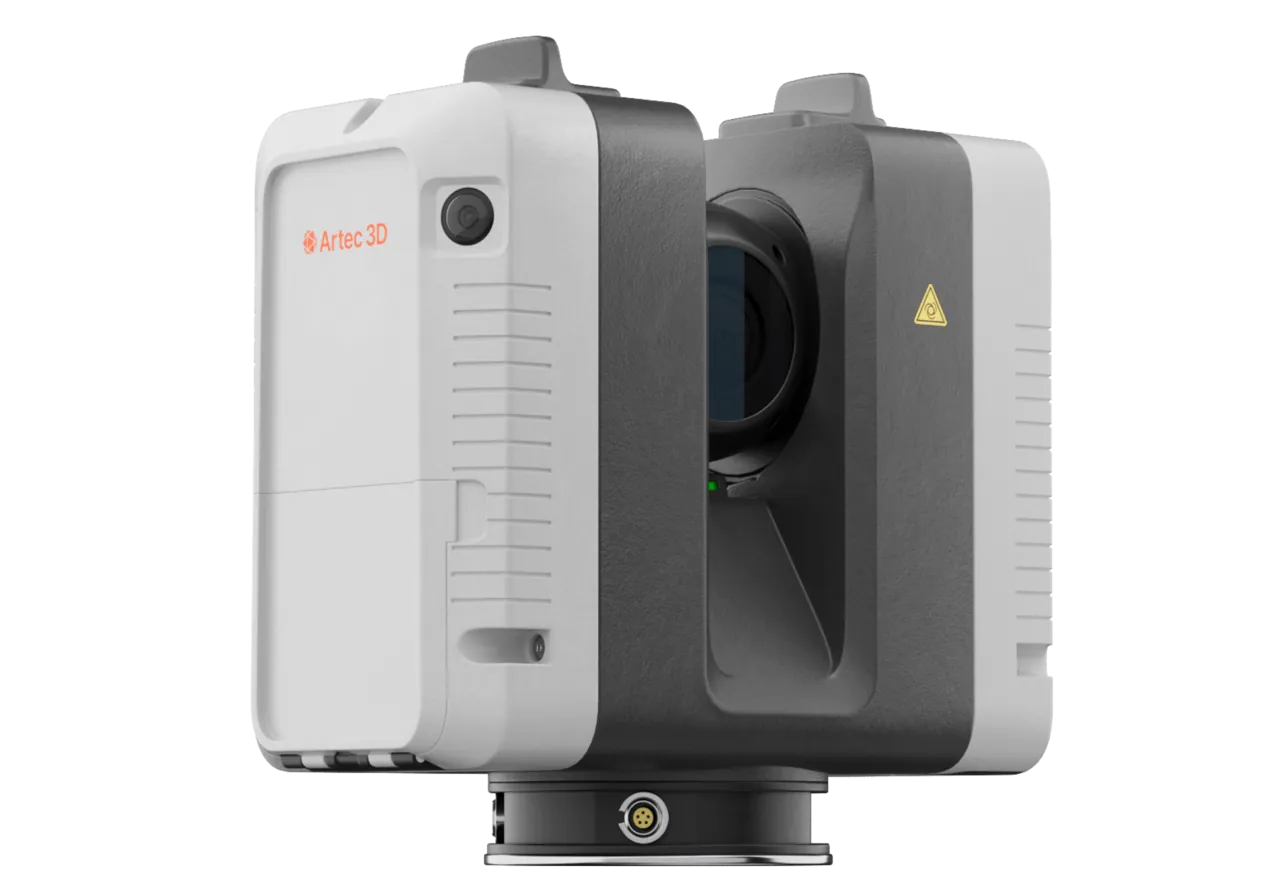
Artec Ray II
- Best for
- The room the pattern sits in
- Accuracy
- 1.9 mm at 10 m
- Range
- 0.5–130 m
- Scan time
- About 1.7 minutes per position (2.7 with colour)
- Portability
- Wireless, tripod-mounted
Area of origin is a question about the whole room, not about one wall: it needs every surface the pattern could have reached, in one coordinate system. Two or three tripod positions supply that in minutes, and the close-range pattern scans register into it — so stain positions and room geometry end up in the same model rather than in two sets of notes.
“Artec has truly changed the face of forensic anthropology with Space Spider, Leo, and Ray. I’ve integrated Artec’s solutions into my daily field work as well as my regular and special classes for investigators, law enforcement officers, and college students, and the results have been nothing short of spectacular.”
“With Leo, we get highly accurate scans that provide more than enough geometry data for any analysis we need to conduct. And then you add in the photo texture to make it real.”
See how bloodstain patterns are captured on the surfaces your cases involve, at sub-millimetre detail — book a demo.
Book a demoQuestions analysts ask
Does scanning interfere with sampling for DNA?
No. Capture is optical and contactless — no targets on the substrate, no coating, no physical contact with the stain. The pattern can be documented in 3D before swabbing, and the swabbing does not destroy the record.
Does it work on textured or dark surfaces?
Textured surfaces are the case where 3D helps most, because the substrate geometry is captured alongside the stain. Dark and low-reflectance substrates are harder for any optical scanner; a structured-light unit projects its own light and its higher-sensitivity mode is what handles them. Ask for your worst substrate at an evaluation and scan that.
Can we still use our existing analysis software?
Yes. Artec Studio exports OBJ, PLY, STL, E57 and other standard formats, so measurements and geometry go into the package your laboratory already validates against. The scanner replaces the measuring, not the analysis.
How is this defended in court?
The same way any measurement is: a documented method, a qualified operator, and a validation record against known references. The NIJ has published on the implications for the courts, and Artec reports judges accepting its 3D scan models as criminal evidence. Admissibility remains the court's decision in your jurisdiction — see also evidence documentation.
Tell us about the patterns you need to document
Describe the substrates and the access you get. A forensic application specialist will come back with the device, the accuracy to expect at that scale, and how the data reaches your analysis package.