
Forensic Digital Twins
A scene exists for hours. A case can run for years. A digital twin is the scene as it was, kept as measurable geometry for as long as anyone needs to ask it a question.
Not a photograph collection and not a rendering — a dimensionally accurate record that supports measurement, reconstruction and presentation from the same file.
 No sensitive case details required.
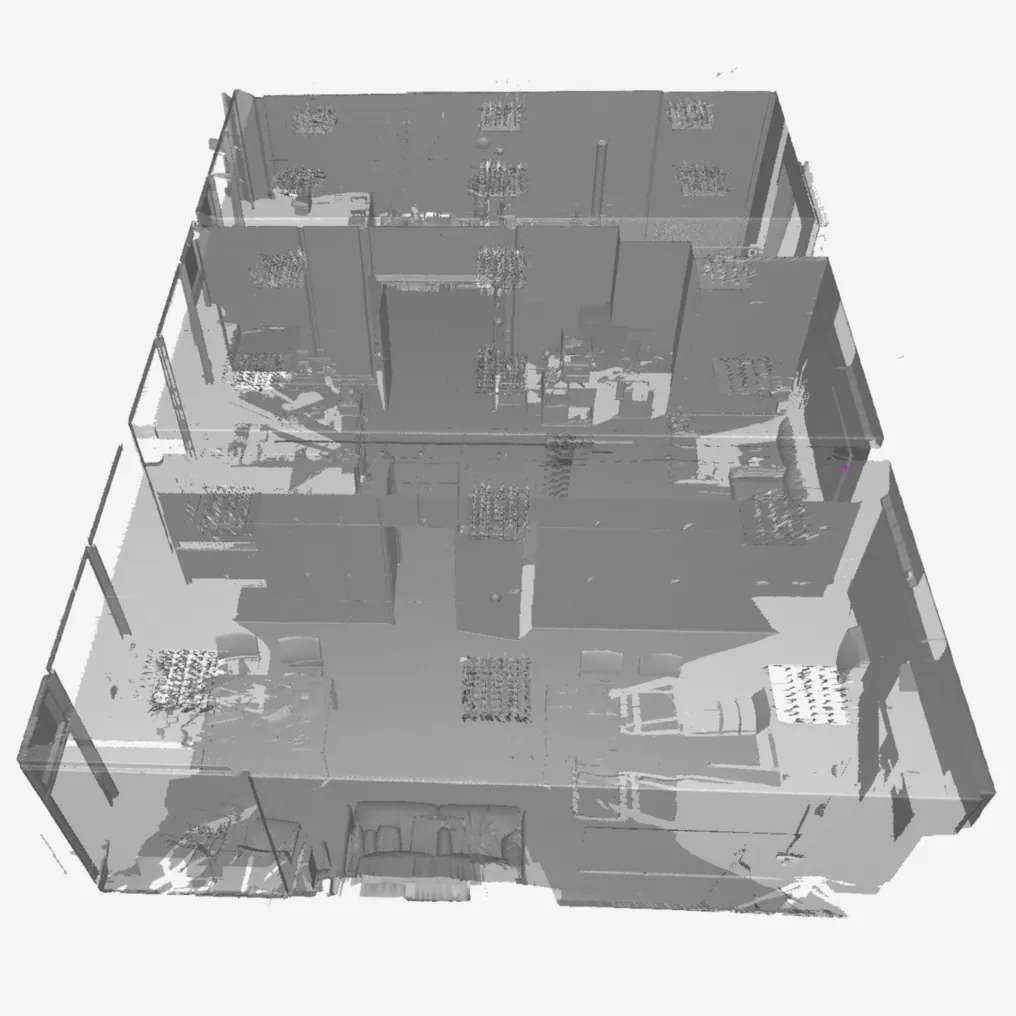
What is a forensic digital twin?
A dimensionally accurate 3D model of a scene, captured before release, that can be measured, revisited and shared for the life of the case — the record that stays after the scene is gone.
 Outlives the sceneThe room is repainted; the twin is not.
 Measurable, not pictorialAny point to any point, years later.
 Shared without lossExperts, prosecutors and courts open the same model.
 One capture, every useDocumentation, analysis, report and exhibit from one file.
Why a scene needs a copy that can be measured
The questions asked of a scene are not known when it is processed. A defence theory a year later, a review by a different expert, a retrial — each asks for a measurement nobody took at the time. With photographs and sketches, the answer is an estimate. With a scene that has since been cleaned or demolished, there is no answer at all.
A digital twin is that scene kept as geometry. Exterior and interior captures merge into one model; any distance, area or angle is measured from it; any hypothesis is tested on it. The model supports the initial documentation, the expert analysis, the report and the courtroom presentation without rescanning and without reconstruction from memory.
It is also the record that travels. A model reaches a prosecutor or a specialist on another continent in minutes and can be measured where it lands.
The workflow, end to end
The twin is built once, at the scene, and used for the life of the case.
 1. Capture wideTripod scans of the whole scene, before anything is moved.
 2. Capture detailHandheld capture of the items and surfaces that carry the evidence.
 3. MergeArtec Studio registers everything into one dimensionally accurate model.
- 4. ArchiveRaw and processed data kept with access control and a retention policy, on your own systems.
 5. Revisit and shareMeasure, test and present from the same file for as long as the case runs.
Which scanner for this work
A twin is the whole scene plus its detail. That is the long-range scanner for the space and a handheld for what is in it.
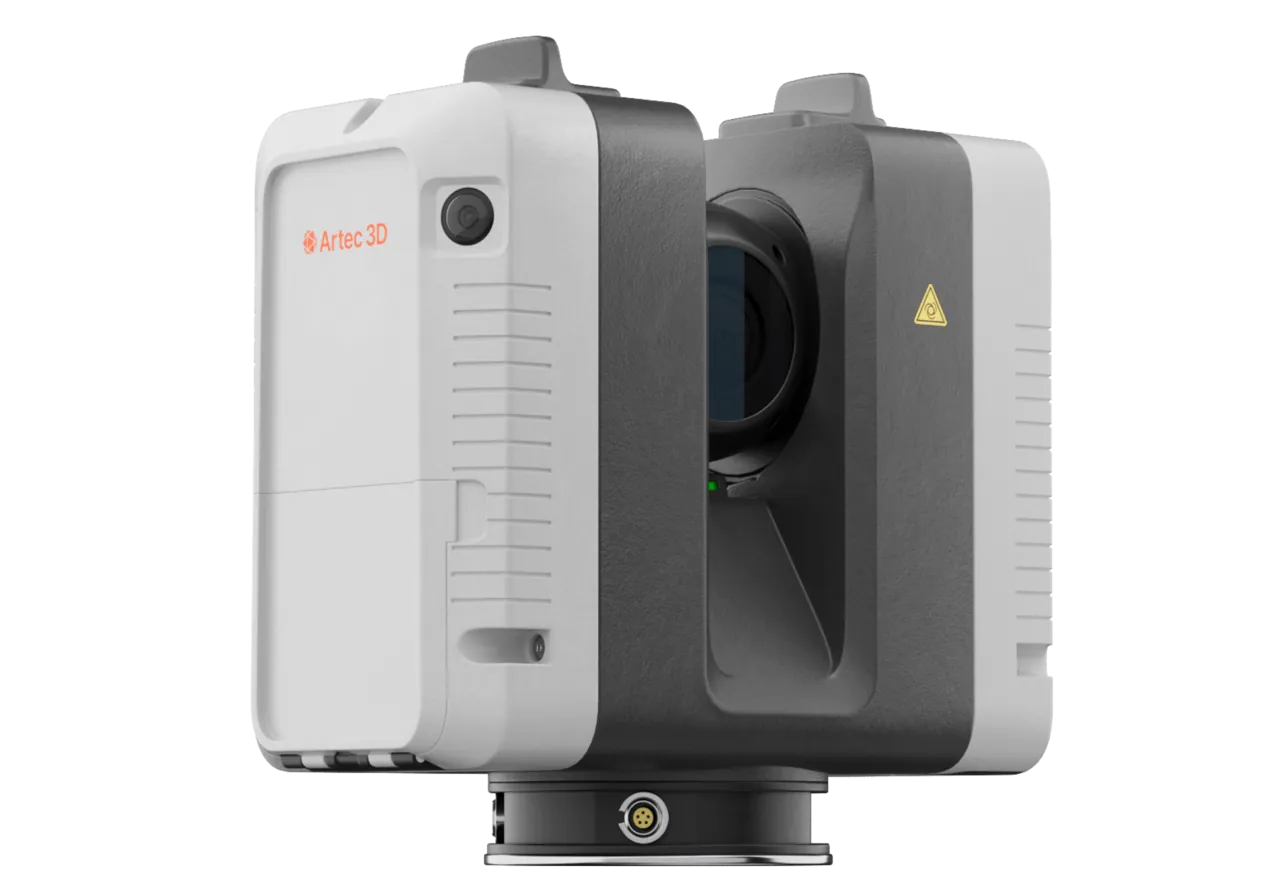
Artec Ray II
- Best for
- The space — rooms, buildings, exteriors
- Accuracy
- 1.9 mm at 10 m
- Range
- 0.5–130 m
- Scan time
- About 1.7 minutes per position (2.7 with colour)
- Portability
- Wireless, tripod-mounted
Ray II records a scene in about 1.7 minutes per position (2.7 with colour), out to 130 metres, indoors or outdoors, as a dense point cloud that can be measured for years. Scans from several positions close the blind spots.
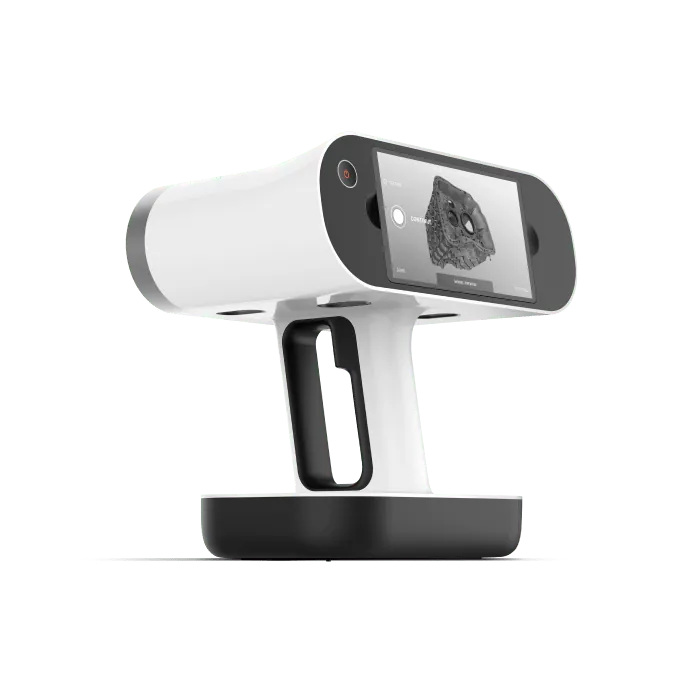
Artec Leo
- Best for
- What is in the space
- 3D point accuracy
- Up to 0.1 mm
- 3D resolution
- Up to 0.2 mm
- Capture
- Wireless, screen and processing onboard
- Capture speed
- Up to 35 million points/s (HD Mode)
Leo captures the body, the items and the surfaces at up to 0.1 mm in colour, wirelessly, and registers them into the room. The twin then carries both the geometry of the scene and the detail of the evidence in it.
See what a digital twin of a scene can still answer years after the scene is released — book a demo.
Book a demoQuestions practitioners ask
How is a digital twin different from a 3D rendering?
A rendering is made to look like the scene. A twin is measured from it: every point has a position, and any distance taken from it is a measurement, not an illustration.
Where is the data kept?
On your own systems, with access control, retention policy and backups. Nothing about the workflow requires the data to leave your network; Artec Cloud is available for sharing but is not a condition of the record.
Can it be updated?
It records the scene at the time of capture — that is its value. A later capture of the same location is a separate record, and the two can be compared.
What formats does it export to?
OBJ, PLY, STL, E57 and other standard formats, so the twin opens in the analysis, reconstruction and presentation software your team already runs.
Tell us about the work you do
A forensic application specialist will come back with the device that fits it, the accuracy to expect at that scale, and how the data reaches your existing workflow.